Don’t come from away: A look at COVID-19 travel restrictions across Canada
Advertisement
Read this article for free:
or
Already have an account? Log in here »
To continue reading, please subscribe:

Digital Subscription
One year of digital access for only $205*
- Enjoy unlimited reading on winnipegfreepress.com
- Read the E-Edition, our digital replica newspaper
- Access News Break, our award-winning app
- Play interactive puzzles
*First annual payment billed as $205.00 + GST for one year. This annual subscription will automatically renew at $233.00 + GST every 52 weeks (10% off the regular annual price of $259.35). Offer available to new and qualified returning subscribers only. Cancel any time.
To continue reading, please subscribe:
Add Free Press access to your Brandon Sun subscription for only an additional
$1 for the first 4 weeks*
- Enjoy unlimited reading on winnipegfreepress.com
- Read the E-Edition, our digital replica newspaper
- Access News Break, our award-winning app
- Play interactive puzzles
*Your next Brandon Sun subscription payment will increase by $1.00 and you will be charged $17.95 plus GST for four weeks. After four weeks, your payment will increase to $24.95 plus GST every four weeks.
Read unlimited articles for free today:
or
Already have an account? Log in here »
Hey there, time traveller!
This article was published 12/06/2020 (2312 days ago), so information in it may no longer be current.
If you’re looking to explore Canada this summer, you’ll first have to navigate the fluctuating patchwork of travel restrictions aimed at preventing the spread of the novel coronavirus throughout the country.
Here’s a look at some of the rules for each province and territory:
Newfoundland and Labrador
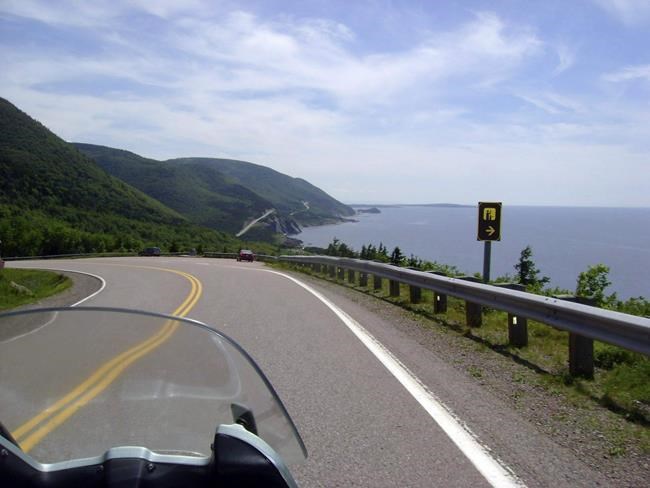
On July 3, Newfoundland and Labrador, Nova Scotia, New Brunswick and P.E.I. eased inter-provincial travel restrictions within the region, creating a so-called “Atlantic bubble.”
The move comes as COVID-19 cases on the East Coast have dipped in recent weeks.
Atlantic Canadians can now travel within the region without having to self-isolate when arriving in another province.
Visitors from provinces and territories outside the region are still required to self-isolate for two weeks and adhere to local entry requirements. However, once the self-isolation period has passed, those visitors will also be allowed to travel within the Atlantic region.
If all goes well, Newfoundland Premier Dwight Ball has suggested that restrictions on out-of-region travellers may be further relaxed in his province on July 17.
Residents, meantime, can travel freely within the province, including to second homes, parks and campgrounds.
Nova Scotia
Each province in the Atlantic bubble has its own process for tracking and monitoring travellers.
Nova Scotia Premier Stephen McNeil has said border monitoring will involve asking people for identification in order to verify which province the traveller is from.
Those with identification from outside the Atlantic region are required to self-isolate. There’s no set date for the removal of that requirement, and the provincial government says its timeline for rolling back restrictions is subject to change.
People don’t need permission to enter Nova Scotia, however, those arriving from outside the Atlantic bubble are required to self-isolate for 14 days.
There are no restrictions on movement within the province, but travellers are asked to abide by guidelines on physical distancing and gatherings.
Private campgrounds have reopened, but only at 50 per cent capacity and they must ensure public health protocols are followed, including adequate distancing between campsites. Cottagers can visit their vacation homes.
Prince Edward Island
As part of the travel bubble, all Atlantic visitors to P.E.I. must fill out a self-declaration form online and provide a copy to border officers before entering the province. They are also subject to public health and proof-of-residency screenings.
Seasonal residents must apply for approval to travel to the province.
New Brunswick
New Brunswick amended some of its strict border controls just before it joined the Atlantic bubble.
New Brunswickers no longer need to self-isolate when returning from work trips in other parts of the country.
Non-residents are also allowed to visit family in the province if they’re symptom-free and self-isolate for the first two weeks of their trip.
The same conditions apply to non-residents who own property in New Brunswick.
Quebec
Quebec has reopened travel within most of the province, but officials encourage people to limit trips between regions.
Quebecers are allowed to vacation in other parts of the province, but are asked to follow safety precautions.
Recommendations include planning your itinerary around local health measures, allowing extra time for delays and limiting non-essential pit stops on the road.
Police checkpoints remain in Nunavik and the Cree Territory of James Bay to limit non-essential travel into the territories.
There are no border closures or self-isolation requirements for out-of-province travellers.
Ontario
Ontario strongly discourages non-essential trips, but has yet to lay out formal rules about travel.
In the meantime, ferry service between the city of Toronto and the Toronto Islands resumed on June 27.
Manitoba
In general, travellers coming to Manitoba from outside the province are required to self-isolate for two weeks.
However, people from Western Canada or northwestern Ontario can now travel without self-isolating, so long as they haven’t left the region for the prior two weeks and don’t have COVID-19 symptoms.
The exception applies to British Columbia, Alberta, Saskatchewan, Yukon, Northwest Territories, Nunavut and the region of Ontario west of Terrace Bay.
Certain types of out-of-province professionals are also exempt from self-isolation requirements, including health-care providers, law enforcement and infrastructure workers.
Members of professional sports teams or film crews are also exempt if they’re symptom-free and self-isolate at home for two weeks prior to entering the province.
Manitoba has also eased restrictions prohibiting travel north of the 53rd parallel to allow residents of Western Canada and northwestern Ontario to visit campgrounds, cottages or parks. They’re asked to travel directly to their destination, and avoid going into remote or First Nations communities.
Additionally, the province has lifted a rule that only allowed people to travel to northern communities for reasons such as work, child custody arrangements and camping.
Saskatchewan
There aren’t self-isolation requirements for travellers entering Saskatchewan. However, officials recommend that returning residents monitor for COVID-19 symptoms for two weeks, and visitors are asked to abide by public health measures.
The province lifted a ban on non-essential travel in the northwest on June 7, but then reversed course to restrict travel to certain high-risk communities in the region.
Northern public health officials are cautioning against non-essential travel between northwest Saskatchewan and northern Alberta until further notice. They’re also urging northern Saskatchewan residents who cross the border to self-isolate for two weeks upon return.
Recreational travel within the province is permitted, but the province that warns there are restrictions that could impact your trip.
Some private campgrounds and regional parks have reopened. But only Saskatchewan residents are allowed to camp in provincial parks.
Alberta
Albertans are allowed to travel within the province, including to vacation homes, cabins, hotels, campgrounds and national and provincial parks. Travellers are asked to abide by physical distancing guidelines and use the province’s mobile contact tracing app while out in public.
There are no border closures or checkpoints. However, officials are advising against non-essential travel in or out of the province until the next phase of Alberta’s reopening strategy.
British Columbia
British Columbia has relaxed restrictions on travel within the province as data suggests that COVID-19 cases have tapered off.
Hotels, motels, spas, resorts, hostels and RV parks are now allowed to resume operating. Most provincial campgrounds, trails and other recreation sites are also open.
However, Premier John Horgan warned British Columbians to plan their trips carefully, because some communities may not be ready to welcome back visitors.
Indigenous leaders from Vancouver Island, the Central Coast and the Interior have raised concerns that the reopening may put Indigenous communities at risk.
In a Facebook post on June 20, Gaagwiis Jason Alsop, president of the Council of the Haida Nation, said the island is still closed to non-residents, and will not reopen for at least three weeks.
Horgan said he is consulting with Indigenous leaders about their concerns.
The premier also discouraged non-essential travel to or from other provinces, including Alberta.
However, he said B.C.’s borders remain open, and entreated out-of-province visitors to abide by public health protocols.
Access to some roads crossing into Yukon and Northwest Territories is restricted.
Nunavut
As of June 15, residents of Nunavut and Northwest Territories were again allowed to cross the border without self-isolating, as long as they haven’t left their territory in the two weeks prior to their trip.
N.W.T. residents have to fill out a form before they can enter Nunavut, and providing false information can result in a fine.
Travel from the rest of Canada is still banned.
Residents who want to fly back to Nunavut must first spend two weeks isolation in either Ottawa, Winnipeg, Edmonton or Yellowknife. After that, asymptomatic residents have to be cleared and get a letter signed by the territory’s chief public health officer in order to board a plane back home.
Northwest Territories
The borders are closed to leisure travellers, except for Nunavut residents.
Anyone who tries to drive across a border checkpoint without permission faces a ticket if they proceed.
The fine for travel offences is $1,500, with a $225 victim surcharge, that can be handed out daily.
N.W.T. residents who return from out-of-territory travel must self-isolate in one of four communities: Yellowknife, Inuvik, Hay River or Fort Smith.
Residents who travel outside their small communities also have to self-isolate before returning home.
There are special passes for travel between the N.W.T-Alberta border in the Fort Smith area.
Yukon

Residents from British Columbia, the Northwest Territories and Nunavut can now travel to Yukon without first having to self-isolate for two weeks.
All residents from other parts of Canada can travel to Yukon, but must self-isolate for 14 days in Whitehorse when they arrive in the territory.
People entering a Yukon airport building or terminal have to wear a non-medical mask or face covering.
Territorial parks and campgrounds have reopened for summer and outdoor gatherings can include up to 50 people.
This report by The Canadian Press was first published June 12, 2020. It was updated July 6, 2020.
Related Articles
Experts urge caution on CEOs' travel demands




Advertisement Advertise With Us
Advertisement Advertise With Us