

COVID-19 case from homeless community: source

Advertisement
Read this article for free:
or
Already have an account? Log in here »
To continue reading, please subscribe:
Monthly Digital Subscription
$1 per week for 24 weeks*
- Enjoy unlimited reading on winnipegfreepress.com
- Read the E-Edition, our digital replica newspaper
- Access News Break, our award-winning app
- Play interactive puzzles
*Billed as $4.00 plus GST every four weeks. After 24 weeks, price increases to the regular rate of $19.95 plus GST every four weeks. Offer available to new and qualified returning subscribers only. Cancel any time.
Monthly Digital Subscription
$4.99/week*
- Enjoy unlimited reading on winnipegfreepress.com
- Read the E-Edition, our digital replica newspaper
- Access News Break, our award-winning app
- Play interactive puzzles
*Billed as $19.95 plus GST every four weeks. Cancel any time.
To continue reading, please subscribe:
Add Free Press access to your Brandon Sun subscription for only an additional
$1 for the first 4 weeks*
*Your next subscription payment will increase by $1.00 and you will be charged $16.99 plus GST for four weeks. After four weeks, your payment will increase to $23.99 plus GST every four weeks.
Read unlimited articles for free today:
or
Already have an account? Log in here »
Hey there, time traveller!
This article was published 15/06/2020 (2139 days ago), so information in it may no longer be current.
One of the recent new COVID-19 cases reported in Manitoba in the past five days involves a person experiencing homelessness now being housed in a coronavirus self-isolation shelter for vulnerable people.
A source told the Free Press the woman in her 30s tested positive June 10 at the COVID-19 testing site at Thunderbird House on Main Street, and is now isolating.
On Monday, Manitoba’s chief provincial health officer wouldn’t confirm nor deny such details.
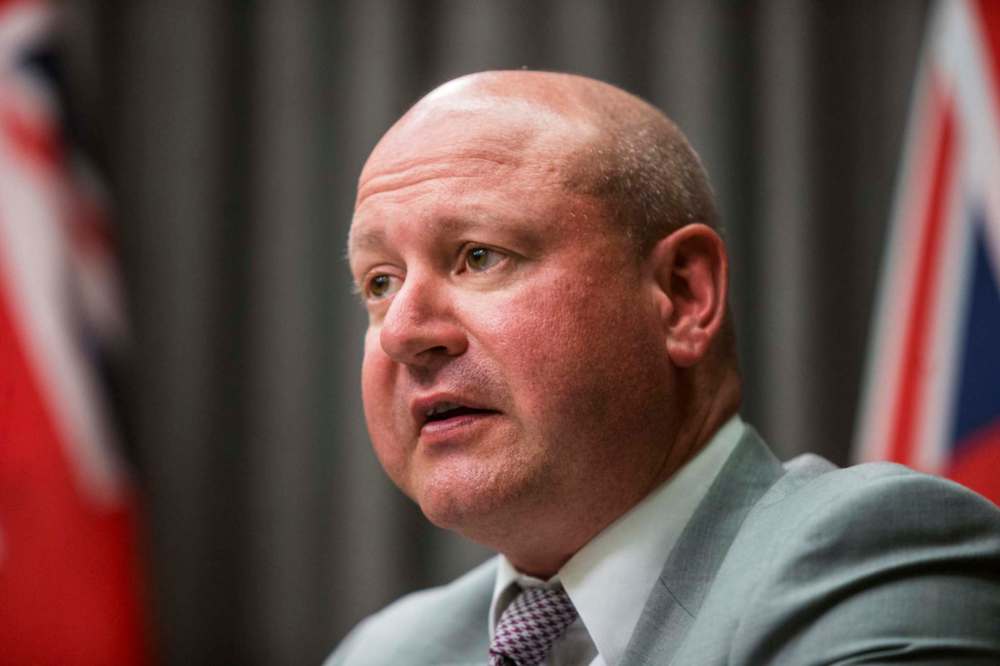
“We’ll make information public whenever we feel that it’s putting Manitobans at risk,” said Dr. Brent Roussin. “That’s been the message all along.”
Roussin has thus far in the pandemic refused to identify places or businesses where COVID-19 cases occur, unless there’s a problem identifying and contacting those who may have come into contact with an infected person and contracted the virus.
“If many Manitobans were exposed, and we’re unlikely to have a method to reach contacts or identify contacts, then we’re going to announce that,” he said. “In these cases, that’s not the case, and that’s why any further details aren’t necessary to protect Manitobans.”
No new COVID-19 cases were reported Monday.
Since the isolation site opened April 10, 140 homeless individuals have used it while awaiting test results, said Main Street Project communications coordinator Cindy Titus.
“Of this number, one has tested positive and the isolation site has provided further 14-day quarantine support for this individual,” Titus said in an email late Monday. She wouldn’t provide any further information about the individual.
Roussin said the four most recent COVID-19 cases are all in the Winnipeg region, including a woman in her 30s. He said her case was reported June 12, and she had travelled from Ontario, had limited contact with others and was self-isolating.
On the weekend, there were three cases reported: two men in their 30s on Saturday, and one man in his 20s on Sunday — all were household contacts of another recent case.
When asked if the COVID-19 isolation shelter for those who need a safe place to stay received any more guests in the last week, Shared Health nursing chief Lanette Siragusa said there were, but she didn’t have a number.
Shared Health said its “alternative isolation accommodation program” provides support for health-care workers and others who cannot safely self-isolate at home, or for vulnerable populations experiencing homelessness awaiting test results or who have tested positive.
For the week of June 3-9, the most recent figures available, 13 people were accepted into the shelter program, a Shared Health spokesman said. Occupancy at the end of the week stood at 11.
By comparison, 10 people were accepted into the shelter program the previous week, with 11 referrals throughout the week.
The isolation shelter is keeping people safe, preventing the possible spread of the virus, and giving people an opportunity to improve their health, Main Street Project officials said.
“Several clients have secured housing and several have taken advantage of (Main Street’s) withdrawal-management services and transferred into those program,” said Titus.

The province has been less forthcoming about COVID-19 cases, refusing to identify where a cluster occurred other than by health region, not naming personal care homes with confirmed cases, and not making public data on First Nations people getting tested until the Assembly of Manitoba Chiefs agreed to it.
That lack of transparency in a public health crisis — especially when it comes to vulnerable and marginalized groups — was questioned by an out-of-province epidemiologist and legal expert.
“Granted, one does not want to further stigmatize the homeless as disease carriers, but one also does not want the elected nabobs obscuring that Winnipeg’s inequality gambles with their lives,” said Amir Attaran, a professor in the faculties of law and School of Epidemiology and Public Health at the University of Ottawa.
“The rationale of non-disclosure because there is no risk to the public is, however, specious,” Attaran said Monday. “The cases in elder care homes present no risk to the public either. But if they disclose those, then why not this?”
carol.sanders@freepress.mb.ca
Carol Sanders
Legislature reporter
Carol Sanders is a reporter at the Free Press legislature bureau. The former general assignment reporter and copy editor joined the paper in 1997. Read more about Carol.
Every piece of reporting Carol produces is reviewed by an editing team before it is posted online or published in print — part of the Free Press‘s tradition, since 1872, of producing reliable independent journalism. Read more about Free Press’s history and mandate, and learn how our newsroom operates.
Our newsroom depends on a growing audience of readers to power our journalism. If you are not a paid reader, please consider becoming a subscriber.
Our newsroom depends on its audience of readers to power our journalism. Thank you for your support.
Carol Sanders
Legislature reporter
Carol Sanders is a reporter at the Free Press legislature bureau. The former general assignment reporter and copy editor joined the paper in 1997. Read more about Carol.
Every piece of reporting Carol produces is reviewed by an editing team before it is posted online or published in print — part of the Free Press‘s tradition, since 1872, of producing reliable independent journalism. Read more about Free Press’s history and mandate, and learn how our newsroom operates.
Our newsroom depends on a growing audience of readers to power our journalism. If you are not a paid reader, please consider becoming a subscriber.
Our newsroom depends on its audience of readers to power our journalism. Thank you for your support.
Advertisement Advertise With Us
Advertisement Advertise With Us