

Fur-baby food bank experiences soaring demand from pet owners

Advertisement
Read this article for free:
or
Already have an account? Log in here »
To continue reading, please subscribe:
Monthly Digital Subscription
$1 per week for 24 weeks*
- Enjoy unlimited reading on winnipegfreepress.com
- Read the E-Edition, our digital replica newspaper
- Access News Break, our award-winning app
- Play interactive puzzles
*Billed as $4.00 plus GST every four weeks. After 24 weeks, price increases to the regular rate of $19.95 plus GST every four weeks. Offer available to new and qualified returning subscribers only. Cancel any time.
Monthly Digital Subscription
$4.99/week*
- Enjoy unlimited reading on winnipegfreepress.com
- Read the E-Edition, our digital replica newspaper
- Access News Break, our award-winning app
- Play interactive puzzles
*Billed as $19.95 plus GST every four weeks. Cancel any time.
To continue reading, please subscribe:
Add Free Press access to your Brandon Sun subscription for only an additional
$1 for the first 4 weeks*
*Your next subscription payment will increase by $1.00 and you will be charged $16.99 plus GST for four weeks. After four weeks, your payment will increase to $23.99 plus GST every four weeks.
Read unlimited articles for free today:
or
Already have an account? Log in here »
Hey there, time traveller!
This article was published 30/03/2020 (2196 days ago), so information in it may no longer be current.
In times of fear, loneliness, and physical distancing, Barbara Judt wants to help pet owners keep their furry friends.
Judt runs the Manitoba division of the Animal Food Bank, a volunteer and donation-based organization that provides pet food and other supplies to low-income pet owners. Now, demand for its services has skyrocketed as Manitobans lose jobs during the pandemic.
“We don’t want to hear the heart-breaking story: ‘I couldn’t afford to feed my pet so I had to drop them off at the shelter,’” Judt said.
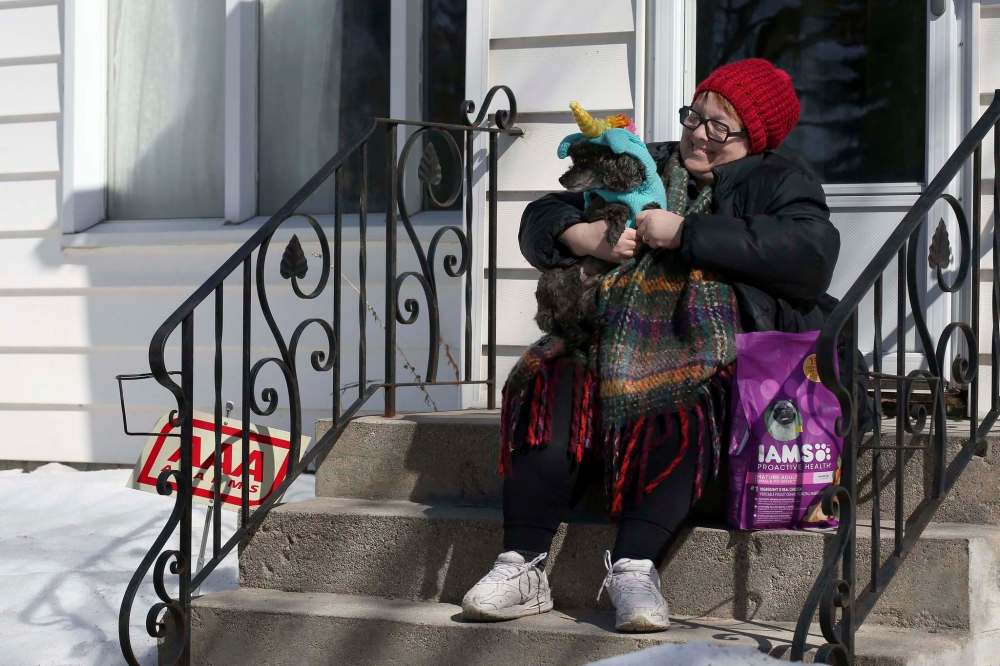
“Right now, people’s anxiety and levels of depression are definitely on the increase. People are very much on edge, some people seem to be paralyzed with fear… so if you’ve got the comfort of your furry friend or your reptile friend close at hand, I think that’s great.”
The Animal Food Bank, which kicked off in Winnipeg last month, gives pet owners access to food, kitty litter, and sometimes toys. Those in need can fill out an application on Facebook, and volunteers work to fill orders and drop off supplies, no questions asked. The program supplies food for all kinds of pets, including cats, dogs, bunnies, birds and reptiles.
“We are a no-barrier program, you don’t have to prove your income to us, and our focus is to help people out who have little to no income and who are living on the streets,” Judt said.
“We never want someone to have to relinquish their pets because they can’t afford to feed them.”
“It’s proven, the connection that people have with their pets and how much our pets do for our well being, it’s phenomenal,” she said.
When it launched the food bank was delivering about 200 pounds of food per week, but since COVID-19 hit Canada, demand has jumped to nearly 1,000 pounds weekly. Judt said she received 15 new requests for food on Friday morning alone.
“Right now, we’re just about out of what we’ve got, so I’m quite worried about how we’re going to be able to meet this demand,” she said.
The charity runs entirely on donations, Judt said. They work with the Pet Valu location on Plessis Road, where Winnipeggers can call in donations to be picked up volunteers. The food bank also accepts e-transfers and open food donations, which can be co-ordinated through its Facebook page.
“We are in need of donations — we want to keep our furry friends and everyone’s pets together with their families,” she said.

To help keep employees safe and shelters as empty as possible during the pandemic, the Winnipeg Humane Society has closed its intake department to everything except emergencies, spokeswoman Lenore Hume said.
In the last two weeks, the shelter took in 143 animals, but staff is encouraging Winnipeggers to find other ways to care for surrenders or strays.
“Where perhaps if they find a stray, we ask them to look after the animal themselves or adopt it out through someone else they know, or foster until we can find a space,” Hume said.
julia-simone.rutgers@freepress.mb.ca
Twitter: @jsrutgers
Julia-Simone Rutgers is the Manitoba environment reporter for the Free Press and The Narwhal. She joined the Free Press in 2020, after completing a journalism degree at the University of King’s College in Halifax, and took on the environment beat in 2022. Read more about Julia-Simone.
Julia-Simone’s role is part of a partnership with The Narwhal, funded by the Winnipeg Foundation. Every piece of reporting Julia-Simone produces is reviewed by an editing team before it is posted online or published in print — part of the Free Press‘s tradition, since 1872, of producing reliable independent journalism. Read more about Free Press’s history and mandate, and learn how our newsroom operates.
Our newsroom depends on a growing audience of readers to power our journalism. If you are not a paid reader, please consider becoming a subscriber.
Our newsroom depends on its audience of readers to power our journalism. Thank you for your support.
Julia-Simone Rutgers is the Manitoba environment reporter for the Free Press and The Narwhal. She joined the Free Press in 2020, after completing a journalism degree at the University of King’s College in Halifax, and took on the environment beat in 2022. Read more about Julia-Simone.
Julia-Simone’s role is part of a partnership with The Narwhal, funded by the Winnipeg Foundation. Every piece of reporting Julia-Simone produces is reviewed by an editing team before it is posted online or published in print — part of the Free Press‘s tradition, since 1872, of producing reliable independent journalism. Read more about Free Press’s history and mandate, and learn how our newsroom operates.
Our newsroom depends on a growing audience of readers to power our journalism. If you are not a paid reader, please consider becoming a subscriber.
Our newsroom depends on its audience of readers to power our journalism. Thank you for your support.
Advertisement Advertise With Us
Advertisement Advertise With Us