

Manitoba nurses, embattled by pandemic, hold strike vote

Advertisement
Read this article for free:
or
Already have an account? Log in here »
To continue reading, please subscribe:
Monthly Digital Subscription
$1 per week for 24 weeks*
- Enjoy unlimited reading on winnipegfreepress.com
- Read the E-Edition, our digital replica newspaper
- Access News Break, our award-winning app
- Play interactive puzzles
*Billed as $4.00 plus GST every four weeks. After 24 weeks, price increases to the regular rate of $19.95 plus GST every four weeks. Offer available to new and qualified returning subscribers only. Cancel any time.
Monthly Digital Subscription
$4.99/week*
- Enjoy unlimited reading on winnipegfreepress.com
- Read the E-Edition, our digital replica newspaper
- Access News Break, our award-winning app
- Play interactive puzzles
*Billed as $19.95 plus GST every four weeks. Cancel any time.
To continue reading, please subscribe:
Add Free Press access to your Brandon Sun subscription for only an additional
$1 for the first 4 weeks*
*Your next subscription payment will increase by $1.00 and you will be charged $16.99 plus GST for four weeks. After four weeks, your payment will increase to $23.99 plus GST every four weeks.
Read unlimited articles for free today:
or
Already have an account? Log in here »
Hey there, time traveller!
This article was published 04/06/2021 (1749 days ago), so information in it may no longer be current.
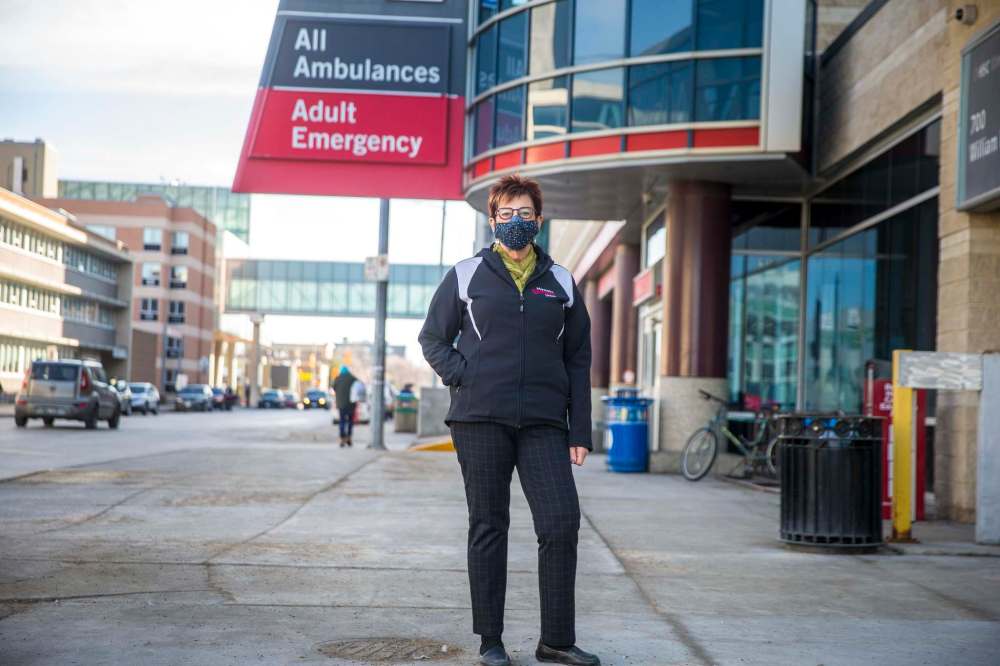
Under the crunch of heavy workloads, mandated overtime and pandemic stress, Manitoba nurses are taking a strike vote this weekend after months of negotiations failed to secure a contract.
“We finally got to the bargaining table with employers in October of 2020. We’ve had 25-plus session days of bargaining and progress has been extremely slow,” said Manitoba Nurses Union president Darlene Jackson.
“We’re really not as hopeful as we were that we’re going to be able to negotiate a collective agreement.”
Their collective agreement expired more than four years ago; negotiations began in earnest in the fall after a series of run-off votes to consolidate health-care bargaining units. Jackson said the union has been asking the province to voluntarily move to interest arbitration, adding they would agree not to trigger that option until Sept. 1, but they received “a hard no.”
In any event, interest arbitration would be triggered after a 60-day strike.
“Nurses believe that is the only way we’re going to get a fair deal that addresses our issues with retention and recruitment with the nursing shortage,” Jackson said. “I’m hoping the strike vote will make this government rethink its position.”
Should the strike vote pass — 12,000 nurses begin casting ballots Sunday — and a strike be called, Jackson said essential COVID-19 care wouldn’t be affected.
“The last thing nurses in this province want to do is disrupt patient care or cause any concern from patients, families or the public,” said Jackson.
“We will never ever pull nurses out of an ICU unit where they have patients. We will never stop people from swabbing or giving vaccinations or doing contact tracing — that’s not what we’re about.”
A strike would involve rotating work-to-rule actions in certain units on a daily basis.
“We all go to work like we normally do…we do a rotating job action that doesn’t disrupt patient care. Maybe not doing non-essential functions for one day at one site or one unit.”
A nurse at Health Sciences Centre told the Free Press: “We won’t be mobilizing patients, answering call lights, answering the phone, taking verbal orders from doctors. (It’ll be) bare minimum paperwork.”
While the province has not locked in wage freezes, and plans to offer competitive compensation, certain proposals, including nurse redeployment, are contentious, said Jackson.
Pandemic health care stress and the nursing shortage in Winnipeg and across the province have prompted nurses to be redeployed to unfamiliar units or regions. Jackson said the province wants to include these ‘float pools’ in the contract, despite nurses’ complaints.
While some amount of redeployment is normal, Jackson said months-long redeployment, potentially to different regions, is another matter.
“This is really worrisome for nurses because they don’t want to be picked up and moved around on a whim,” she said.
Jackson said the union wants to ensure the new contract will help retain and recruit nurses. The union is trying to avoid its members working long, mandated overtime with crippling patient loads and lack of time off, Jackson said.
“It’s not all compensation. It’s about being able to go to work, have a patient load that you can manage and provide safe, quality patient care for,” she said.

“We’re all about making sure that we have enough nurses to sustain our health-care system.”
Acting health minister Kevin Goertzen said “nobody wants any kind of strike action, at any time, but especially during the pandemic” and said bargaining should continue. He noted arbitration can resolve financial concerns but “rarely deal with issues of operation.”
“In nursing, this includes things like ensuring nurses are in the place they are needed most by patients to provide the incredible care we know nurses give,” Goertzen said. “The need for this flexibility has been known a long time but has been made even clearer during the pandemic.”
julia-simone.rutgers@freepress.mb.ca
Twitter: @jsrutgers
Julia-Simone Rutgers is the Manitoba environment reporter for the Free Press and The Narwhal. She joined the Free Press in 2020, after completing a journalism degree at the University of King’s College in Halifax, and took on the environment beat in 2022. Read more about Julia-Simone.
Julia-Simone’s role is part of a partnership with The Narwhal, funded by the Winnipeg Foundation. Every piece of reporting Julia-Simone produces is reviewed by an editing team before it is posted online or published in print — part of the Free Press‘s tradition, since 1872, of producing reliable independent journalism. Read more about Free Press’s history and mandate, and learn how our newsroom operates.
Our newsroom depends on a growing audience of readers to power our journalism. If you are not a paid reader, please consider becoming a subscriber.
Our newsroom depends on its audience of readers to power our journalism. Thank you for your support.
Julia-Simone Rutgers is the Manitoba environment reporter for the Free Press and The Narwhal. She joined the Free Press in 2020, after completing a journalism degree at the University of King’s College in Halifax, and took on the environment beat in 2022. Read more about Julia-Simone.
Julia-Simone’s role is part of a partnership with The Narwhal, funded by the Winnipeg Foundation. Every piece of reporting Julia-Simone produces is reviewed by an editing team before it is posted online or published in print — part of the Free Press‘s tradition, since 1872, of producing reliable independent journalism. Read more about Free Press’s history and mandate, and learn how our newsroom operates.
Our newsroom depends on a growing audience of readers to power our journalism. If you are not a paid reader, please consider becoming a subscriber.
Our newsroom depends on its audience of readers to power our journalism. Thank you for your support.
Advertisement Advertise With Us
Advertisement Advertise With Us