

Pandemic adds to ‘remittance’ pressure for newcomers
Sending money home isn't easy when salaries -- some meagre -- are cut

Advertisement
Read this article for free:
or
Already have an account? Log in here »
To continue reading, please subscribe:
Monthly Digital Subscription
$1 per week for 24 weeks*
- Enjoy unlimited reading on winnipegfreepress.com
- Read the E-Edition, our digital replica newspaper
- Access News Break, our award-winning app
- Play interactive puzzles
*Billed as $4.00 plus GST every four weeks. After 24 weeks, price increases to the regular rate of $19.95 plus GST every four weeks. Offer available to new and qualified returning subscribers only. Cancel any time.
Monthly Digital Subscription
$4.99/week*
- Enjoy unlimited reading on winnipegfreepress.com
- Read the E-Edition, our digital replica newspaper
- Access News Break, our award-winning app
- Play interactive puzzles
*Billed as $19.95 plus GST every four weeks. Cancel any time.
To continue reading, please subscribe:
Add Free Press access to your Brandon Sun subscription for only an additional
$1 for the first 4 weeks*
*Your next subscription payment will increase by $1.00 and you will be charged $16.99 plus GST for four weeks. After four weeks, your payment will increase to $23.99 plus GST every four weeks.
Read unlimited articles for free today:
or
Already have an account? Log in here »
Hey there, time traveller!
This article was published 30/11/2020 (1939 days ago), so information in it may no longer be current.
Even before COVID-19 forced most Manitobans to tighten their budgets, Eva Lania had always had to make tough financial choices for her family.
Lania, 53, lives with her husband and parents in Winnipeg. She immigrated to Canada from the Philippines in 2007 on a work permit and became a permanent resident last September. Her parents came next, in 2014. Finally, her husband joined them last May. She has sent a minimum of $500 a month to her children and grandchildren in the Philippines for as long as she’s been able to — and, even as the pandemic brings new financial challenges, continues to do so.
“Life in the Philippines is not easy, and I have three children… as a Filipino, I know when you’re (born) Canadian, it’s different,” she said.
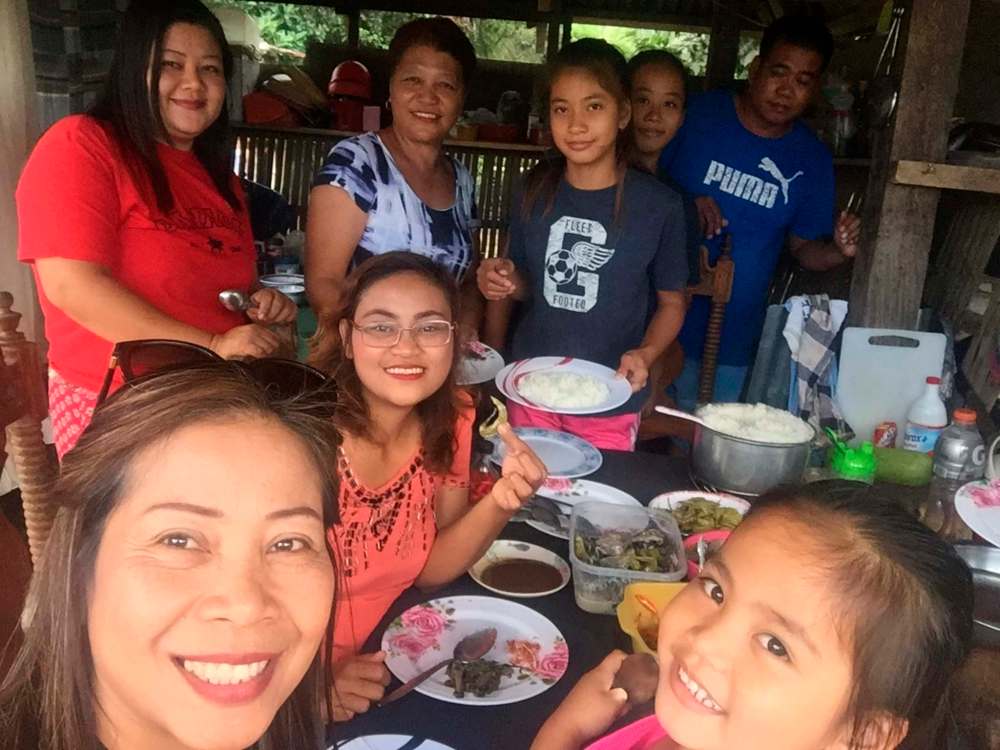
“I have an extended family; I really want to help my family, because I know how hard it is in the Philippines to survive.”
COVID-19 restrictions have only amplified how crucial these payments — called “remittance” — are, and how difficult they are to make. Back home, her children are finding it harder to support their families, and here, her husband has been forced to take fewer and shorter shifts, leaving Lania, who works as a nanny, to provide financial support to four generations of her family.
“It’s hard. My salary is not really big, and I have my parents here with me, and my husband is only working for two hours (a shift),” she said.
Lania isn’t alone — a 2017 Statistics Canada survey found 37 per cent of Canadian residents born in countries eligible to receive Official Development Assistance were sending money abroad to loved ones, with the Philippines as the top recipient of remittance from Canada.
ODA-designated nations consist of all low- and middle-income countries based on gross national income per capita as published by the World Bank. All of the least-developed countries, as defined by the United Nations, are included in the ODA-eligible country list.
The pandemic has dried up remittance payments across the world, threatening many countries already in an especially fragile state — COVID-19 was devastating in the Philippines, at the time one of the fastest-growing economies in Asia. The World Bank has projected a 14 per cent decline in the amount of money migrant workers will send abroad worldwide by 2021.
“When I send money for them, it helps. Even though it’s only $500, but I’m pretty sure it’ll help them,” Lania said.
Fadi Ennab, an instructor at the University of Winnipeg in the urban and inner-city studies program focusing on racism and migration, knows Lania’s situation all too well, through his research and his home life.
Ennab, originally from Jordan, came to Canada at 18 and has lived here for exactly half of his life. He has spent the last 10 years sending money back home to his father, whose declining health and dementia necessitated a move to a Jordanian care home.

The $1,000 Ennab sends each month, along with money sent from his sister in Calgary, is their father’s primary source of income.
“During COVID, it’s not fun to support family overseas,” he said.
“My flight overseas was cancelled since April now, that’s when I was going to visit my dad in a care home, and I haven’t been able to, and I don’t know when I’m going to be able to. So I’m only sending money, and that’s demoralizing sometimes.”
He was transitioned from full- to part-time work as a result of the pandemic, but the amount he sends to his father hasn’t changed — he’s had to pull from savings, a privilege he said he knows many fellow immigrants to Canada don’t have.
“During COVID, finances can be a bit trickier for most people — lots of immigrants and newcomers will keep sending money, even if their income is interrupted,” he said.
“There’s a determination, there’s desperation. It feels like, you’re forced to be away from family, that’s the least you could do.”
As an instructor specializing in migrant issues, Ennab said he has heard from international students who are facing a reversed version of the same problem. Some students being supported by family in countries facing economic collapse due to COVID-19 are now trapped without financial support from home or the ability to find work to support themselves.
Many of the side effects of pandemic-induced restrictions that may seem new and unfamiliar to Canadian-born residents are reflective of the immigrant experience, Ennab said.
“Racialized migrants already experience the stress of family separation, tighter pockets, high emotional stress, isolation before and after COVID,” he said.

“COVID’s just made things worse.… When we ask people to distance, these families are already experiencing distance. In fact, now I can relate more to the average mainstream Canadian, because they’re also experiencing family separation.”

That feeling of separation is familiar to Lania, who faces an uncertain future due to the same work insecurity that has plagued much of the world for the past eight months, but with the added responsibilities — and fears — of helping to keep her family afloat from the other side of the world.
“I can’t say no matter what I’ll send the money, because I don’t know what might happen to me here in Winnipeg, if my boss will continue to employ me even though there’s COVID, because there’s a lot of restrictions right now,” she said.
“But for me, as a mom, I’ll do my best to help my family in the Philippines.”
malak.abas@freepress.mb.ca
Twitter: malakabas_
Malak Abas is a city reporter at the Free Press. Born and raised in Winnipeg’s North End, she led the campus paper at the University of Manitoba before joining the Free Press in 2020. Read more about Malak.
Every piece of reporting Malak produces is reviewed by an editing team before it is posted online or published in print — part of the Free Press‘s tradition, since 1872, of producing reliable independent journalism. Read more about Free Press’s history and mandate, and learn how our newsroom operates.
Our newsroom depends on a growing audience of readers to power our journalism. If you are not a paid reader, please consider becoming a subscriber.
Our newsroom depends on its audience of readers to power our journalism. Thank you for your support.
Malak Abas is a city reporter at the Free Press. Born and raised in Winnipeg’s North End, she led the campus paper at the University of Manitoba before joining the Free Press in 2020. Read more about Malak.
Every piece of reporting Malak produces is reviewed by an editing team before it is posted online or published in print — part of the Free Press‘s tradition, since 1872, of producing reliable independent journalism. Read more about Free Press’s history and mandate, and learn how our newsroom operates.
Our newsroom depends on a growing audience of readers to power our journalism. If you are not a paid reader, please consider becoming a subscriber.
Our newsroom depends on its audience of readers to power our journalism. Thank you for your support.
Advertisement Advertise With Us
Advertisement Advertise With Us
History
Updated on Monday, November 30, 2020 8:01 AM CST: Fixes typo