

Pandemic proves devastating for First Nations
Indigenous suffer 40 per cent of deaths last month
Advertisement
Read this article for free:
or
Already have an account? Log in here »
To continue reading, please subscribe:

Digital Subscription
One year of digital access for only $205*
- Enjoy unlimited reading on winnipegfreepress.com
- Read the E-Edition, our digital replica newspaper
- Access News Break, our award-winning app
- Play interactive puzzles
*First annual payment billed as $205.00 + GST for one year. This annual subscription will automatically renew at $233.00 + GST every 52 weeks (10% off the regular annual price of $259.35). Offer available to new and qualified returning subscribers only. Cancel any time.
To continue reading, please subscribe:
Add Free Press access to your Brandon Sun subscription for only an additional
$1 for the first 4 weeks*
- Enjoy unlimited reading on winnipegfreepress.com
- Read the E-Edition, our digital replica newspaper
- Access News Break, our award-winning app
- Play interactive puzzles
*Your next Brandon Sun subscription payment will increase by $1.00 and you will be charged $17.95 plus GST for four weeks. After four weeks, your payment will increase to $24.95 plus GST every four weeks.
Read unlimited articles for free today:
or
Already have an account? Log in here »
Hey there, time traveller!
This article was published 06/06/2021 (1929 days ago), so information in it may no longer be current.
Nearly 40 per cent of the COVID-19 deaths reported in Manitoba last month were First Nations people, as the deadly virus continues to have a devastating and disproportionate impact on Indigenous communities.
Data released Friday by the Manitoba First Nations COVID-19 Pandemic Response Co-ordination Team showed that of the 78 people who died from COVID-19 in May, 31 were First Nations.
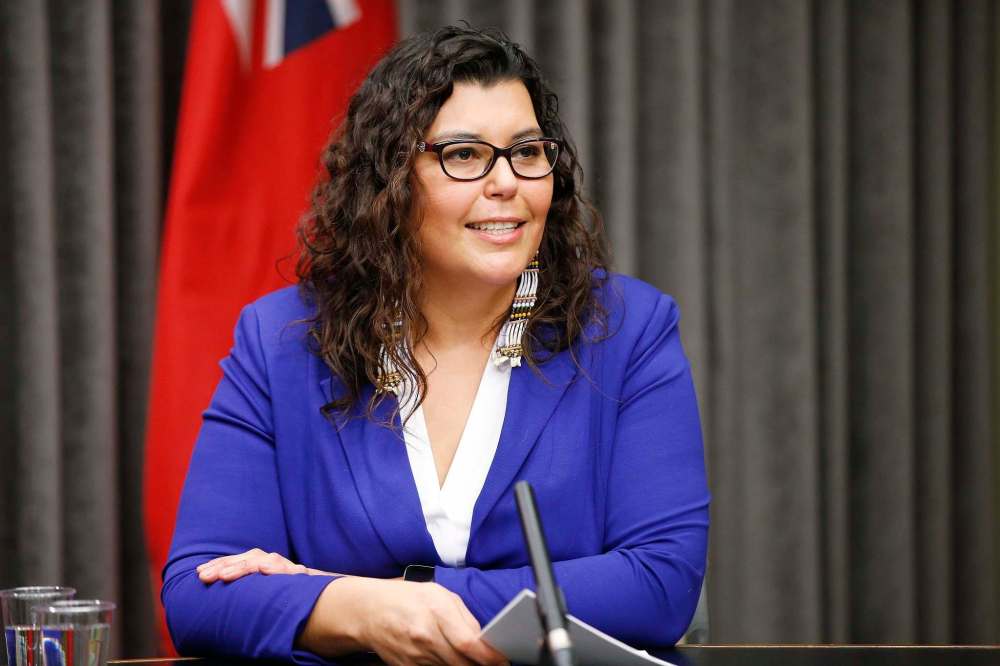
“These impacts get closer and closer to home and it’s hard when our relatives or our friends are in hospital, or have family members in hospital because of this despite those family members doing everything they’re supposed to do,” said Dr. Marcia Anderson, the public health lead for the First Nations pandemic response coordination team (PRCT).
Currently, First Nations COVID-19 patients are over-represented among people hospitalized with the disease, and as of last week accounted for up to 30 per cent of all COVID-19 admissions.
Throughout the month of May, the PRCT said 260 First Nations people needed hospital care related to the virus, the highest number reported throughout the pandemic. Of those, 86 patients required admission to an intensive care unit.
Statistics Canada estimates that First Nations, Metis and Inuit people make up about 18 per cent of the province’s total population, based on the 2016 census.
“The positioning and disproportionate impacts of COVID-19 on First Nations people is linked to and created by the same type of systemic racism that led to Brian Sinclair’s death and to Joyce Echaquan’s death,” Anderson said.
“Sometimes I feel like I’m saying the same things over and over, but we will have to keep saying the same things over and over until the action that is taken matches the urgency of the need and results in the equal outcomes that First Nations people have the right to,” Anderson said.
The virus is also having a larger impact on First Nations people who live off-reserve, with the majority of infections in the Winnipeg region and caused by a variant of concern, the response team said. About a quarter of all COVID-19 infections reported in the past week have been among First Nations individuals.
“It’s important that when we’re considering public health measures, that we are considering both the COVID and non-COVID impact of those measures on the people who experience the most marginalization within society,” Anderson said. “And ask ourselves how can we minimize those negative impacts.”
Anderson said where First Nations led responses have been deployed to address COVID-19, outcomes have improved.
“We’ve seen really good response to the Indigenous-led testing and vaccine clinics, but without Indigenous leadership in these systems, those took longer time to get going,” Anderson said.
“If we had that Indigenous leadership at the outset and structured into those systems, perhaps we could have these more responsive solutions implemented earlier.”
Meanwhile, vaccine uptake among First Nations people living in rural and urban areas is lagging behind the immunization rates on-reserve.
The latest data from the PRCT shows that 66.6 per cent of people living on a First Nations reserve had received at least one dose of the vaccine.
Melanie MacKinnon, the executive director of Ongomiizwin at the University of Manitoba and the lead for the vaccine roll out to reserves, said second doses will be complete by the end of this week.
Meanwhile, communities will receive deliveries of the Pfizer-BioNTech vaccine this week and next to offer to people aged 12 to 17, with youth clinics running until June 22.
MacKinnon said demand for vaccines for youth has been overwhelming and said that both Cross Lake First Nation and Ebb and Flow First Nation used the majority of doses allocated for youth within days.
First Nations are also able to request additional Moderna doses to offer to people who may have missed their community’s initial clinic, MacKinnon said.
“I’m really happy to see that more communities are pulling down more Moderna which is signalling some improved uptake among people who didn’t get immunized as part of the mass clinics and roll out throughout the past couple of months,” MacKinnon said.
Anderson said that immunization rates for First Nations people living off-reserve are improving due to the work of five urban Indigenous immunization clinics in Winnipeg, Brandon, Portage la Prairie and Thompson.
As of June 3, 48.3 per cent of First Nations people living off reserve had received the vaccine, and a total 61,715 First Nations people had been vaccinated (about 55 per cent of all First Nations people).
“The good news is that number grew by almost 4,000 people over the past week,” Anderson said. “Signs are encouraging.”
Anderson said further outreach activities will be necessary to get immunization rates up and noted that provincial grant money is available to fund community efforts to improve vaccine uptake.
“That could enable for example the door-to-door, block-by-block type of campaigns. Those one-on-one conversations with people, answering any questions about the vaccine, ensuring people know where they can get the vaccine I think will be helpful to bring the numbers up,” Anderson said. “Discussions are ongoing and underway around that.”

And while vaccine hesitancy is certainly a factor, Anderson said the difference between immunization rates on- and off-reserve has more to do with eligibility and access.
“The province relied exclusively on supersites with a complicated booking system for a really long time, until the opening of the urban Indigenous clinics,” Anderson said.
“I think with this enhanced accessibility we will continue to see more off-reserve First Nations people getting vaccinated too.”
danielle.dasilva@freepress.mb.ca