

Pandemic Q&A: ins and outs of face coverings
Masks can help protect others, but improper use can raise wearer's risk

Advertisement
Read this article for free:
or
Already have an account? Log in here »
To continue reading, please subscribe:

Digital Subscription
One year of digital access for only $205*
- Enjoy unlimited reading on winnipegfreepress.com
- Read the E-Edition, our digital replica newspaper
- Access News Break, our award-winning app
- Play interactive puzzles
*First annual payment billed as $205.00 + GST for one year. This annual subscription will automatically renew at $233.00 + GST every 52 weeks (10% off the regular annual price of $259.35). Offer available to new and qualified returning subscribers only. Cancel any time.
To continue reading, please subscribe:
Add Free Press access to your Brandon Sun subscription for only an additional
$1 for the first 4 weeks*
- Enjoy unlimited reading on winnipegfreepress.com
- Read the E-Edition, our digital replica newspaper
- Access News Break, our award-winning app
- Play interactive puzzles
*Your next Brandon Sun subscription payment will increase by $1.00 and you will be charged $17.95 plus GST for four weeks. After four weeks, your payment will increase to $24.95 plus GST every four weeks.
Read unlimited articles for free today:
or
Already have an account? Log in here »
Hey there, time traveller!
This article was published 04/05/2020 (2344 days ago), so information in it may no longer be current.
Editor’s Note: Longtime readers of the Winnipeg Free Press might remember a regular feature called Answers, where, in a time before Google, we answered readers’ questions. Since even Google does not have all the answers regarding the COVID-19 pandemic, reporter Alan Small will attempt to answer your novel coronavirus queries. Send your questions to coronavirusquestions@freepress.mb.ca.
QUESTION: Now that it’s recommended people wear masks to protect others, is a dust mask, like the ones people use in workshops, an OK choice?
ANSWER: Wearing any mask, whether it be a medical mask, a cloth mask or a dust mask, reduces the chance that other people will come in contact with your respiratory droplets.
A mask should be used in addition to — not as a replacement for — frequent hand-washing and physical-distancing methods to prevent the transmission of COVID-19, provincial health officials say.
Dr. Brent Roussin, the province’s chief medical officer for health, has reminded Manitobans multiple times in his briefings, a mask is there to protect others and not the person wearing it.
Masks need to fit well to be effective. Here are mask-wearing procedures provincial health officials recommend:
● Wash your hands immediately before putting it on and immediately before taking it off and again immediately after taking it off.
● Practise good hand hygiene while wearing the mask.
● Ensure your mask fits well over your nose and mouth.
● Do not share your mask with others.
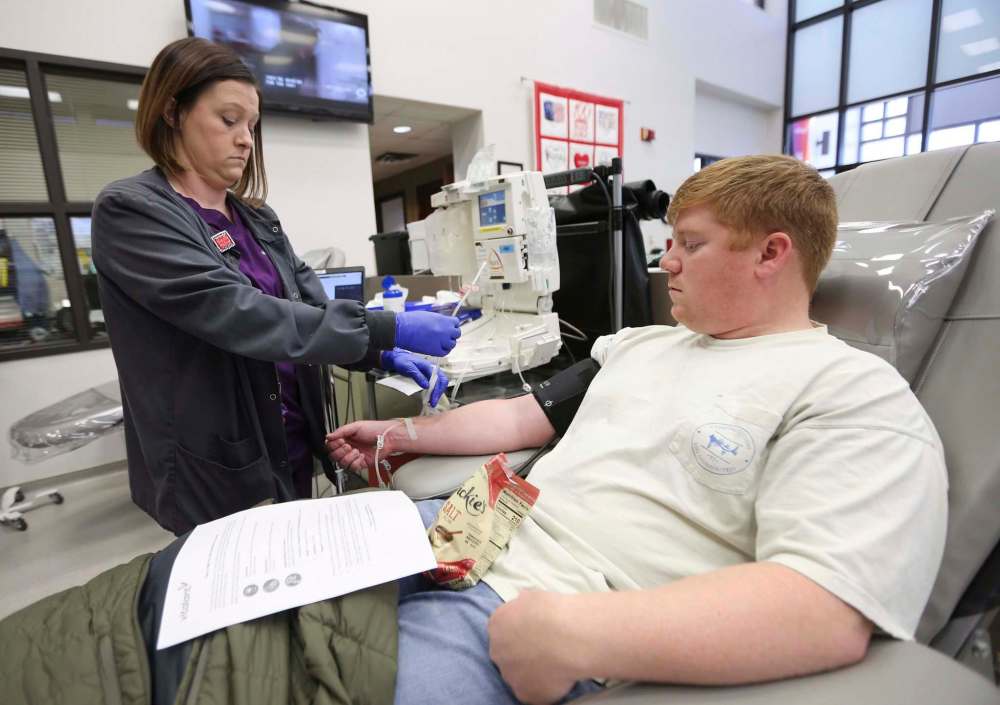
QUESTION: A reader who donates plasma once or twice a week is concerned about whether it puts them at risk of contracting COVID-19. What about those who donate blood? Should people who donate blood or plasma regularly stop donating during the pandemic?
ANSWER: Canadian Blood Services, which oversees blood donations across Canada, says current evidence and risk modelling suggest COVID-19 is not transmissible through blood and blood products, including plasma protein products, which are pharmaceutical therapies made from plasma — a blood component.
The non-profit charitable organization has strict measures in place to ensure the continued safety of its products and services related to blood, plasma, stem cells and organs and tissues, and to address the health of donors, a spokesperson says.
The agency says it has always asked all donors with flu symptoms or other illnesses to stay home, and continues to do so during the pandemic. Only healthy people are eligible to donate blood.
It has increased the frequency of cleaning within donor centres and staff continue to use products that effectively kill viruses on a variety of surfaces. Donor beds are spaced according to physical-distancing guidelines. Pamphlets will either be disposed of after being used or have been laminated and are cleaned after each use.
Employees and volunteers are prompted before entering Canadian Blood Services buildings to evaluate whether they are feeling well and will be asked not to enter the building if they are symptomatic.
Healthy individuals who enter donor centres will be asked to sanitize their hands and practise proper 20-second handwashing, as well as coughing and sneezing etiquette. They will also be reminded to avoid touching their eyes, nose and mouth and avoid close contact with others who are not feeling well.
Individuals who enter blood-donor centres displaying symptoms will be provided with a mask and asked to leave.
On March 27, CBS suspended the use of pre-donation salty snacks at donor centres and mobile events, and asks donors to eat a salty snack as well as drinking lots of water prior to arriving for their donation. Blood-donation team members will ask donors to perform muscle tension exercises during donations to prevent post-donation reactions.
QUESTION: Are privately owned RV parks in Manitoba affected by any provincial COVID-19 regulations? If so, does the province have any recommendations to RV campers?

ANSWER: Effective Monday, May 4, parks, campgrounds, yurts and vacation cabins may open if people maintain a distance of at least two metres, except for brief exchanges. This requirement will be enforceable under the provincial public-health order. Provincial guidelines for the first phase of restoring services, including RV parks, are available online.
For people heading to an RV park, campground, vacation cabin or a yurt, the province recommends taking recommended prescription drugs and medical supplies; put gas in vehicles before leaving home; pack up everything that taken to the site to leave no trace; not use local health providers unless it’s an emergency and to wear water shoes or sandals when using shower facilities.
QUESTION: A Winnipeg senior who lives at home and doesn’t have a car asks how she can go to a COVID-19 test site if she has symptoms and needs to be tested. She says she cannot afford a taxi and is afraid of cross-contamination with the driver and she has similar worries if she takes public transit. Is there a way to have someone test her at her home?
ANSWER: People with symptoms of respiratory illnesses such as a cough, sore throat, fever and runny nose, should call Health Links — Info Santé (204-788-8200 or 1-888-315-9257) or complete the province’s online screening tool to determine if COVID-19 testing is recommended and, where to go to be tested.
People who need a test and have no access to a vehicle should also call Health Links for assistance to access a health-care facility. Visit the province’s website for advice on transportation.
Alan Small
Reporter
Alan Small was a journalist at the Free Press for more than 22 years in a variety of roles, the last being a reporter in the Arts and Life section.
Our newsroom depends on a growing audience of readers to power our journalism. If you are not a paid reader, please consider becoming a subscriber.
Our newsroom depends on its audience of readers to power our journalism. Thank you for your support.
Alan Small
Reporter
Alan Small was a journalist at the Free Press for more than 22 years in a variety of roles, the last being a reporter in the Arts and Life section.
Our newsroom depends on a growing audience of readers to power our journalism. If you are not a paid reader, please consider becoming a subscriber.
Our newsroom depends on its audience of readers to power our journalism. Thank you for your support.
Advertisement Advertise With Us
Advertisement Advertise With Us