

Pandemic rewrites rules of elevator etiquette

Advertisement
Read this article for free:
or
Already have an account? Log in here »
To continue reading, please subscribe:
Monthly Digital Subscription
$1 per week for 24 weeks*
- Enjoy unlimited reading on winnipegfreepress.com
- Read the E-Edition, our digital replica newspaper
- Access News Break, our award-winning app
- Play interactive puzzles
*Billed as $4.00 plus GST every four weeks. After 24 weeks, price increases to the regular rate of $19.95 plus GST every four weeks. Offer available to new and qualified returning subscribers only. Cancel any time.
Monthly Digital Subscription
$4.99/week*
- Enjoy unlimited reading on winnipegfreepress.com
- Read the E-Edition, our digital replica newspaper
- Access News Break, our award-winning app
- Play interactive puzzles
*Billed as $19.95 plus GST every four weeks. Cancel any time.
To continue reading, please subscribe:
Add Free Press access to your Brandon Sun subscription for only an additional
$1 for the first 4 weeks*
*Your next subscription payment will increase by $1.00 and you will be charged $16.99 plus GST for four weeks. After four weeks, your payment will increase to $23.99 plus GST every four weeks.
Read unlimited articles for free today:
or
Already have an account? Log in here »
Hey there, time traveller!
This article was published 01/07/2020 (2122 days ago), so information in it may no longer be current.
Elevators may strike some people as dangerously close quarters during a pandemic, but operators are taking measures to make the up-and-down rides as safe as possible.
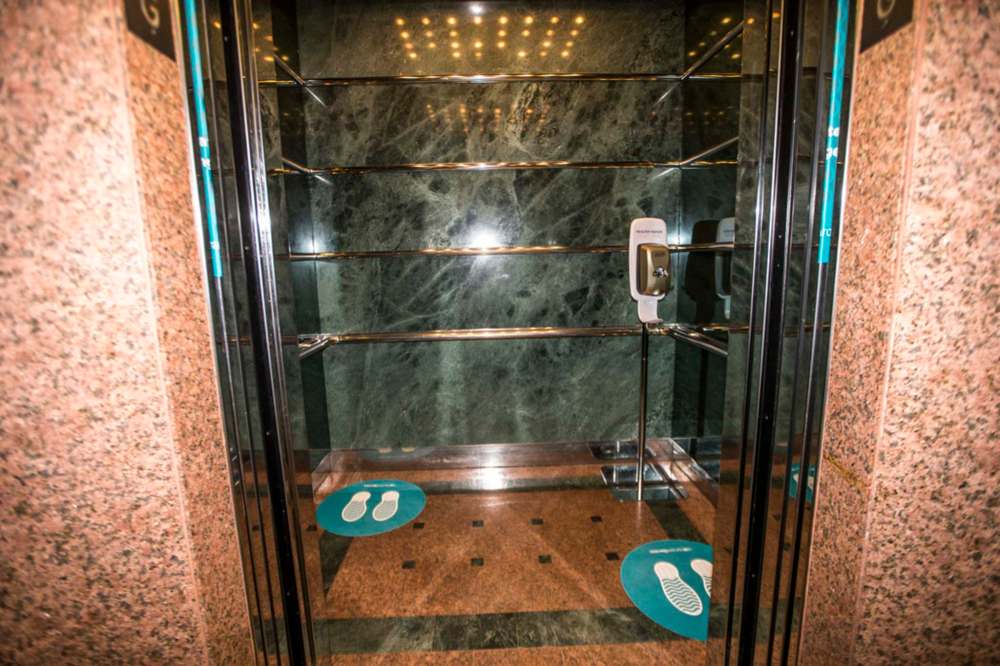
If you’re riding an elevator in the 33-storey office tower at 201 Portage Ave., you’ll have a buddy — a hand sanitizer stand.
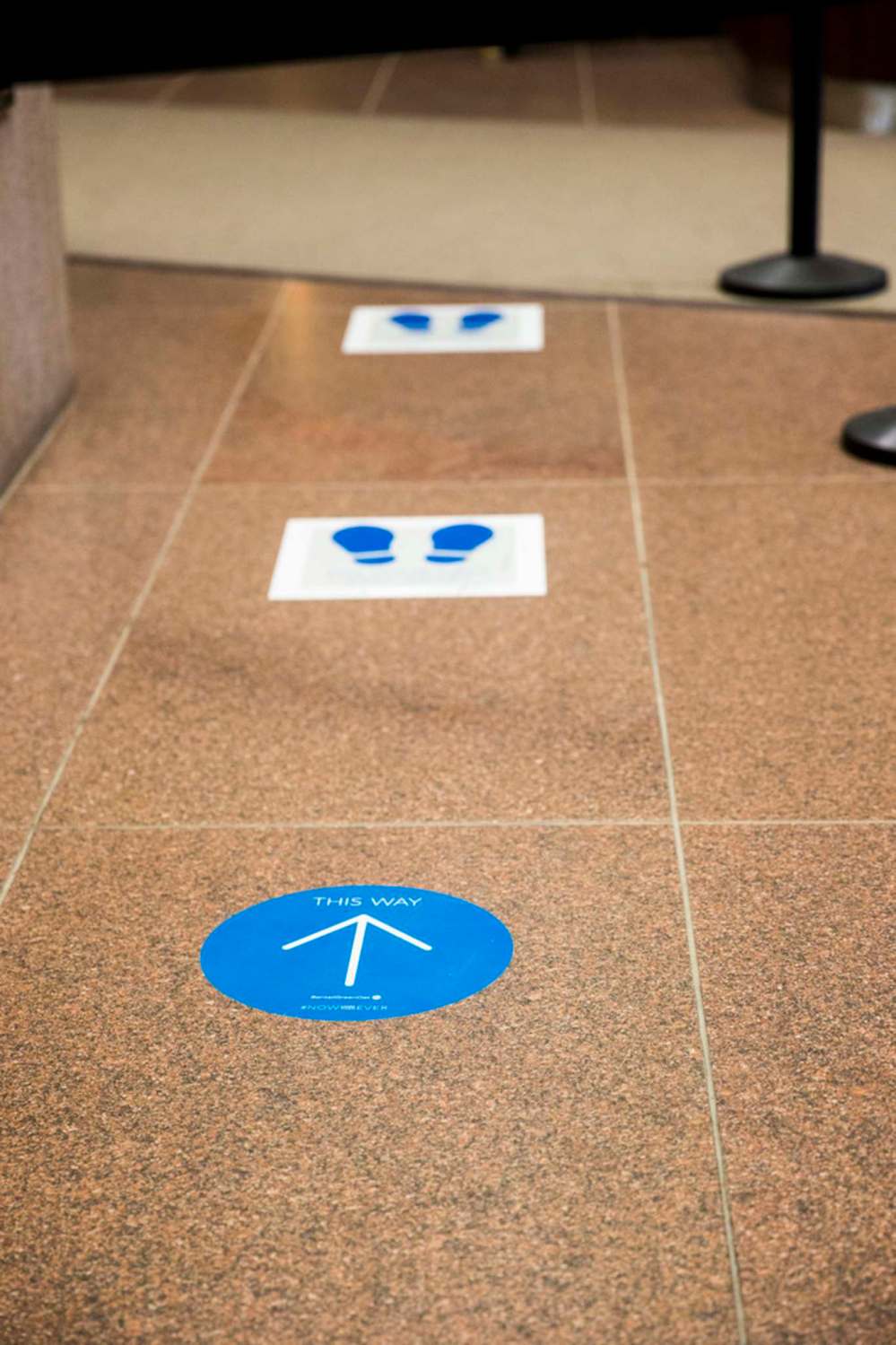
Each of the building’s 11 elevators carries a hand sanitizer pump. Elevator cars have two markers on the floor highlighting the spots its passengers must stand to maintain a two-metre distance. If you’re waiting for an elevator, and you see two people inside as the doors open, you must wait for the next one — the car is already at maximum capacity.
Across the street, the Richardson Building has similar instructions: only three people can ride together, and there’s an emphasis on hand sanitizer and following floor markings.
People often wear face masks inside cars. They bring their own or grab one from an employee handing them out near the elevators in the morning.
It’s unknown if all the precautions in elevators are necessary to prevent the spread of COVID-19, according to Jeffrey Siegel, an engineering professor at the University of Toronto whose research interests include ventilation and indoor air quality.
“The one thing we absolutely know we have to avoid is crowded places with poor ventilation and, unfortunately, that describes an elevator quite well,” Siegel said.
Even when you limit the number of people in an elevator car, you still have people in a small space with poor air flow, Siegel said. “What happens in the history of the elevator beforehand matters, too.”
If someone with COVID-19 gets on an elevator alone, sneezes or coughs, then leaves, droplets containing COVID-19 could still be in the car, Siegel said. If the elevator goes up a few floors and someone new gets on, that person could be exposed to the virus.
Siegel said he doesn’t know of any cases where people have contracted COVID-19 while inside an elevator, but that’s not surprising. “We don’t know a lot about many and most COVID cases, where they came from specifically, so I think we should definitely be cautious.”
He said when it comes to COVID-19 prevention, it’s better to be safe than sorry. Staying silent as you ride up and down floors helps, too.
“The difference in potential droplets containing the virus is much larger from talking than it is from breathing,” Siegel said. “I know it seems very anti-social.”
If people can take the stairs, it’s a good idea, he said — in addition to getting exercise, stairwells usually provide better ventilation because of fire code requirements.
Jai Gandha works on the ninth floor of 201 Portage. He said he takes the elevator around three times a day and he’s comfortable with the social-distancing protocols.
“Every time I touch anything on the elevator, my hand goes straight to the hand sanitizer,” Gandha said.

Melody Bruce uses the elevators at the Richardson Building in the morning, at lunch, and on her way home. She said she doesn’t mind wearing a face mask in the elevator.
“We have to be responsible for ourselves,” Bruce said. “Our elevator protocol is really good.”
Jan Jocelyn, who works on the 27th floor of the Richardson Building, said many people are still working from home, so it’s easier to maintain social distancing when riding the elevators. She said people have been respectful of following the rules.
“I’m feeling very safe,” she said.
gabrielle.piche@freepress.mb.ca
Gabrielle Piché reports on business for the Free Press. She interned at the Free Press and worked for its sister outlet, Canstar Community News, before entering the business beat in 2021. Read more about Gabrielle.
Every piece of reporting Gabrielle produces is reviewed by an editing team before it is posted online or published in print — part of the Free Press‘s tradition, since 1872, of producing reliable independent journalism. Read more about Free Press’s history and mandate, and learn how our newsroom operates.
Our newsroom depends on a growing audience of readers to power our journalism. If you are not a paid reader, please consider becoming a subscriber.
Our newsroom depends on its audience of readers to power our journalism. Thank you for your support.
Gabrielle Piché reports on business for the Free Press. She interned at the Free Press and worked for its sister outlet, Canstar Community News, before entering the business beat in 2021. Read more about Gabrielle.
Every piece of reporting Gabrielle produces is reviewed by an editing team before it is posted online or published in print — part of the Free Press‘s tradition, since 1872, of producing reliable independent journalism. Read more about Free Press’s history and mandate, and learn how our newsroom operates.
Our newsroom depends on a growing audience of readers to power our journalism. If you are not a paid reader, please consider becoming a subscriber.
Our newsroom depends on its audience of readers to power our journalism. Thank you for your support.
Advertisement Advertise With Us
Advertisement Advertise With Us