

Questions raised about usefulness of COVID app
Only used to notify contacts in tiny percentage of confirmed cases
Advertisement
Read this article for free:
or
Already have an account? Log in here »
To continue reading, please subscribe:
Monthly Digital Subscription
$1 per week for 24 weeks*
- Enjoy unlimited reading on winnipegfreepress.com
- Read the E-Edition, our digital replica newspaper
- Access News Break, our award-winning app
- Play interactive puzzles
*Billed as $4.00 plus GST every four weeks. After 24 weeks, price increases to the regular rate of $19.95 plus GST every four weeks. Offer available to new and qualified returning subscribers only. Cancel any time.
Monthly Digital Subscription
$4.99/week*
- Enjoy unlimited reading on winnipegfreepress.com
- Read the E-Edition, our digital replica newspaper
- Access News Break, our award-winning app
- Play interactive puzzles
*Billed as $19.95 plus GST every four weeks. Cancel any time.
To continue reading, please subscribe:
Add Free Press access to your Brandon Sun subscription for only an additional
$1 for the first 4 weeks*
*Your next subscription payment will increase by $1.00 and you will be charged $16.99 plus GST for four weeks. After four weeks, your payment will increase to $23.99 plus GST every four weeks.
Read unlimited articles for free today:
or
Already have an account? Log in here »
Hey there, time traveller!
This article was published 10/05/2021 (1810 days ago), so information in it may no longer be current.
OTTAWA — Manitobans have used the COVID Alert app to notify contacts in just 3.38 per cent of confirmed infections since the province started using the app last October.
Data obtained by the Free Press suggest Manitoba is in the middle of the pack for using the app, which raises questions about how useful it is.
COVID Alert anonymously logs when one smartphone is near another app-user’s phone for 15 minutes, using anonymized codes.
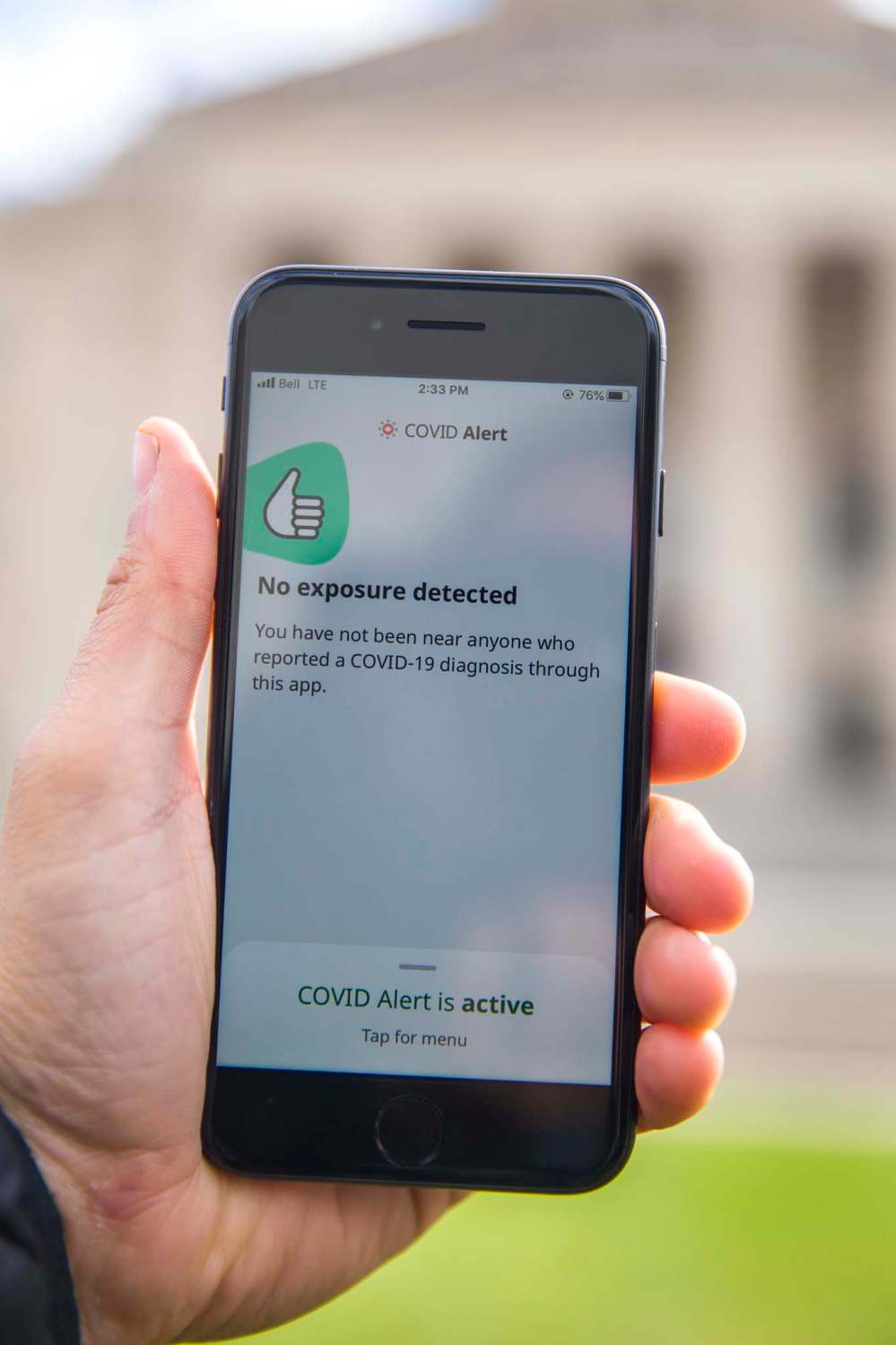
When someone tests positive for COVID-19, provincial authorities give them a password, which they enter to have the app send an alert to anyone who’s been in close contact over the past two weeks.
The alert notifies people they might have been exposed to the coronavirus, and gives them instructions on how to respond, as stipulated by their provincial government.
As of May 4, Manitoba app users had entered 1,277 of these codes, of the 37,785 cases that had been reported from when the province activated the app on Oct. 1.
In Saskatchewan, 5.24 per cent of reported cases have led to an alert since that province approved the app last September.
Quebec adopted the app last October, and just 1.8 per cent of cases reported since then have resulted in the alert app being triggered.
Meanwhile, Ontario generated a code for 4.97 per cent of cases since the app was launched in late July, amounting to 22,075 codes — but officials could not say Friday how many of those codes were actually used.
In fact, Manitoba said just 73 per cent of the 1,758 codes public-health nurses have issued have actually been put into use. That means 481 codes were never entered into the app in order to notify people, though some of the codes were generated during training.
In Saskatchewan, only 62 per cent of 3,444 generated codes have been used. That’s compared to Quebec where 96 per cent of the 5,085 issued codes were put into use.
There have been 6.5 million downloads of the COVID Alert app, representing 28 per cent uptake. That’s based on the population aged 18 and over in the nine jurisdictions using the app, representing 23 million Canadians.
Colin Furness, an epidemiologist and information-management professor at the University of Toronto, said the app is worth trying out, but is probably not designed for success.
Unlike other countries’ apps, Canadian officials focused intensely on privacy, foregoing any details for users on where and when they were exposed.
“If uptake were really high, I think we’d be talking about a lot of the false alarms,” Furness said.
For example, the Bluetooth technology could identify a contact in another room or apartment, even if there is zero chance of COVID-19 transmission through a wall.
Not knowing when someone was exposed or where they were physically located makes it impossible to tell if the exposure stemmed from an outdoor meeting, a shared bus trip or an indoor gathering, each of which would involve different risks and air quality.
“It creates a huge amount of anxiety, but you don’t know what to do,” said Furness.
He argued it would help to know when someone is exposed so that nurses can advise whether it’s too early or late to get a COVID-19 test.
Furness said contact tracing involves sifting through numerous situations to identify possible exposures, which he said is akin to finding a needle in a haystack, even in the best circumstances.
“The app contributes a lot of haystack. How many needles? Not sure,” he said.
Meanwhile, the app only logs encounters that last 15 minutes, even though provinces are treating shorter encounters as exposures, due to more contagious coronavirus variants.

On top of that, Furness said the poor uptake might be the nature of an app aimed at telling someone they might have a highly contagious disease that has killed almost 25,000 Canadians.
“People will play Candy Crush like crazy. People will download apps and use them if they’re entertaining — the COVID (Alert) app is not that. It’s this possible bearer of bad news.”
Furness said he downloaded the app itself, and hopes it will help inform future pandemics, heaven forbid.
“Maybe the biggest use of the app will be learning how to do it more effectively next time.”
dylan.robertson@freepress.mb.ca