

Rural residents who use U.S. doctors feeling frustrated
Quarantines tough on medical travellers

Advertisement
Read this article for free:
or
Already have an account? Log in here »
To continue reading, please subscribe:
Monthly Digital Subscription
$1 per week for 24 weeks*
- Enjoy unlimited reading on winnipegfreepress.com
- Read the E-Edition, our digital replica newspaper
- Access News Break, our award-winning app
- Play interactive puzzles
*Billed as $4.00 plus GST every four weeks. After 24 weeks, price increases to the regular rate of $19.95 plus GST every four weeks. Offer available to new and qualified returning subscribers only. Cancel any time.
Monthly Digital Subscription
$4.99/week*
- Enjoy unlimited reading on winnipegfreepress.com
- Read the E-Edition, our digital replica newspaper
- Access News Break, our award-winning app
- Play interactive puzzles
*Billed as $19.95 plus GST every four weeks. Cancel any time.
To continue reading, please subscribe:
Add Free Press access to your Brandon Sun subscription for only an additional
$1 for the first 4 weeks*
*Your next subscription payment will increase by $1.00 and you will be charged $16.99 plus GST for four weeks. After four weeks, your payment will increase to $23.99 plus GST every four weeks.
Read unlimited articles for free today:
or
Already have an account? Log in here »
Hey there, time traveller!
This article was published 01/02/2021 (1864 days ago), so information in it may no longer be current.
A Manitoba couple doesn’t want to be forced into lockdown every time they get their medication.
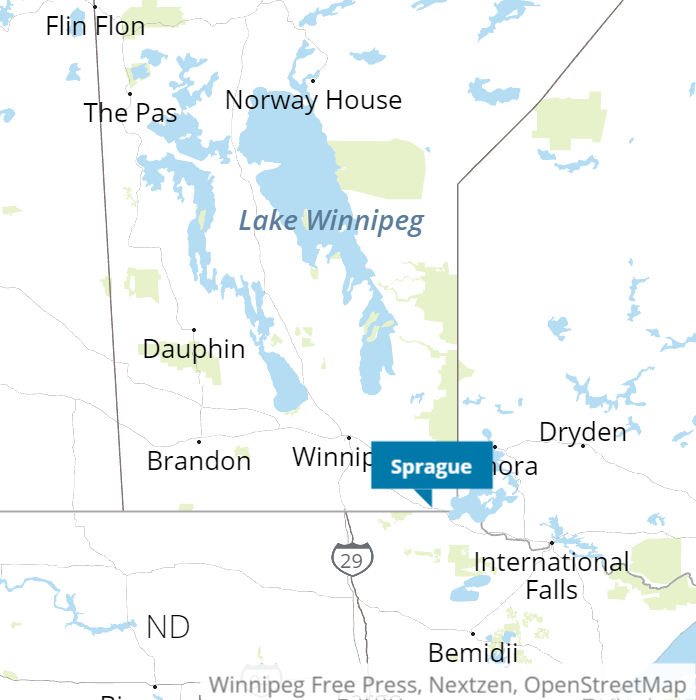
Donna Bartinski, 80, and her 88-year-old husband Mike, longtime residents of Sprague, have had a family doctor in Roseau, Minn., for decades.
Over the years, as the couple has been treated for heart conditions and cancer, they have grown used to travelling 20 minutes south of the Canada-U.S. border for checkups, prescriptions and other health-care needs thanks to a long-standing agreement with U.S.-based Altru Health.
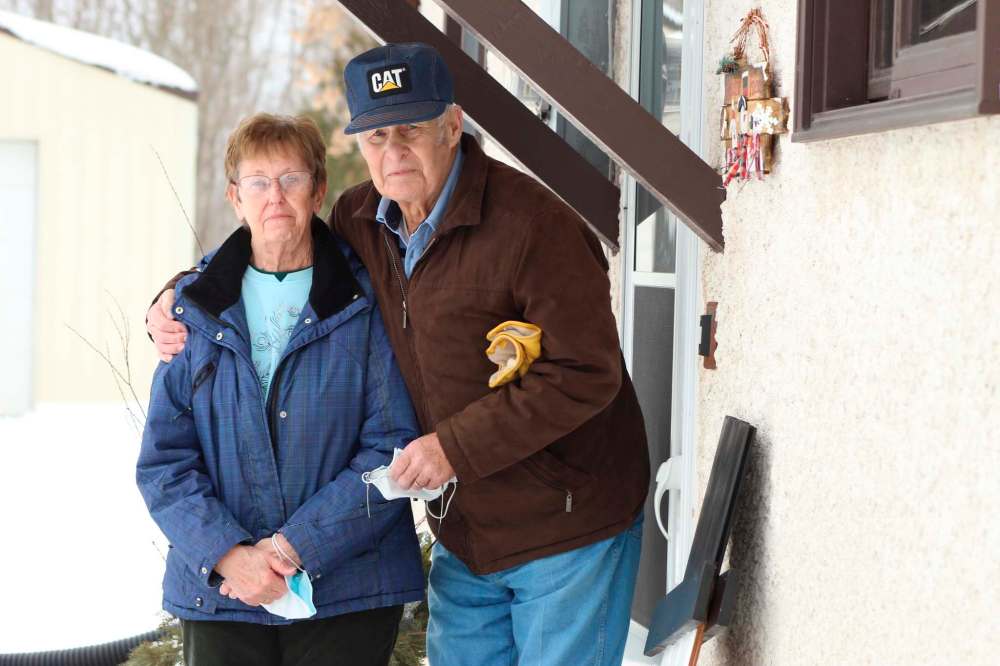
In recent months, however, they have put off their regularly scheduled appointments after the Canada Border Services Agency began mandating 14-day quarantines for returning medical travellers.
“I’ve had to cancel two appointments because I don’t want to be quarantined all the time,” Donna Bartinski said.
The couple travelled to Roseau at the end of November to pick up a three-month supply of their medications and were asked to quarantine at home for 14 days upon their return.
In that time, the pair put together puzzles, answered calls from the federal health department and RCMP, and had a friend in Sprague drop off mail and groceries in a cooler at the edge of their property, Bartinski said, but the time spent on lockdown was mentally exhausting.
“You can’t leave your yard, you can’t go for a drive,” Bartinski said of her time in lockdown. “You get very depressed.”
To avoid repeated quarantines, Bartinski’s husband cancelled a doctor’s appointment in December and will likely cancel another in early February so the couple will be able to travel south and pick up another round of prescriptions at the end of the month.
Before October, Piney residents had been able to travel for medical appointments without a mandated quarantine, but Canada Border Services began enforcing the stay-at-home orders without warning in mid-fall, RM of Piney Reeve Wayne Anderson said.
“Suddenly our lives are just turned upside down,” he said in an interview. “Everybody is really scared to do anything.”
The next-closest options for health care on the Canadian side of the border are in Steinbach or Winnipeg, but those facilities are farther away and come with significantly longer wait times.
“Steinbach is an hour and a half away from us. There’s no way we can get a family doctor in Steinbach right now because they’re just all booked,” Bartinski said.
The remote community has had ties to the south side of the border for generations, Anderson said. The Altru Agreement, which allows Piney residents to seek provincially-covered primary and emergency care at LifeCare Centers in Roseau and Warroad, Minn., was struck more than 20 years ago to make life easier on southern Manitoba residents. Now, Anderson feels the federal government is turning a blind eye to the community’s needs.
“We’d settled upon the best option for people in southeast Manitoba… but now, with the border closures, all of our plans are in suspension right now,” he said.
“I don’t get how border services made this ruling. It doesn’t make sense to me.”
Ted Falk, the Conservative member of Parliament for Provencher, said Friday he has been in contact with federal ministers and the provincial government to secure an exemption for health-care-related travel under the agreement — so far to no avail.
“These are folks that are no different from people who, on a daily basis, cross the border for employment,” said Falk.
“A lot of them are putting themselves at risk by delaying appointments or surgeries or procedures or treatments.”
Falk said he has been told exemptions will not be granted to prevent the spread of COVID-19 and to avoid further “health crisis.”
“But what they don’t realize is that they’re creating different health issues and maybe even more significant health issues,” Falk said.
While the provincial government has recently called for stricter border security measures in light of new COVID-19 variants across the world, Premier Brian Pallister and provincial health ministers have thrown their support behind the Piney community.
“The Manitoba government continues to raise this issue with the federal government, who are ultimately responsible for international border crossings,” Health Minister Heather Stefanson said in a statement to the Free Press.
“It is our hope that this issue can be resolved soon so that residents of Piney and area are once again able to access their primary health-care providers under the Altru Agreement.”
Canada’s border services won’t budge. Exemptions to the order granted prior to October were a mistake, a representative for CBSA said in an email. Now, border services officers “have received clarification and are applying the exemption according to its intended application.”
While the current federal border closure orders — in effect until Feb. 21 — include exemptions for “non-discretionary” travel, including crossing the border for work, supply chain services, immediate medical care, or shopping for essential goods like medication, it is up to border services agents to make the final call.

In the meantime, residents such as Bartinski are growing increasingly frustrated with the government’s rules.
“It makes no sense for us that we can’t go over, yet essential workers can go over there,” Bartinski said.
“Isn’t our health essential?”
julia-simone.rutgers@freepress.mb.ca
Twitter: @jsrutgers
Julia-Simone Rutgers is the Manitoba environment reporter for the Free Press and The Narwhal. She joined the Free Press in 2020, after completing a journalism degree at the University of King’s College in Halifax, and took on the environment beat in 2022. Read more about Julia-Simone.
Julia-Simone’s role is part of a partnership with The Narwhal, funded by the Winnipeg Foundation. Every piece of reporting Julia-Simone produces is reviewed by an editing team before it is posted online or published in print — part of the Free Press‘s tradition, since 1872, of producing reliable independent journalism. Read more about Free Press’s history and mandate, and learn how our newsroom operates.
Our newsroom depends on a growing audience of readers to power our journalism. If you are not a paid reader, please consider becoming a subscriber.
Our newsroom depends on its audience of readers to power our journalism. Thank you for your support.
Julia-Simone Rutgers is the Manitoba environment reporter for the Free Press and The Narwhal. She joined the Free Press in 2020, after completing a journalism degree at the University of King’s College in Halifax, and took on the environment beat in 2022. Read more about Julia-Simone.
Julia-Simone’s role is part of a partnership with The Narwhal, funded by the Winnipeg Foundation. Every piece of reporting Julia-Simone produces is reviewed by an editing team before it is posted online or published in print — part of the Free Press‘s tradition, since 1872, of producing reliable independent journalism. Read more about Free Press’s history and mandate, and learn how our newsroom operates.
Our newsroom depends on a growing audience of readers to power our journalism. If you are not a paid reader, please consider becoming a subscriber.
Our newsroom depends on its audience of readers to power our journalism. Thank you for your support.
Advertisement Advertise With Us
Advertisement Advertise With Us
History
Updated on Monday, February 1, 2021 9:28 AM CST: Minor headline change
Updated on Monday, February 1, 2021 10:32 AM CST: Minor copy editing changes