

Visits cut, transfers rise as staff cases press health system
Advertisement
Read this article for free:
or
Already have an account? Log in here »
To continue reading, please subscribe:

Digital Subscription
One year of digital access for only $205*
- Enjoy unlimited reading on winnipegfreepress.com
- Read the E-Edition, our digital replica newspaper
- Access News Break, our award-winning app
- Play interactive puzzles
*First annual payment billed as $205.00 + GST for one year. This annual subscription will automatically renew at $233.00 + GST every 52 weeks (10% off the regular annual price of $259.35). Offer available to new and qualified returning subscribers only. Cancel any time.
To continue reading, please subscribe:
Add Free Press access to your Brandon Sun subscription for only an additional
$1 for the first 4 weeks*
- Enjoy unlimited reading on winnipegfreepress.com
- Read the E-Edition, our digital replica newspaper
- Access News Break, our award-winning app
- Play interactive puzzles
*Your next Brandon Sun subscription payment will increase by $1.00 and you will be charged $17.95 plus GST for four weeks. After four weeks, your payment will increase to $24.95 plus GST every four weeks.
Read unlimited articles for free today:
or
Already have an account? Log in here »
Hey there, time traveller!
This article was published 30/12/2021 (1720 days ago), so information in it may no longer be current.
With more than 400 workers sick with COVID-19, Manitoba health-care leaders say hospital and care home visitation will be paused, patient transfers will increase, and some services could be reduced to handle an anticipated surge in admissions.
As the Omicron variant rips through the community, Shared Health chief executive officer Adam Topp said new COVID-19 wards are being readied across the province to accept patients who may need hospital care.
Manitoba posted a daily record of 1,123 new infections Thursday.
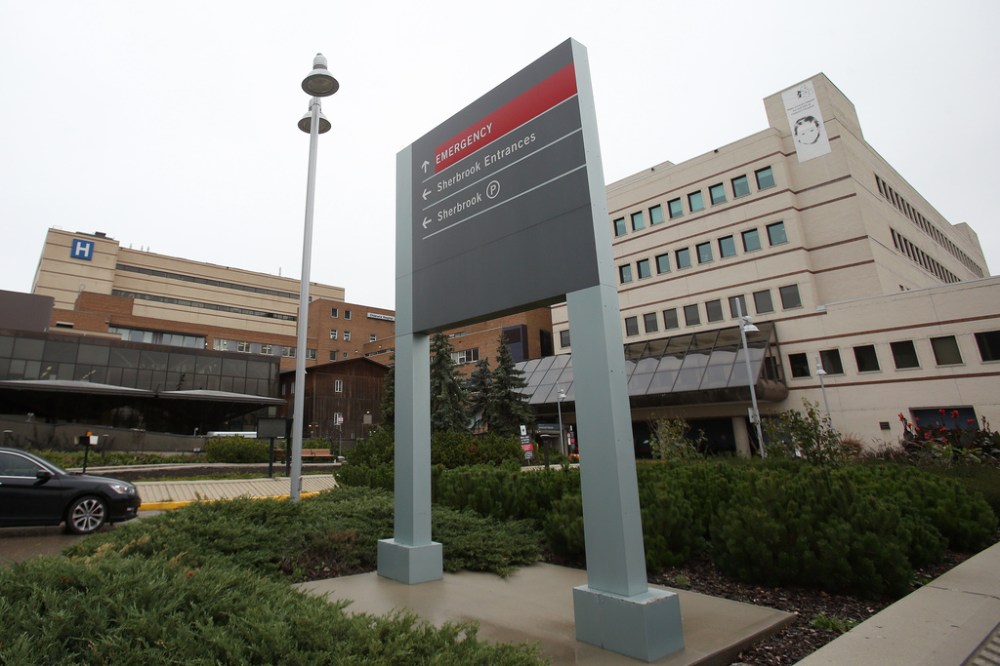
The number of COVID-19 patients admitted to hospital increased by 32 per cent over last week, with that trend expected to climb as the days and weeks pass, Topp said.
“We’ve seen more patients who are in need of medicine admission to hospital, not ICU admission,” he said. “Many of these patients are vaccinated and are therefore protected against the worst outcomes of the virus.”
Transfers will be required as stable COVID-19 patients are moved around the province, Topp said. Seven patients were moved to Brandon from Winnipeg in the past week.
To date, 147 patients of all types have been moved out of Winnipeg to make space in high acuity hospitals, including 40 in the past week, Topp said.
Planning also continues to incrementally increase the number of critical care beds; a total of 113 were available in Manitoba hospitals as of Thursday, he said.
At this time, Shared Health is planning for a worst-case scenario with intensive care admissions similar to the third COVID-19 wave, Topp said.
During the third wave, a total of 57 critically ill COVID-19 patients were flown out of province for treatment.
Topp said he does not anticipate other provinces will be able to assist Manitoba this time around; however, he anticipates ICU admission rates to be somewhat less than previous waves, given early reports the Omicron variant may cause less severe disease.
“I’m confident that we have the plans in place to deal with what we’re going to see,” Topp said.
Shared Health will rely on patient transfers, alternative models of care, reduction on some non-COVID-19 services, and being able to recruit staff from the Canadian Red Cross to both expand capacity and supplement staffing levels, said chief nursing officer Lanette Siragusa.
A number of health-care centres have already experienced significant disruptions, though, with workers off sick. Hubs in Leaf Rapids and Gillam had been closed earlier this week due to staff illness, while diagnostic services in Roblin have been interrupted.
Between Dec. 19 and 25, 418 workers were out sick with COVID-19, a nearly seven-fold increase from the week prior, Siragusa said, adding it is estimated about half of the workers were exposed to the virus in the community.
The latest figures included 96 nurses and nursing students and 49 physicians or physicians in training. The majority had not yet received a booster shot of the COVID-19 vaccine.
“The health regions are closely monitoring sick calls and will be redeploying resources as needed to ensure essential services are maintained,” Siragusa said.

Shared Health has not made a decision on whether or not to allow COVID-19-positive staff to work if they’re well enough, Topp said. The frequency of rapid antigen testing for unvaccinated health-care workers will not be increased, he noted.
General visitation to hospitals and personal care homes is also being temporarily suspended.
“Only essential care providers and designated family caregivers and select exceptions will be able to visit in health-care facilities for the immediate future as we make every effort to limit the spread of this virus in our communities,” Siragusa said.
The provincial government needs to increase public health measures to preserve health-care capacity, said Opposition NDP Leader Wab Kinew.
“The concern that we have is that those rising hospital admissions we’re seeing right now, that’s based on when the case counts were in the 200-300 range, so what’s going to happen in a week or so from now, after multiple days of cases near 1,000 per day?” he said.
Kinew called on the government to develop and publish a triage protocol in case health-care resources become so overwhelmed services cannot be provided to all in need.

“It would help to ensure that decisions around health care are being made with the big picture kept in mind and not just unfairly treating those on the front lines of our health-care system,” he said.
Siragusa said her team is focused on building capacity in the health-care system to meet demand and, to her knowledge, Shared Health has not developed a triage protocol but will work with clinical providers if they have concerns.
Liberal Leader Dougald Lamont said the provincial government has called for Manitoba to be moved to code red in its pandemic response, among other measures, and to develop a triage protocol on a number of occasions.
“Yet, somehow we are still not even there yet,” Lamont said in a statement. “The PCs have actively cut and disrupted the health-care system during the pandemic and we are seeing the direct results.”
danielle.dasilva@freepress.mb.ca
History
Updated on Thursday, December 30, 2021 7:51 PM CST: Clarifies province planning for worst-case scenario akin to third wave