

Japan lifts coronavirus emergency in all remaining areas
Advertisement
Read this article for free:
or
Already have an account? Log in here »
To continue reading, please subscribe:
Digital Subscription
One year of digital access for only $1.44 a week*
- Enjoy unlimited reading on winnipegfreepress.com
- Read the E-Edition, our digital replica newspaper
- Access News Break, our award-winning app
- Play interactive puzzles
*Billed as $5.77 plus GST every four weeks. After 52 weeks, price increases to the regular rate of $19.95 plus GST every four weeks. Offer available to new and qualified returning subscribers only. Cancel any time.
To continue reading, please subscribe:
Add Free Press access to your Brandon Sun subscription for only an additional
$1 for the first 4 weeks*
- Enjoy unlimited reading on winnipegfreepress.com
- Read the E-Edition, our digital replica newspaper
- Access News Break, our award-winning app
- Play interactive puzzles
*Your next Brandon Sun subscription payment will increase by $1.00 and you will be charged $17.95 plus GST for four weeks. After four weeks, your payment will increase to $24.95 plus GST every four weeks.
Read unlimited articles for free today:
or
Already have an account? Log in here »
Hey there, time traveller!
This article was published 25/05/2020 (2196 days ago), so information in it may no longer be current.
TOKYO – Japanese Prime Minister Shinzo Abe lifted a coronavirus state of emergency in Tokyo and four other remaining areas on Monday, ending the restrictions nationwide as businesses begin to reopen.
Abe also unveiled a plan for a new stimulus package to support businesses hit by the pandemic.
Experts on a government-commissioned panel approved the lifting of the emergency in Tokyo, neighbouring Kanagawa, Chiba and Saitama prefectures, and in Hokkaido to the north, which had more cases and remained under the emergency declaration after it was removed in most of Japan earlier this month.
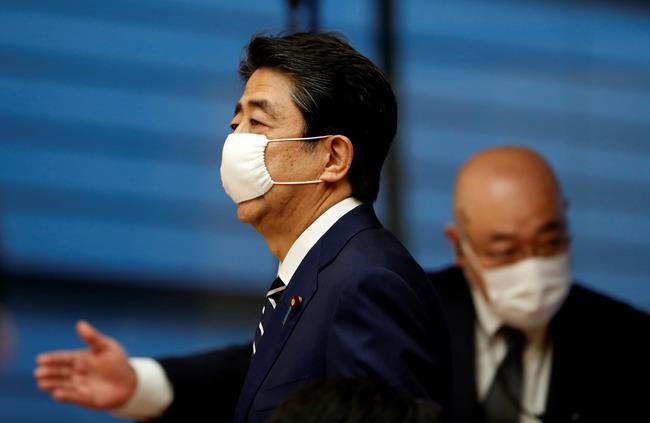
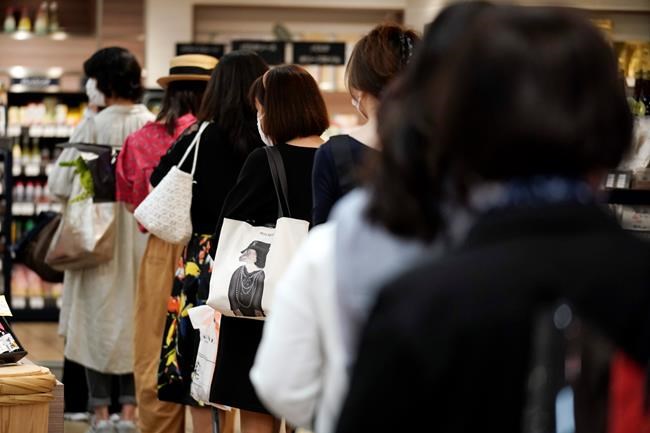
Under the emergency, people were asked to stay at home and non-essential businesses were requested to close or reduce operations, but there was no enforcement. Since May 14, when the measures were lifted in most of Japan, more people have been leaving their homes and stores have begun reopening.
Japan, with about 16,600 confirmed coronavirus cases and about 850 deaths, has so far avoided a large outbreak like those experienced in the U.S. and Europe despite its softer restrictions.
“We were able to bring the outbreak nearly under control in just a month and a half in a uniquely Japanese way” without enforcing measures with penalties, Abe said. “We demonstrated the power of the ‘Japan model.’”
But the world’s third largest economy has fallen into a recession, and public discontent over Abe’s handling of the outbreak has sent his support ratings tumbling. Recent media surveys show public support for his Cabinet has plunged below 30%, the lowest since he returned to office in December 2012.
Abe said the lifting of the emergency does not mean the end of the outbreak. He said the goal is to balance preventive measure and the economy until vaccines and effective drugs become available.
”Our goal is to create a new normal,” he said. “We need a new approach to resume our daily social and economic activity.”
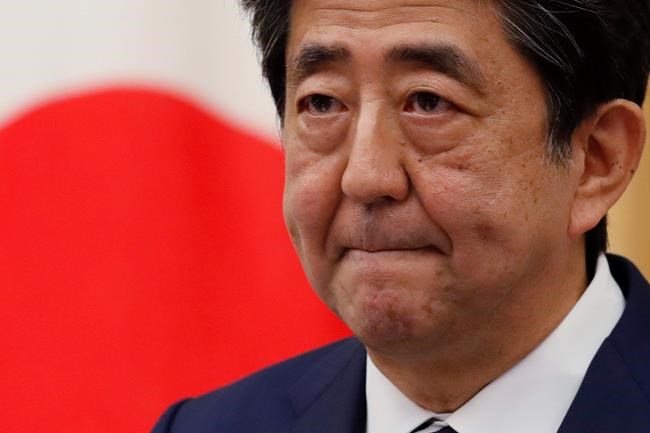
Abe also announced a new stimulus plan worth about 100 trillion yen ($930 billion) to provide financial support for companies hit by the pandemic. Cabinet approval of a second supplementary budget to fund the additional stimulus is expected later this week.
Combined with an earlier 117 trillion yen stimulus, the amount of spending will be more than 200 trillion yen ($1.9 trillion), he said. The new package will include loan programs to reduce the burden of rent for store owners and subsidies for local governments to step up regional measures.
Abe declared the state of emergency on April 7 in several parts of Japan including Tokyo, expanded it to the entire nation 10 days later, and then extended it until the end of May.

On Monday, Matsuya Ginza department store, a landmark in the posh Tokyo shopping district, resumed operation after being closed for seven weeks. Sales staff wearing plastic face shields welcomed customers with bows but no verbal greetings under new guidelines.
Economy Minister Yasutoshi Nishimura said earlier Monday that recent data suggest that infections have slowed enough and pressure on the medical system has fallen sufficiently to allow a gradual resumption of social and economic activity. He said Tokyo, Kanagawa and Hokkaido, where the number of infections is still fluctuating, will be watched closely.
Individual prefectures are allowed to impose their own measures. Tokyo Gov. Yuriko Koike said last week that the capital will reopen in three phases starting with schools, libraries, museums, and longer service hours for restaurants. She said theatres, sports facilities and other commercial establishments will be next, with nightclubs, karaoke and live music houses in the final phase.
___
Follow Mari Yamaguchi on Twitter at https://www.twitter.com/mariyamaguchi