

Manitoba requiring travellers from other provinces to self-isolate for COVID-19
Advertisement
Read this article for free:
or
Already have an account? Log in here »
To continue reading, please subscribe:
Digital Subscription
One year of digital access for only $1.44 a week*
- Enjoy unlimited reading on winnipegfreepress.com
- Read the E-Edition, our digital replica newspaper
- Access News Break, our award-winning app
- Play interactive puzzles
*Billed as $5.77 plus GST every four weeks. After 52 weeks, price increases to the regular rate of $19.95 plus GST every four weeks. Offer available to new and qualified returning subscribers only. Cancel any time.
To continue reading, please subscribe:
Add Free Press access to your Brandon Sun subscription for only an additional
$1 for the first 4 weeks*
- Enjoy unlimited reading on winnipegfreepress.com
- Read the E-Edition, our digital replica newspaper
- Access News Break, our award-winning app
- Play interactive puzzles
*Your next Brandon Sun subscription payment will increase by $1.00 and you will be charged $17.95 plus GST for four weeks. After four weeks, your payment will increase to $24.95 plus GST every four weeks.
Read unlimited articles for free today:
or
Already have an account? Log in here »
Hey there, time traveller!
This article was published 26/01/2021 (2096 days ago), so information in it may no longer be current.
WINNIPEG – The Manitoba government is expanding its travel restrictions to require all domestic travellers to self-isolate for 14 days after entering the province.
Since last June, only people arriving from areas east of Terrace Bay in northern Ontario have been subject to the requirement.
But, starting Friday, all out-of-province arrivals will be covered by the public-health measure to help fight the spread of COVID-19.
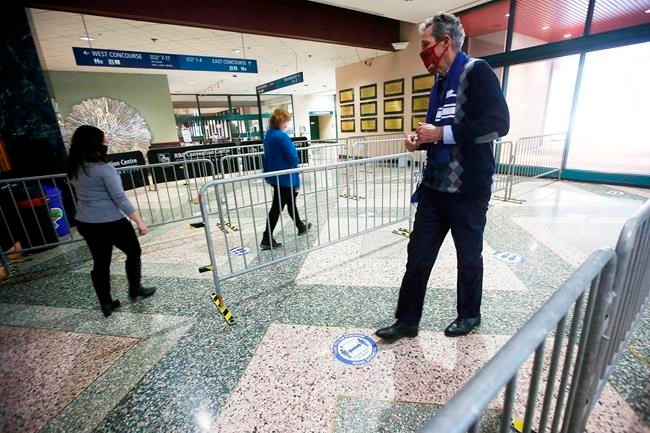
“This is being done out of an abundance of caution to protect Manitobans,” Premier Brian Pallister said Tuesday.
The move is needed because of the growing spread of novel coronavirus variants and because of delays in vaccine supplies, he said.
There will be ongoing exceptions for people travelling for essential work and medical care, and a new exemption for residents of border communities who cross into Saskatchewan or Ontario for necessities.
Pallister also called on the federal government to tighten rules governing international travellers. He said a ban on non-essential trips, as suggested by Quebec Premier Francois Legault last week, should be on the table.
“We believe that a total travel ban may be something the federal government needs to consider seriously,” Pallister said.
“I respect that the federal government has to make this call and that’s why I’m not trying to be overly prescriptive with what Manitoba wants. … I’m simply adding my voice to those of the premiers who have said, ‘Make a decision on this and doing nothing is not an option.'”
Pallister also revealed that he had disciplined James Teitsma, a Progressive Conservative caucus member, who travelled with his family to British Columbia in December.
The vacation did not contravene any formal public-health orders, but went against advice to avoid non-essential travel.
Pallister did not say what discipline Teitsma was subjected to, and Teitsma did not return requests for comment. He sits on cabinet and Legislature committees and receives extra pay as chairman of one.
The premier’s office later issued a statement that said one of Teitsma’s committee appointments was revoked as part of a cabinet shuffle in early January. A recently updated list of members of the cabinet committee on economic growth no longer includes Teitsma’s name.
Manitoba’s COVID-19 case count continued its downward trend Tuesday. Health officials reported 92 additional cases and five deaths.
Numbers have been dropping since late fall, shortly after the province brought in tight restrictions on public gatherings and store openings. Some of the measures were eased on the weekend to allow small social gatherings in private homes and non-essential store openings with limited capacity.
“It’s trending the right way again, but we still have a number of people in hospital … so it still is a burden on the acute-care system,” said Dr. Jazz Atwal, acting deputy chief public health officer.
Opposition NDP Leader Wab Kinew said he supports the government’s expanded travel restrictions, but said the province must build up intensive care units, which are running well above pre-pandemic capacity.
“Let’s use this time to make the investments in our health care system so that we can withstand what’s coming, potentially, as the pandemic drags on,” Kinew said.
This report by The Canadian Press was first published Jan. 26, 2021