

Putin to get coronavirus vaccine shot in Russia on Tuesday
Advertisement
Read this article for free:
or
Already have an account? Log in here »
To continue reading, please subscribe:
Digital Subscription
One year of digital access for only $1.44 a week*
- Enjoy unlimited reading on winnipegfreepress.com
- Read the E-Edition, our digital replica newspaper
- Access News Break, our award-winning app
- Play interactive puzzles
*Billed as $5.77 plus GST every four weeks. After 52 weeks, price increases to the regular rate of $19.95 plus GST every four weeks. Offer available to new and qualified returning subscribers only. Cancel any time.
To continue reading, please subscribe:
Add Free Press access to your Brandon Sun subscription for only an additional
$1 for the first 4 weeks*
- Enjoy unlimited reading on winnipegfreepress.com
- Read the E-Edition, our digital replica newspaper
- Access News Break, our award-winning app
- Play interactive puzzles
*Your next Brandon Sun subscription payment will increase by $1.00 and you will be charged $17.95 plus GST for four weeks. After four weeks, your payment will increase to $24.95 plus GST every four weeks.
Read unlimited articles for free today:
or
Already have an account? Log in here »
Hey there, time traveller!
This article was published 22/03/2021 (1902 days ago), so information in it may no longer be current.
MOSCOW – President Vladimir Putin said he will get a coronavirus vaccine shot on Tuesday, several months after widespread vaccination started in Russia.
Kremlin opponents have criticized Putin for not getting vaccinated amid a comparatively slow rollout of the shot in Russia, arguing that his reluctance is contributing to the already extensive hesitance about the vaccine. Russia, where only 4.3% of the 146-million population have received at least one dose, lags behind a number of countries in terms of the vaccination rate.
Surveys by Russia’s top independent pollster Levada Center have shown that a number of Russians reluctant to get vaccinated with Sputnik V has grown in recent months — to 62% in February from 58% in December. The Kremlin has said it doesn’t see a connection between Putin not getting vaccinated and public trust in the Russian COVID-19 vaccine.
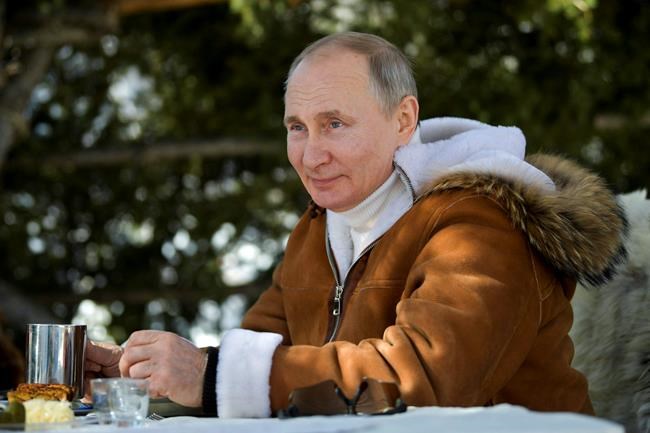
Putin, 68, told a meeting with government officials and vaccine developers on Monday that he will get his shot “tomorrow,” without specifying which coronavirus vaccine out of the three authorized for use in Russia he will take.
Russian authorities have given regulatory approval to three domestically developed shots. Sputnik V has been approved last August with much fanfare at home and criticism abroad, because at the time it had only been tested on a few dozen people.
But a recent study published in British medical journal The Lancet showed the Sputnik V is 91% effective and appears to prevent inoculated individuals from becoming severely ill with COVID-19, although it’s still unclear if the vaccine can prevent the spread of the disease.
Two other Russian vaccines, EpiVacCorona and CoviVac, have also received regulatory approval before completing late-stage trials experts say are necessary to ensure their safety and effectiveness in line with established scientific protocol. EpiVacCorona is still undergoing these trials, while CoviVac was to begin them in March. No data on efficacy of these two vaccines have been released.
Putin’s spokesman Dmitry Peskov also wouldn’t say which one of the three Putin will take on Tuesday, saying only that “all of them are good and reliable.”
According to the Russian president, 6.3 million people in Russia have already received at least one shot, and more than 4.3 million have had two doses.
Putin said that 60% of Russian adults need to be vaccinated in order to achieve herd immunity, which requires a total of 69.8 million vaccines. As of March 17, around 8.9 million two-dose sets of Sputnik V have been released into circulation in Russia, as well as over 115,000 two-dose sets of EpiVacCorona, the Russian leader said.
“Today we can confidently say … that the Russian vaccines are absolutely reliable and safe,” Putin said. “It is an absolute success of our scientists and specialists.”
Putin and his spokesman have been repeatedly asked why the president hasn’t been vaccinated so far. In December, the Russian leader said Sputnik V wasn’t being recommended to people of a certain age, adding that “vaccines have not yet reached people like me.”
At the time, the shot was only being offered to people ages 18 to 60, but in less then two weeks after Putin’s remarks Russian health authorities cleared the vaccine for those older than 60.
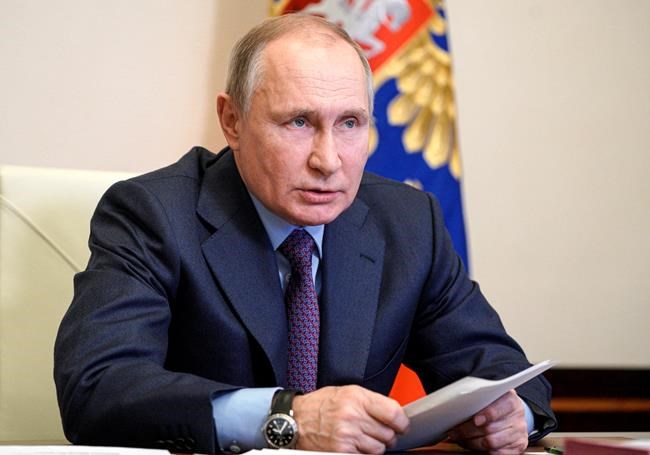
Last month, Russia’s Kommersant newspaper reported that Putin said he might get vaccinated at the end of the summer or beginning of the fall. The newspaper quoted Putin telling Russian media managers at a closed-door meeting that he didn’t want to do it for publicity’s sake in front of cameras and that he had other vaccinations scheduled already.
Peskov said Monday he didn’t “expect” Putin’s vaccination on Tuesday “to be a public event.”
Russia has been actively marketing Sputnik V abroad, despite the slow rollout at home, in what some analysts see as an effort to score geopolitical points. Dozens of countries have approved the use of Sputnik V and signed deals with Russia to get shipments of the shot. Exporting the vaccines, however, has not been without delays, and questions remained whether Moscow had the capacity to deliver on its promises.
In order to boost production, the Russian Direct Investment Fund that bankrolled the vaccine signed agreements with pharmaceutical companies in several countries, including India, South Korea, Brazil, Turkey and most recently Italy. Putin said on Monday such agreements amounted to a total of 700 million vaccines a year.
“The geography of using the Russian Sputnik V is actively growing. Even despite deliberate discrediting of our vaccine, various hoaxes and sometimes outright nonsense, more states all around the world express interest in our vaccine,” Putin said.
The Russian president took aim at officials in the European Union, some of whom have expressed reluctance about using Sputnik V even though the bloc has been criticized for a slow vaccine rollout.
On Sunday, Internal Market Commissioner Thierry Breton, who heads the European Commission’s vaccine task force, told French television that the EU “has absolutely no need” for Sputnik V.
Putin called the statement “bizarre” and insisted that Russia was “not imposing anything on anyone,” questioning whether European officials protect the interests “some pharmaceutical companies or the interests of citizens of European countries.”
Sputnik V hasn’t yet been approved for use in the EU, but the body’s regulator, the European Medicines Agency, or EMA, started a rolling review of the vaccine earlier this month.
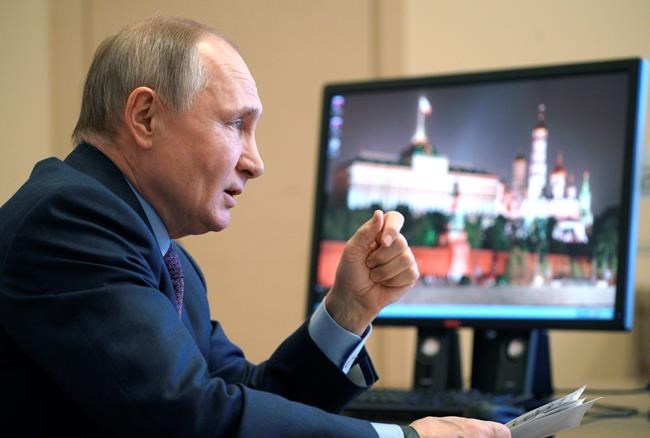
Some EU nations have decided not to wait for the EMA’s approval, and Hungary became the first EU country to authorize Sputnik V for use last month while Slovakia announced a deal last week to acquire 2 million Sputnik V doses in a move that prompted a political crisis in the country.

___
Follow AP’s pandemic coverage at:
https://apnews.com/hub/coronavirus-pandemic
https://apnews.com/hub/coronavirus-vaccine
https://apnews.com/UnderstandingtheOutbreak