

Wood stock faces high demand, higher prices
Pandemic shutdowns combine with renovation boom to create supply shortage

Advertisement
Read this article for free:
or
Already have an account? Log in here »
To continue reading, please subscribe:
Digital Subscription
One year of digital access for only $1.44 a week*
- Enjoy unlimited reading on winnipegfreepress.com
- Read the E-Edition, our digital replica newspaper
- Access News Break, our award-winning app
- Play interactive puzzles
*Billed as $5.77 plus GST every four weeks. After 52 weeks, price increases to the regular rate of $19.95 plus GST every four weeks. Offer available to new and qualified returning subscribers only. Cancel any time.
To continue reading, please subscribe:
Add Free Press access to your Brandon Sun subscription for only an additional
$1 for the first 4 weeks*
- Enjoy unlimited reading on winnipegfreepress.com
- Read the E-Edition, our digital replica newspaper
- Access News Break, our award-winning app
- Play interactive puzzles
*Your next Brandon Sun subscription payment will increase by $1.00 and you will be charged $17.95 plus GST for four weeks. After four weeks, your payment will increase to $24.95 plus GST every four weeks.
Read unlimited articles for free today:
or
Already have an account? Log in here »
Hey there, time traveller!
This article was published 24/08/2020 (2249 days ago), so information in it may no longer be current.
In May, Matt Wickstrom’s company bought the lumber for a new house it’s building in River Heights. It was good timing.
Back then, the wooden materials — oriented strand board (OSB), spruce, pine, fir, a lot of other terms a Free Press reporter hadn’t heard of — came in at around $30,000. If he bought them now, it’d be a different story.
Over the last month, prices for lumber and wood panelling have skyrocketed, local homebuilders and trade groups say: OSB prices have shot up from $12 per sheet to between $25 and $30, plywood from $16 to $30 or more, and spruce-pine-fir two-by-fours up US$760 per thousand board feet.
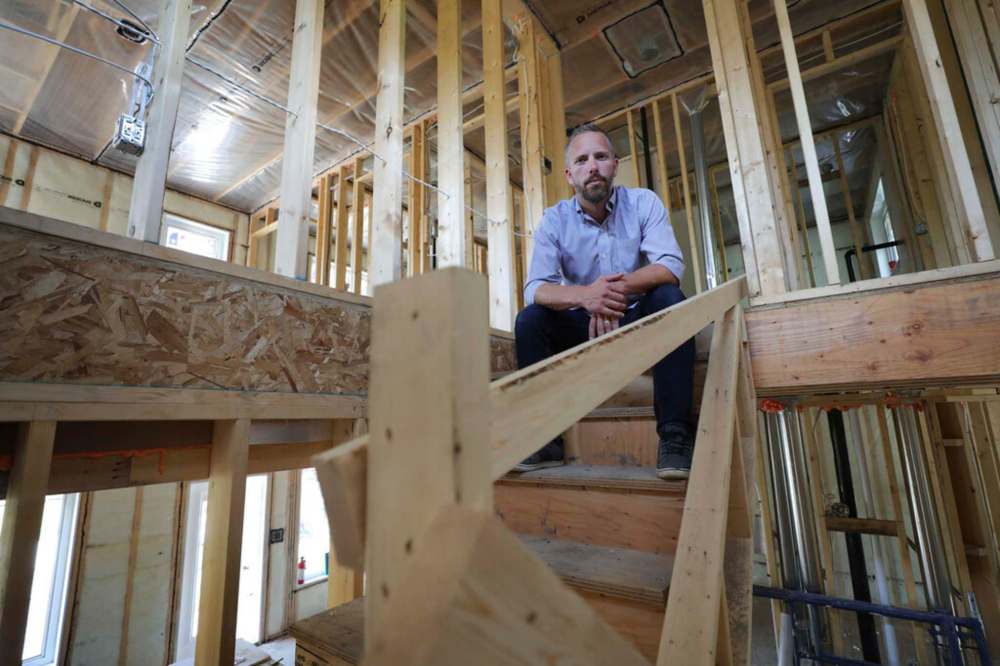
“The price increases came really quickly, and without much warning,” says Wickstrom, the operations director for Hearth Homes.
Professionals like Wickstrom understand the market fluctuates, but normally not like this. And the increased price for materials could spell an equivalent increase in home-building costs: depending on the size, a standard single-family home could cost $5,000 to $15,000 more if it uses a proportionate amount of lumber.
The price increase isn’t localized to Manitoba, and it can be attributed to COVID-19 as well as the market conditions that preceded the pandemic, says Liz Kovach, the president of the Western Retail Lumber Association.
Last year, pulp and sawmills in British Columbia experienced curtailments and closures, drastically decreasing the national supply. There were also widespread forest fires and pine-beetle infestations that significantly hampered production. “All that creates a bit of shortage,” she says.
Then, in March, mills were forced to shut down as the pandemic entered the picture. When, and if, they reopened, the mills did so at limited capacity, creating an even larger potential supply chain issue.
“If you had asked in March, the prediction (from the industry) would’ve been we’d need fewer materials,” said Kovach. But then, as consumption habits shifted, Canadians began focusing on home renovations and do-it-yourself projects and buying materials from the already-winnowed pool available.
“It was truly that DIY market that nobody predicted,” said Kovach.
All those circumstances — high demand, low supply, renewed interest in renovations, a booming housing market — have contributed to the sharp increase in material costs.
“Everyone’s building a fence or a deck, so much so that it’s hard to get our hands on (certain materials),” said Josh Dueck, a co-owner of custom home firm Dueck Builders.
For homebuilders or contractors, it means quotes made two months ago could be inconceivable from a pricing perspective, leading to potentially difficult conversations with clients over costs. Prices are generally stable, but now, those tradespeople are considering whether it’s worth it to buy now or wait and see if prices dip.

Kovach said the situation is dynamic, and that the industry expects it will take some time before it returns to normal. “I think everyone is caught a little off guard with how it’s gone,” she said, however, with the pre-existing market conditions, it makes some sense, she added.
As summer winds down, the renovation market generally does, too — very few people want to build a deck in -30-degree weather — so Kovach said the retail market should cool down when snow falls, and the lumber backlog should be somewhat filled by then.
However, for now, the best time to have bought lumber is several months ago.
Wickstrom knows the next few months will come with new challenges for all builders, but said his hope is Winnipeg returns to its usual, level market.
ben.waldman@freepress.mb.ca
Ben Waldman is a National Newspaper Award-nominated reporter on the Arts & Life desk at the Free Press. Born and raised in Winnipeg, Ben completed three internships with the Free Press while earning his degree at Ryerson University’s (now Toronto Metropolitan University’s) School of Journalism before joining the newsroom full-time in 2019. Read more about Ben.
Every piece of reporting Ben produces is reviewed by an editing team before it is posted online or published in print — part of the Free Press‘s tradition, since 1872, of producing reliable independent journalism. Read more about Free Press’s history and mandate, and learn how our newsroom operates.
Our newsroom depends on a growing audience of readers to power our journalism. If you are not a paid reader, please consider becoming a subscriber.
Our newsroom depends on its audience of readers to power our journalism. Thank you for your support.
Ben Waldman is a National Newspaper Award-nominated reporter on the Arts & Life desk at the Free Press. Born and raised in Winnipeg, Ben completed three internships with the Free Press while earning his degree at Ryerson University’s (now Toronto Metropolitan University’s) School of Journalism before joining the newsroom full-time in 2019. Read more about Ben.
Every piece of reporting Ben produces is reviewed by an editing team before it is posted online or published in print — part of the Free Press‘s tradition, since 1872, of producing reliable independent journalism. Read more about Free Press’s history and mandate, and learn how our newsroom operates.
Our newsroom depends on a growing audience of readers to power our journalism. If you are not a paid reader, please consider becoming a subscriber.
Our newsroom depends on its audience of readers to power our journalism. Thank you for your support.
Advertisement Advertise With Us
Advertisement Advertise With Us