

Labour conference seeks to build on 100 years of history
Advertisement
Read this article for free:
or
Already have an account? Log in here »
To continue reading, please subscribe:
Digital Subscription
One year of digital access for only $75*
- Enjoy unlimited reading on winnipegfreepress.com
- Read the E-Edition, our digital replica newspaper
- Access News Break, our award-winning app
- Play interactive puzzles
*Billed as $5.77 plus GST every four weeks. After 52 weeks, price increases to the regular rate of $19.95 plus GST every four weeks. Offer available to new and qualified returning subscribers only. Cancel any time.
Monthly Digital Subscription
$4.99/week*
- Enjoy unlimited reading on winnipegfreepress.com
- Read the E-Edition, our digital replica newspaper
- Access News Break, our award-winning app
- Play interactive puzzles
*Billed as $19.95 plus GST every four weeks. Cancel any time.
To continue reading, please subscribe:
Add Free Press access to your Brandon Sun subscription for only an additional
$1 for the first 4 weeks*
- Enjoy unlimited reading on winnipegfreepress.com
- Read the E-Edition, our digital replica newspaper
- Access News Break, our award-winning app
- Play interactive puzzles
*Your next Brandon Sun subscription payment will increase by $1.00 and you will be charged $17.95 plus GST for four weeks. After four weeks, your payment will increase to $24.95 plus GST every four weeks.
Read unlimited articles for free today:
or
Already have an account? Log in here »
Hey there, time traveller!
This article was published 07/05/2019 (2575 days ago), so information in it may no longer be current.
Labour activists and academics from across Canada are gathering in the city for the start of a four-day conference to mark the 100th anniversary of the 1919 Winnipeg General Strike.
The University of Winnipeg will play host to the conference subtitled: Building a Better World: 1919-2019. It runs Wednesday through Saturday.
Some 300 delegates activists, academics and artists from the labour sector will take in 23 panel presentations.
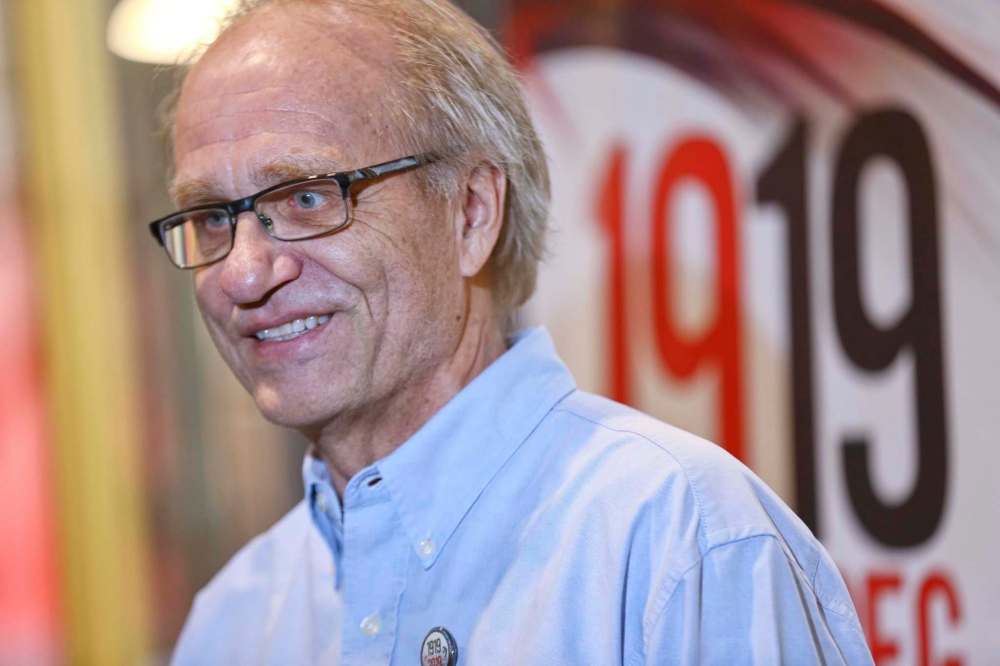
Plus, “We have three public roundtables, the first is on poverty and the fight for a material existence, the second is on building an inclusive labour movement, and the third is making labour a social force and a political leader,” conference committee member and Brandon University history Prof. Rhonda Hinther said Tuesday.
“Those are all wide open to the public… It is really an amazing cast of activists. leaders, scholars and other folks who involved in making public these very important issues and pushing them forward.”
Jane McAlevey, a prominent U.S. author, educator, activist and organizer, will deliver the keynote Thursday evening at the Ukrainian Labour Temple, described by conference organizers as “an artifact” of the landmark general strike.
The building was a key organizing hub, as some 35,000 workers walked off the job in May 1919 to demand collective bargaining rights and a living wage that are now the cornerstones of modern labour unions.
The strike halted factories and stalled an entire city for six solid weeks. The shockwaves reverberated across the country, triggered a rise in unionism and sympathetic labour actions from Nova Scotia to British Columbia and inflamed fears of a Bolshevik-style revolution.
On June 21, Winnipeg mayor Charles Frederick Gray read the Riot Act, mounted police charged the unarmed crowds, a striker was shot dead, another later died of his wounds, strike leaders were arrested and the military patrolled city streets. In the wake of “Bloody Saturday,” labour leaders called off the strike June 25.
The geography of Winnipeg remains shaped by the event, with its working-class North End and more-affluent south end neighbourhoods, said conference chairman James Naylor.
The temper of the times today is not unlike the social conditions a century ago, the Brandon University history professor said.
“There are a lot of connections. One is the immediate cause of the strike was connected to two issues: (first), collective bargaining, which continues to be an issue today. Collective bargaining rights are sometimes tenuous. Business and government eat them away at various times, and that’s the situation today,” Naylor said.
“The other issue is the fight against poverty — and we are fighting with a lot of precarious jobs and that seems to be rising problem.”

The conference will draw attention to a factor that’s often overlooked in the 1919 Winnipeg General Strike.
“One of the interesting things… is in 1919, not a lot of workers were unionized. When they went out on strike, thousands of other workers who were not unionized went out in support of them and all sorts of other people, like returned soldiers from the (First) World War, rallied to support them,” Naylor said.
Ordinary people found themselves thrust into positions of leadership against a backdrop of inequality and injustice — not all that different in this current age of populism, Naylor noted.
“One of the kind of features of the last 20 years, of neoliberalism, is that the rates of social inequality are returning in many countries to what they were in the Great Depression and before. The world’s becoming hugely unequal, as it was at that time… There is a lot of fear and anger out there about all sorts of issues.”
alexandra.paul@freepress.mb.ca