

Olympic flame nearly out of fuel in Manitoba
Advertisement
Read this article for free:
or
Already have an account? Log in here »
To continue reading, please subscribe:

Digital Subscription
One year of digital access for only $205*
- Enjoy unlimited reading on winnipegfreepress.com
- Read the E-Edition, our digital replica newspaper
- Access News Break, our award-winning app
- Play interactive puzzles
*First annual payment billed as $205.00 + GST for one year. This annual subscription will automatically renew at $233.00 + GST every 52 weeks (10% off the regular annual price of $259.35). Offer available to new and qualified returning subscribers only. Cancel any time.
To continue reading, please subscribe:
Add Free Press access to your Brandon Sun subscription for only an additional
$1 for the first 4 weeks*
- Enjoy unlimited reading on winnipegfreepress.com
- Read the E-Edition, our digital replica newspaper
- Access News Break, our award-winning app
- Play interactive puzzles
*Your next Brandon Sun subscription payment will increase by $1.00 and you will be charged $17.95 plus GST for four weeks. After four weeks, your payment will increase to $24.95 plus GST every four weeks.
Read unlimited articles for free today:
or
Already have an account? Log in here »
Hey there, time traveller!
This article was published 25/10/2017 (3250 days ago), so information in it may no longer be current.
Our most successful Olympians, Cindy Klassen and Clara Hughes, are long gone.
And, thanks to Gary Bettman and the NHL, Jonathan Toews and Duncan Keith won’t be going to the 2018 Winter Olympics in Korea, either.
So who will be Manitoba’s leading gold-medal hopes when the Games begin in Pyeongchang in less than four months?
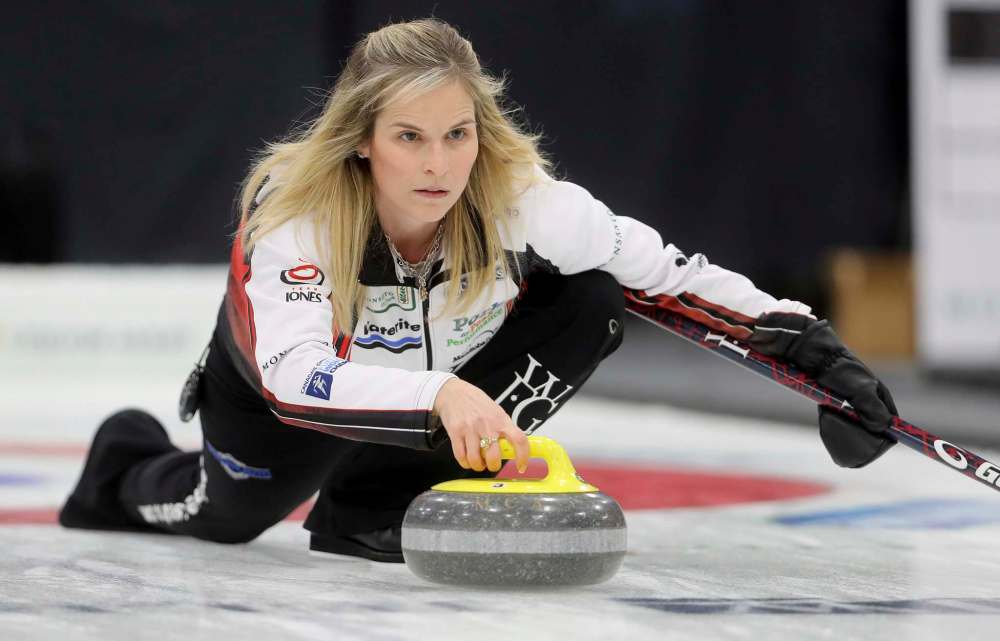
Curlers, probably. And a small group of very talented women’s hockey players.
And beyond that, things start to get very, very thin in a province that spends just 18 cents per person every year on the development of high-performance athletes and has, in some important ways in recent years, turned its back on grooming our future Olympians.
Consider: the folks over at the Manitoba branch of the Canadian Sport Centre have a spreadsheet that tracks all of Manitoba’s current Olympic hopefuls.
There are presently 35 names on that list. But take away the 25 curlers and four women’s hockey players and you are left with four speedskaters — three of whom are prohibitive longshots — an even longer-shot snowboarder and a figure skater who didn’t grow up here.
Now, if all four Manitoba women stick with the national hockey team, we send either a men’s or women’s curling team to the Olympics and we pick up a couple more Olympians somewhere else — some combination of maybe a mixed doubles curler or speedskater Heather McLean or figure skater Eric Radford or perhaps some Manitoban playing men’s hockey over in Europe — we might equal the delegation of 10 that this province sent to each of the last two Winter Olympics.
And that’d pretty good if it happens. On a per capita basis, that would even once again give Manitoba a disproportionate national presence in Pyeongchang.
And yet, talk to the guy who is in charge of developing this province’s high-performance athletes and he will tell you that we are collectively failing miserably at creating the conditions necessary for our elite athletes to succeed internationally.
“The environment provincially doesn’t support the development of podium-level Olympic athletes, either summer or winter,” Jeff Powell, general manager of the local Canadian Sports Centre, told me this week.
Powell, who is also a former Olympian and two-time world champion rower and has more credibility on this issue than most people, describes the departure last year of Canada’s national volleyball team from its longtime training centre in Winnipeg as a watershed moment for this province, leaving us without a single national team training program in Manitoba for the first time in a generation.
Add to that the paltry financial support we devote as a province to high-performance athletics and Powell believes this province is sending an unmistakable — and deeply regrettable — message to our kids.
“We’ve got a whole generation now who will grow up and see that Olympic athletes are kids who grew up elsewhere, who will think that Manitobans don’t grow up to be Olympic champions.”
As Powell sees it, those who do go on to become Olympic champions from this province will do so despite our inadequate efforts, rather than because of them.
The man makes good points.
Consider our curlers, who receive next to nothing in support financially from the province and yet continue to consistently produce world champions and — thanks to Jennifer Jones in Sochi in 2014 — now also Olympic champions.
Any other province — or country — that was as consistently good internationally as we are at curling would be throwing all kinds of government money at the sport to keep it that way, building state-of-the-art national training centres and making sure our curlers have the means to do what they do best — and only what they do best.
Think Norway and cross-country skiing. Or Quebec and freestyle skiing.
And yet here in Manitoba, we simply take it all for granted and hope that our best local curlers — from Jones to Reid Carruthers to Mike McEwen — can scrape together enough cash from sponsors and prize money and their regular jobs to make it through another winter on tour without going bankrupt.
It is a monument to this province’s curlers — and an indictment of the rest of us — that despite our almost complete neglect as a province, there is a very real chance that Manitobans could actually sweep the three Olympic berths up for grabs in curling this time around.
Jones will be the favourite to repeat at Canada’s Curling Trials in Ottawa in early December, while both Carruthers and McEwen will be among the favourites to take down the men’s Olympic berth.
And then there’s the 12 Manitobans already qualified for the quirky mixed doubles trials that will take place in January in Portage. This will be the first time mixed doubles has been a full medal sport at the Olympics and you could make the case that Manitobans have potentially more to gain from a third medal sport for curling than perhaps any other population anywhere.
And so what are we doing as a province to make sure Manitobans can cash in on this huge opportunity? There’s been the promise of a new curling centre for Portage and a new privately run curling training centre in Morris deserves plaudits for the effort, but it speaks volumes about us that Curling Canada’s national curling centre is still based in Calgary, not Winnipeg.
And then there are our women’s hockey players. We’ve been producing elite female hockey players in this province since the day Jennifer Botterill learned to skate and this quadrennial has been even more productive than usual, with four Manitobans on the Team Canada exhibition squad that played the Americans in Quebec City the other night — Bailey Bram, Halli Krzyzaniak, Jocelyne Larocque and Brigette Lacquette.
But again, they’ve done it all mostly despite us, not because of us.
We throw all kinds of money at hockey in this province, but almost all of it — including $13.5 million in annual public subsidies — goes to the millionaires who play for the Winnipeg Jets and the billionaire who part-owns the team.
But what about Manitoba’s women, who have collectively won six Olympic medals — five of them gold — for this province since women’s hockey became a full medal sport in Nagano?
How about a national training centre, based in Winnipeg or Brandon, exclusively for women who play hockey? I know a three-time Olympic gold medallist in Botterill you could name it after.
While such a centre would directly benefit this province’s elite female hockey players, any of these kinds of investments ultimately benefits us all.
Powell will tell you that public expenditure on sport produces all kinds of quantifiable trickle-down returns, from lower health-care costs to lower crime rates to more engaged students. And if you want to knock down the gender inequities that still plague us, you could do a lot worse than throwing some public money at developing female role models who can kick ass.
Powell says politicians would be tripping over themselves to endorse any other public policy initiative that produced that wide a range of tangible public benefits.
“We couldn’t fund it fast enough,” he says. “But because we’re talking about sport, we still see it as a luxury.”
Look, there are always going to be certain inherent limitations in turning this province into an amateur-sports powerhouse.

Our Prairie topography alone comes with limitations that restrict our ability to compete in many winter sports. You don’t groom an elite alpine skier at Springhill, for instance, and even the sliding sports don’t really have a home here, 2010 skeleton gold medallist Jon Montgomery of Russell notwithstanding.
But while we’re not good at a lot of things here in Manitoba, there are a handful of things we’re very good at, as we’re about to see once again in Korea.
Imagine how good we’d be if we actually threw a little dough at it.
paul.wiecek@freepress.mb.ca
Twitter: @PaulWiecek