

A quiet NASCAR owner risked it all in the antitrust lawsuit and came out on top
Advertisement
Read this article for free:
or
Already have an account? Log in here »
To continue reading, please subscribe:

Digital Subscription
One year of digital access for only $205*
- Enjoy unlimited reading on winnipegfreepress.com
- Read the E-Edition, our digital replica newspaper
- Access News Break, our award-winning app
- Play interactive puzzles
*First annual payment billed as $205.00 + GST for one year. This annual subscription will automatically renew at $233.00 + GST every 52 weeks (10% off the regular annual price of $259.35). Offer available to new and qualified returning subscribers only. Cancel any time.
To continue reading, please subscribe:
Add Free Press access to your Brandon Sun subscription for only an additional
$1 for the first 4 weeks*
- Enjoy unlimited reading on winnipegfreepress.com
- Read the E-Edition, our digital replica newspaper
- Access News Break, our award-winning app
- Play interactive puzzles
*Your next Brandon Sun subscription payment will increase by $1.00 and you will be charged $17.95 plus GST for four weeks. After four weeks, your payment will increase to $24.95 plus GST every four weeks.
Read unlimited articles for free today:
or
Already have an account? Log in here »
Hey there, time traveller!
This article was published 20/02/2026 (238 days ago), so information in it may no longer be current.
CHARLOTTE, N.C. (AP) — Bob Jenkins risked his entire race team — a Daytona 500-winning team — when he refused to sign NASCAR’s revenue-sharing agreement and Front Row Motorsports joined 23XI in suing over antitrust violations.
Michael Jordan was the face of the suit settled in December, while Jenkins was the quiet team owner in the background presumed to be riding the global icon’s coattails.
“People thought Michael Jordan was bankrolling this — no, no, no. I had to pay my half,” Jenkins told The Associated Press.
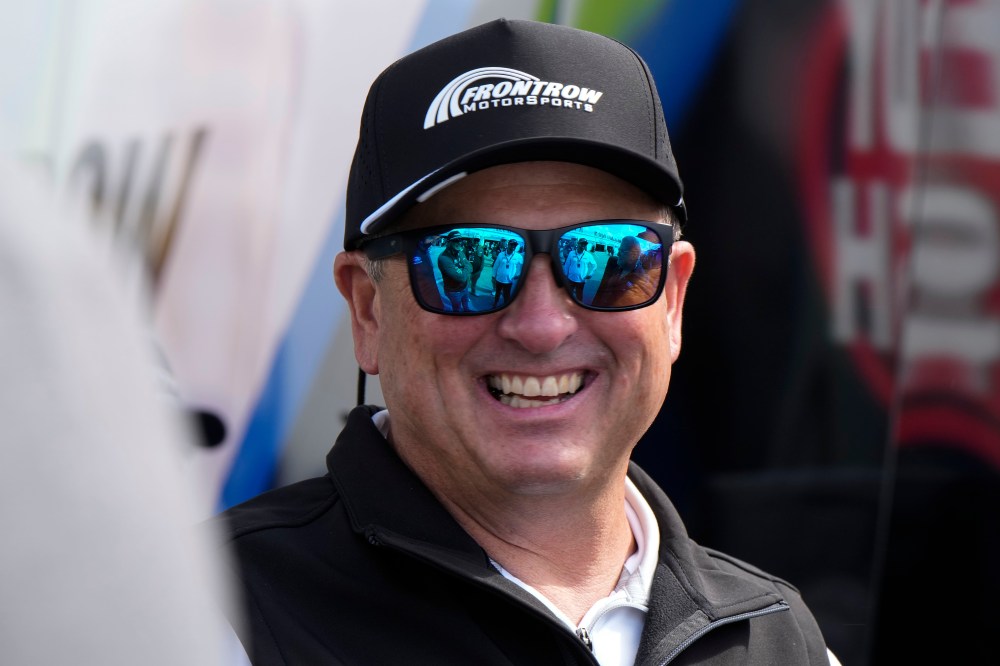
Jenkins, the sole owner of Front Row, said he split the fees of the case equally with 23XI, which has three owners to divide the costs. Had NASCAR not settled the suit, both teams would have ceased operations.
“And I was OK with that,” Jenkins told The Associated Press. “It would have hurt, I risked losing three charters myself, but I would have been OK. I just felt that strongly that we had a winning case that I could risk it.”
The settlement that was reached on the ninth day of the trial made the charters — the equivalent of a franchise in other sports — evergreen and that alone doubled their value overnight to nearly $100 million each.
Who is Front Row Motorsports?
For Jenkins, an entrepreneur from Tennessee who owns Long John Silver’s, 400 Taco Bell franchises and about 30 KFC franchises, the settlement meant a racing organization that had been bleeding money was now secure to be passed down to his four sons. He testified during the trial that Front Row had lost approximately $100 million since it launched in the early 2000s and didn’t turn a profit a single season — even in 2021 when Michael McDowell won the Daytona 500.
The settlement now allows Jenkins to look to the future with Front Row, which has one of the youngest lineups in NASCAR and opened the 2026 season with a victory when Chandler Smith won the Truck Series race at Daytona.
The Ford team fields Cup Series cars for Noah Gragson — who at 27 is the oldest driver in the lineup — Zane Smith (26) and Todd Gilliland (25). Jenkins believes he has a budding star in Smith, who signed a contract extension last October when the fate of the team was uncertain amidst the lawsuit. Smith won a stage in last week’s Daytona 500 and finished sixth, and heads into this Sunday’s race at Atlanta Motor Speedway ranked fourth in the Cup standings.
Gilliland and Gragson are in contract years and Jenkins said he’s explicitly told both what he expects from them this season.
The two Front Row trucks are driven by Smith and Layne Riggs, who are both 23.
So the team has young drivers to develop, as well as an alliance with Team Penske. Jenkins said that partnership with Penske went soft during the lawsuit — Roger Penske signed the charter agreement presented to owners in 2024 that Front Row and 23XI refused to accept — but has amped up since the settlement.
What’s next?
Front Row in the offseason hired engineer Grant Hutchens from Penske to crew chief Gragson, a move that allowed the team to move Drew Blickensderfer to competition director.
“Drew wanted more of an organizational, leadership role, and we always had that in the back of our mind, so Grant gave us an opportunity to fast-track that,” explained Front Row general manager Jerry Freeze. “Bringing Grant in makes us a little more aligned with the Penske group and we hope that’s hopefully going to pay off in the long run.”
The settlement gave Front Row stability — Freeze said “it seems like a light switch went on with our relationship with Penske” — and relief to team employees who had worried their jobs might cease to exist. It also allows the team to search for new headquarters as Front Row is currently bursting at the seams across two different leased race shops, one owned by the late Greg Biffle and the other owned by Brad Keselowski.
Jenkins wants to consolidate his teams into one building and can now confidently make that investment.
A sense of satisfaction
Jenkins and Front Row don’t get the same attention as mega teams Penske, Hendrick Motorsports or Joe Gibbs Racing. And he’s a busy team owner with commitments to his fast-food empire that he takes a very hands-on role with. It was Jenkins who made the call for Long John Silver’s to switch to waffle fries — a recipe he says the chain is still trying to perfect to prevent fries from getting soggy during third-party delivery — and he’s often in the test kitchen sampling new recipes and vetoing a spicy shrimp idea because he didn’t like the way the fish looked in a red sauce.

It made sense that Jordan, winning team owner of last week’s Daytona 500, was willing to take on NASCAR in the revenue sharing dispute because racing is just his retirement hobby. But it took bravery and belief for Jenkins to sue — something the likes of Joe Gibbs, Rick Hendrick and Roger Penske did not do.
Jenkins doesn’t need to be celebrated, but he’s certainly pleased with the outcome for himself, his race teams and the future of NASCAR. It was a fight he thinks he’s “probably stupid enough to have done myself” without 23XI, but knows having Jordan was necessary.
“Personally it’s very gratifying because it could have went the other way, and this sounds cliche, but when something needs to be said, you’ve got to find a way to say it,” Jenkins said. “We did that and it just makes me feel good that we took a stand.”
___
AP auto racing: https://apnews.com/hub/auto-racing