

There’s been a change to F1’s engine rules and it could mostly impact Mercedes
Advertisement
Read this article for free:
or
Already have an account? Log in here »
To continue reading, please subscribe:

Digital Subscription
One year of digital access for only $205*
- Enjoy unlimited reading on winnipegfreepress.com
- Read the E-Edition, our digital replica newspaper
- Access News Break, our award-winning app
- Play interactive puzzles
*First annual payment billed as $205.00 + GST for one year. This annual subscription will automatically renew at $233.00 + GST every 52 weeks (10% off the regular annual price of $259.35). Offer available to new and qualified returning subscribers only. Cancel any time.
To continue reading, please subscribe:
Add Free Press access to your Brandon Sun subscription for only an additional
$1 for the first 4 weeks*
- Enjoy unlimited reading on winnipegfreepress.com
- Read the E-Edition, our digital replica newspaper
- Access News Break, our award-winning app
- Play interactive puzzles
*Your next Brandon Sun subscription payment will increase by $1.00 and you will be charged $17.95 plus GST for four weeks. After four weeks, your payment will increase to $24.95 plus GST every four weeks.
Read unlimited articles for free today:
or
Already have an account? Log in here »
Hey there, time traveller!
This article was published 28/02/2026 (208 days ago), so information in it may no longer be current.
LONDON (AP) — Formula One ’s governing body has reached a compromise with manufacturers that changes the way the compression ratio will be measured midway through this season and in the 2027 season.
New engine rules set out a compression ratio of 16:1 — a measurement of how tightly the pistons squeeze the mixture of fuel and air before it ignites, and therefore how much power can be generated.
The regulations include a test to stop teams exceeding 16:1, but the checks happen at “ambient temperature.” Some rival teams have suggested Mercedes found a way for components to behave differently when they heat up during use, beating the test, though Mercedes says its engine is fully legal.
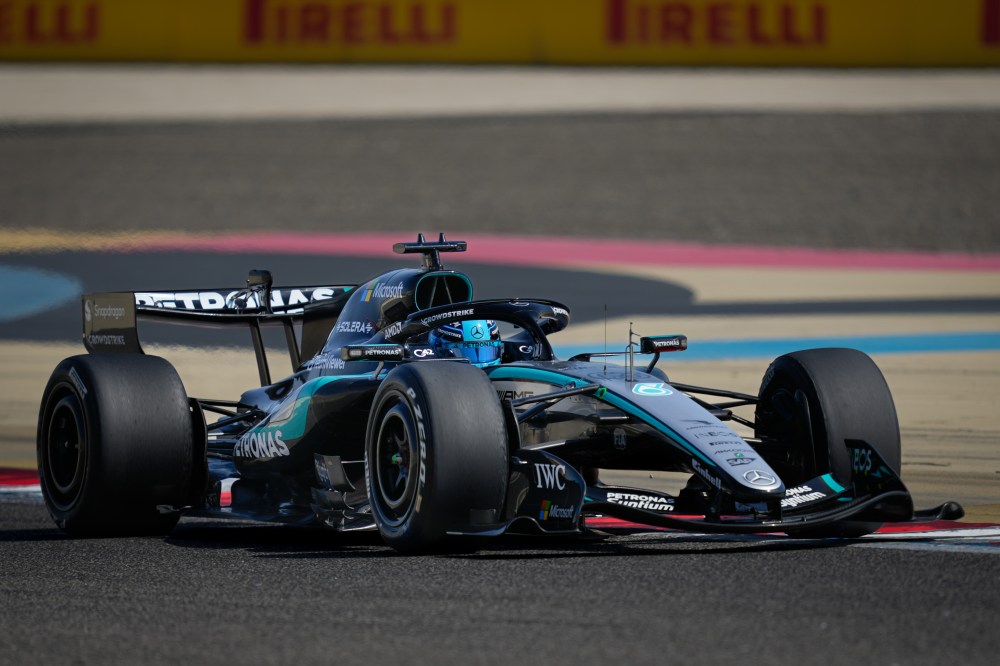
The compromise announced Saturday means the compression ratio will be controlled in both hot and cold conditions from June 1 and only when hot from the 2027 season thereafter.
There are seven F1 races before the June 1 test.
“The regulations introduced for 2026 represent one of the biggest changes in recent memory,” the FIA said. “All parties acknowledge that with the introduction of such significant regulatory changes, there are collective learnings to be taken from pre-season testing and the initial rounds of the 2026 championship.
“Further evaluation and technical checks on energy management matters are ongoing.”
Mercedes also supplies McLaren, Alpine and Williams.

___
AP auto racing: https://apnews.com/hub/auto-racing