

AP interview: Madring track creator says changes by new designers affected overtaking at Spanish GP
Advertisement
Read this article for free:
or
Already have an account? Log in here »
To continue reading, please subscribe:

Digital Subscription
One year of digital access for only $205*
- Enjoy unlimited reading on winnipegfreepress.com
- Read the E-Edition, our digital replica newspaper
- Access News Break, our award-winning app
- Play interactive puzzles
*First annual payment billed as $205.00 + GST for one year. This annual subscription will automatically renew at $233.00 + GST every 52 weeks (10% off the regular annual price of $259.35). Offer available to new and qualified returning subscribers only. Cancel any time.
To continue reading, please subscribe:
Add Free Press access to your Brandon Sun subscription for only an additional
$1 for the first 4 weeks*
- Enjoy unlimited reading on winnipegfreepress.com
- Read the E-Edition, our digital replica newspaper
- Access News Break, our award-winning app
- Play interactive puzzles
*Your next Brandon Sun subscription payment will increase by $1.00 and you will be charged $17.95 plus GST for four weeks. After four weeks, your payment will increase to $24.95 plus GST every four weeks.
Read unlimited articles for free today:
or
Already have an account? Log in here »
MADRID (AP) — The original designer of the widely criticized Madring circuit has blamed small changes made after his company was removed from the project for the lack of overtaking during this weekend’s lackluster Spanish Grand Prix. He also said there is “not much” that can be done on the layout going forward.
Jarno Zaffelli told The Associated Press on Tuesday that the relocation of curbs, the choice of track surface and the new Formula 1 regulations all played a factor on the lack of action in Sunday’s race that marked Madrid’s return to F1 after a 45-year absence.
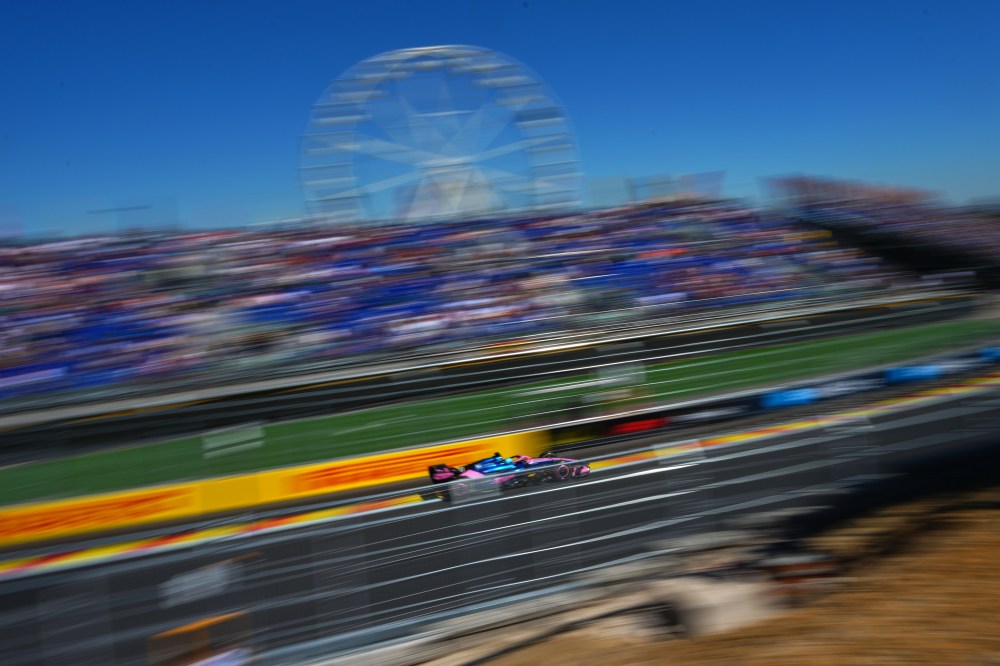
Only a few passes happened during the race won by Mercedes’ Kimi Antonelli at the 5.4-kilometer (3.3-mile) urban circuit that mixes existing roads and purpose-built sections in the Spanish capital. Drivers praised the “high adrenaline” aspect of the track but widely criticized the lack of overtaking opportunities.
Zaffelli was the original designer of the track but is not involved in the project anymore. He claimed his contract was wrongfully terminated by organizers last year, and said he was escorted away by police when he arrived at the circuit for this weekend’s race. Legal proceedings are ongoing.
The track designing company Tilke, which did not immediately respond to a request for comment, took over the project. Madring organizers also didn’t respond to a request for comment.
Zaffelli said the original layout was roughly maintained, but small modifications to the track played a role in the lack of overtaking. He said changes he had been planning to make during the final construction phase of the circuit were not ultimately implemented.
He said, “if you start to change some inclinations, centimeters in the transitions, you change the kind of asphalt that you have, you change the position of some curbs,” then the intention of the original design is affected.
Costly changes to Turn 5
Zaffelli said the relocation of curbs and the removal of a gravel runoff area on Turn 5, which was supposed to be the main overtaking spot, made it harder for drivers to make passing attempts.
“You change the curb and runoff in the only point that we thought it was possible to overtake in the beginning of the design, I cannot be responsible for the result,” Zaffelli said.
He said the new designers also did not implement a suggestion from Williams’ Spanish driver Carlos Sainz to change the turn’s radius.
“That was one of the modifications that Carlos Sainz suggested and we were going to implement it in November 2025,” Zaffelli said. “The problem is … we were ousted in September, and eventually they just followed the design from the beginning without doing this subtle modification (in the construction phase).”
Zaffelli said the choice of asphalt picked by organizers was an issue because it forced drivers to manage their tires to avoid graining, affecting the layout’s original intention.
Zaffelli added that when he first designed the track, the new F1 regulations that forced drivers to constantly manage battery power were not in place, and that also affected the overtaking opportunities.
He used the example of the banked “La Monumental” corner, which he designed for drivers to go flat-out on so they could arrive at the end of the following straightaway with a chance to pass the car in front of them. However, some drivers admitted this weekend that they had to lift off the throttle early in the corner to save battery for later in the lap.
Possible changes for next year
Madring signed a 10-year contract with F1 to have the Spanish GP.
Zaffelli, an Italian involved in projects at circuits such as Zandvoort, Spa-Francorchamps and Silverstone, said the first thing he would to change if he was still involved with the track was to replace the surface to a “non-graining type.”
“I would just replace the asphalt fully, with the geometries of the asphalt that we were expecting, and the kind of asphalt that we were thinking for this layout,” he said.
Other changes to the layout were limited unless building-restrictions and authorization processes for changes were altered by organizers, he said.
“The asphalt will be making a lot of difference already, and then some bits and pieces,” he said. “And we hope that next year they will have different conditions, the cars, the regulation will be different, and they will be able to push. To me, (there’s) not much that they can do.”
Organizers said Monday they were open to trying to improve the layout, and event director Luis García Abad told Motorsport.com that governing body FIA has already indicated the changes that might be needed, without elaborating.
No blank canvas for the layout

Zaffelli claimed he didn’t have a “blank canvas” to build the track from scratch, as many assumed, and said there were many restrictions in place, including future constructions planned by organizers that had to be taken into consideration.
Zaffelli said he was “so sorry” that “so many people are speaking out loud on this without knowing the background.”
“But fortunately, we know that it’s part of the game. We know that, until we were there, we did the maximum possible that we can achieve,” he said. “And this will be demonstrated by the fact that if they are modifying something, it will be very, very, very limited as a modification, because we know the reason behind the choices that we made, and that we had to make.”
___
See AP’s full auto racing coverage here