

Column: Players finding payoffs are changing in baseball
Advertisement
Read this article for free:
or
Already have an account? Log in here »
To continue reading, please subscribe:

Digital Subscription
One year of digital access for only $205*
- Enjoy unlimited reading on winnipegfreepress.com
- Read the E-Edition, our digital replica newspaper
- Access News Break, our award-winning app
- Play interactive puzzles
*First annual payment billed as $205.00 + GST for one year. This annual subscription will automatically renew at $233.00 + GST every 52 weeks (10% off the regular annual price of $259.35). Offer available to new and qualified returning subscribers only. Cancel any time.
To continue reading, please subscribe:
Add Free Press access to your Brandon Sun subscription for only an additional
$1 for the first 4 weeks*
- Enjoy unlimited reading on winnipegfreepress.com
- Read the E-Edition, our digital replica newspaper
- Access News Break, our award-winning app
- Play interactive puzzles
*Your next Brandon Sun subscription payment will increase by $1.00 and you will be charged $17.95 plus GST for four weeks. After four weeks, your payment will increase to $24.95 plus GST every four weeks.
Read unlimited articles for free today:
or
Already have an account? Log in here »
Hey there, time traveller!
This article was published 21/02/2019 (2760 days ago), so information in it may no longer be current.
Manny Machado’s new $300 million contract put a stop — at least temporarily — to a growing chorus of player complaints that major league teams were conspiring to do deep damage to the free agent market.
It did nothing, however, to change the new reality of baseball. And that’s something players should be worrying about between now and 2021, when the current collective bargaining agreement expires and the threat of labour action looms.
No longer do major league executives reflexively chase the latest bauble on the market. Analytics that have changed the field of play have changed the front office, too.
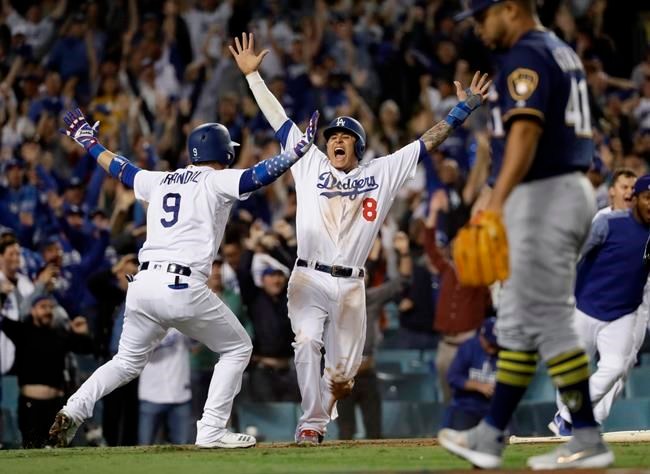
“Markets change,” commissioner Rob Manfred said the other day before Machado signed with the San Diego Padres. “We’ve had a lot of change in the game. People think about players differently. They analyze players differently. They negotiate differently.”
Indeed they do. But things have changed so quickly that the players’ union seems to have been taken off guard.
When players last negotiated a contract in 2016 the most pressing issues were more days off and private chefs in every clubhouse. With salaries rising every year, their attention was on work life issues.
After a second straight season where owners expressed little interest in some free agents, though, the trends have set off some alarms among players and the players’ union.
There’s increasing chatter about the possibility of trying to reopen the collective bargaining agreement to make some adjustments.
Sure, Machado got a 10-year contract and Bryce Harper will get something similar. But those contracts are just for a few elite players, while others will remain unsigned or settle for far less.
It’s one reason baseball salaries were down slightly last season for the first time since 2010.
From the standpoint of owners the equation is simple: Why take the risk on long-term contracts for millions of dollars when there are replacement players available for the major league minimum of $555,000?
Use two of them in a platoon and the numbers might be close enough to a Machado or Harper. Or load the bullpen with minimum wage arms and have them throw as hard as they can for as long as they can and then bring in a new bunch.
“All veteran players of a certain age are being affected by this analysis, which is not just widespread but fairly consistent across most clubs,” said former New York Mets general manager Sandy Alderson, now an Oakland Athletics senior adviser. “The math is the math.”
That math is unsparing in baseball these days. A sport that always valued numbers has embraced new metrics like WAR (Wins Above Replacement) even more and front offices are using them to evaluate risk and reward in the free agent market.
Add in the higher luxury tax imposed in the latest collective bargaining agreement and high payroll clubs like the Red Sox, Dodgers and Yankees are watching every dollar they spend.
Still, it’s hard not to laugh when Chicago Cubs owner Tom Ricketts — whose team is valued at $2.9 billion by Forbes — opens spring training by saying his team didn’t pursue any high priced free agents because there is no money to spend.
Even more laughable was the suggestion by Pirates owner Bob Nutting that it doesn’t make sense to add a big free agent because it could cause an imbalanced payroll that might make other players unhappy.
No one — at least outside the union — is saying that major league ballplayers are underpaid either. At an average salary of $4 million a year they’re well compensated for what they do.

They’re also not going to be walking picket lines any time in the future. But even the possibility of labour trouble — at a time attendance is already declining — should scare baseball enough to at least have a discussion about where the game is going.
Expand that discussion to include issues like a pitch clock, the use of relievers and the shift and there’s plenty of potential for owners and players to come together for the good of the game.
Or wait three years until owners have a full blown revolt on their hands.
___
Tim Dahlberg is a national sports columnist for The Associated Press. Write to him at tdahlberg@ap.org or http://twitter.com/timdahlberg
Related Articles
With Machado at third, Kinsler can focus on second for Pads Angels sign left-hander Jennings to minor league deal Padres announce Machado's $300 million, 10-year deal



Advertisement Advertise With Us
Advertisement Advertise With Us