

After delays, Florida county votes to approve financing for new $1.3B ballpark for MLB’s Rays
Advertisement
Read this article for free:
or
Already have an account? Log in here »
To continue reading, please subscribe:

Digital Subscription
One year of digital access for only $205*
- Enjoy unlimited reading on winnipegfreepress.com
- Read the E-Edition, our digital replica newspaper
- Access News Break, our award-winning app
- Play interactive puzzles
*First annual payment billed as $205.00 + GST for one year. This annual subscription will automatically renew at $233.00 + GST every 52 weeks (10% off the regular annual price of $259.35). Offer available to new and qualified returning subscribers only. Cancel any time.
To continue reading, please subscribe:
Add Free Press access to your Brandon Sun subscription for only an additional
$1 for the first 4 weeks*
- Enjoy unlimited reading on winnipegfreepress.com
- Read the E-Edition, our digital replica newspaper
- Access News Break, our award-winning app
- Play interactive puzzles
*Your next Brandon Sun subscription payment will increase by $1.00 and you will be charged $17.95 plus GST for four weeks. After four weeks, your payment will increase to $24.95 plus GST every four weeks.
Read unlimited articles for free today:
or
Already have an account? Log in here »
Hey there, time traveller!
This article was published 16/12/2024 (656 days ago), so information in it may no longer be current.
ST. PETERSBURG, Fla. (AP) — After a nearly two-month delay, the Pinellas County Commission voted Tuesday in favor of its share of financing for a new $1.3 billion Tampa Bay Rays ballpark, part of a plan to keep the team in St. Petersburg for another 30 years.
The overall plan, with its slogan “Here To Stay,” was approved by the county commission and city of St. Petersburg officials this summer, but votes on the funding for the deal have proven more contentious and were delayed.
Earlier this month, the St. Petersburg City Council voted to approve its share of the bonds necessary to build the new 30,000-seat ballpark. The county vote Tuesday was 5-2 for bonds that would be funded by tourist or “bed” taxes that cannot be spent on things such as hurricane recovery.
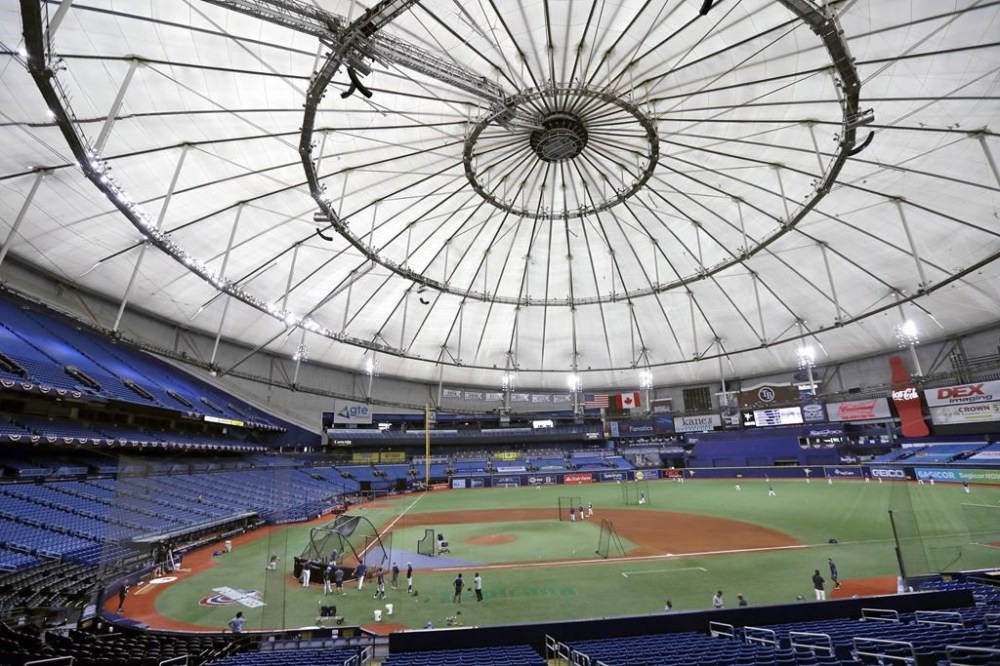
Under the agreement, the city and county would put up about half the cost, with the Rays covering the rest, including any cost overruns.
“We’re upholding our part of the bargain,” City Council Chair Deborah Figgs-Sanders said at a meeting earlier this month. “We said we were going to do this. We’re doing it. Now what you got?”
The county’s share of bond financing approved Tuesday is about $312.5 million. Major League Baseball Commissioner Rob Manfred met recently with several skeptical commissioners to stress the project’s importance and the league’s desire to keep a team in the Tampa Bay region.
“He is committed to this market. Rob Manfred is the reason I am voting yes on this today,” said Pinellas County Commissioner Chris Latvala.
The proposal caps years of uncertainty about the Rays’ future, including possible moves across the bay to Tampa, or to Nashville, Tennessee, or even to split home games between St. Petersburg and Montreal, an idea Major League Baseball rejected.
Under the stadium deal, the Rays commit to remain in St. Petersburg for another 30 years. But the Rays will play this season in Tampa at the New York Yankees’ spring training site, Steinbrenner Field, because of hurricane damage to Tropicana Field.
The Rays say costs of the new ballpark will inevitably rise because its planned opening will be delayed at least a year, from 2028 to 2029. It’s not clear what those extra costs will be, but cost overruns are the responsibility of the Rays under the agreement.
Matt Silverman, co-president of the Rays, said in a statement after the county vote that the team “cannot absorb this increase alone” and that further negotiations are likely.

“When the county and city wish to engage, we remain ready to solve this funding gap together,” Silverman said.
The proposed stadium is a signature piece of a broader $6.5 billion revitalization project known as the Historic Gas Plant District, which refers to a predominantly Black neighborhood that was forced out by construction of the Trop and an interstate highway spur.
Supporters say the development would transform an 86-acre (34-hectare) tract in the city’s downtown, with plans for a Black history museum, affordable housing, entertainment venues, plus office and retail space — and the promise of thousands of jobs.
“This is much, much bigger than a stadium,” Pinellas County Commission Chair Kathleen Peters said at a November meeting. “It’s about the investment we can make and the return on that investment that can guarantee we can keep our taxes low.”
___ Kate Payne, who reported from Tallahassee, is a corps member for The Associated Press/Report for America Statehouse News Initiative. Report for America is a nonprofit national service program that places journalists in local newsrooms to report on undercovered issues.
Related Articles
Goldeyes re-sign southpaw pitcher Strobel City switcher: Clay Holmes confident and excited about move from bullpen to rotation with NY Mets




Advertisement Advertise With Us
Advertisement Advertise With Us