

Jumping through hoops
Somali-Minnesotan teens face discrimination, racism, paranoia -- but they just want to go to college and play basketball
Advertisement
Read this article for free:
or
Already have an account? Log in here »
To continue reading, please subscribe:
Digital Subscription
One year of digital access for only $1.44 a week*
- Enjoy unlimited reading on winnipegfreepress.com
- Read the E-Edition, our digital replica newspaper
- Access News Break, our award-winning app
- Play interactive puzzles
*Billed as $5.77 plus GST every four weeks. After 52 weeks, price increases to the regular rate of $19.95 plus GST every four weeks. Offer available to new and qualified returning subscribers only. Cancel any time.
To continue reading, please subscribe:
Add Free Press access to your Brandon Sun subscription for only an additional
$1 for the first 4 weeks*
- Enjoy unlimited reading on winnipegfreepress.com
- Read the E-Edition, our digital replica newspaper
- Access News Break, our award-winning app
- Play interactive puzzles
*Your next Brandon Sun subscription payment will increase by $1.00 and you will be charged $17.95 plus GST for four weeks. After four weeks, your payment will increase to $24.95 plus GST every four weeks.
Read unlimited articles for free today:
or
Already have an account? Log in here »
Hey there, time traveller!
This article was published 04/08/2018 (2862 days ago), so information in it may no longer be current.
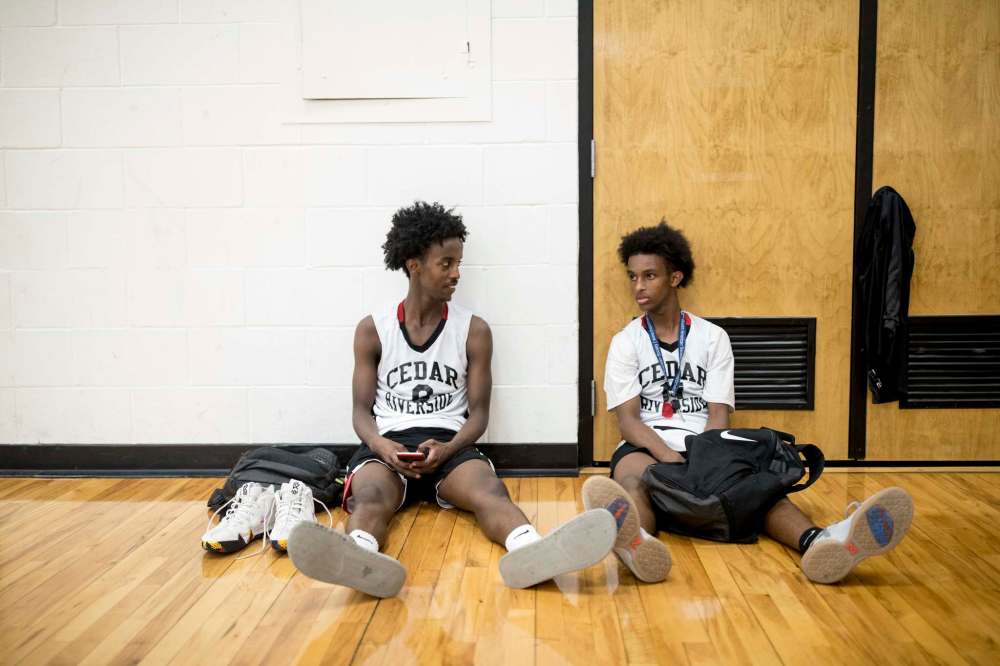
MINNEAPOLIS — Feysal Yusuf and Abdikani Abdi don’t know who might be watching them these days, but it wasn’t college basketball recruiters on the first Saturday morning of July. If anyone else was surveilling the skinny Somali-American teenagers, they would have found them inside a pale community centre at the edge of Little Mogadishu, leading a torrid second-half comeback in an Amateur Athletic Union (AAU) tournament semifinal game in their Minneapolis neighbourhood.
That neighbourhood, Cedar-Riverside, is representative of the national debate over immigration, refugee resettlement and national security, but now the words were also emblazoned on the new black uniforms of Yusuf and Abdi, the starting backcourt on the neighbourhood’s first-ever travelling basketball team. That was enough to not quit after trailing by 20 points, college scouts in the stands or not.
They were down by two on the final possession. Few people watched. A woman walked the elevated track above, sticking her phone into her hijab as a headset. Two men prayed in the corner. Abdi stepped into the sunlight sneaking through the thin windows and swung the ball to Yusuf with a few seconds remaining, but his potentially game-winning shot clanked off the rim. He bowed his head. Abdi rushed over and put his arm around his teammate.

“Good game,” Abdi whispered to Yusuf, and soon they were praying to Allah together near the court.
Basketball is booming in Cedar-Riverside, where participation in youth leagues has more than doubled over the past two years, giving young Somali-Americans such as Yusuf and Abdi a valuable platform for expression even as they grapple with questions about their own identity as Muslim teens in America in 2018.
They wonder: have their names been tarnished by the two dozen or so youths that have tried to leave Minnesota for extremist groups overseas? Does U.S. President Donald Trump’s travel ban on Somalia and other Muslim-majority countries mean they’re not welcome in this country? And is anyone watching them as part of a controversial government program designed to deter young people from joining terrorist groups but has instead bred fear and paranoia in their community?
Yusuf and Abdi have basketball, at least, and as faces of their own small movement in Cedar-Riverside, they have been labelled as “ambassadors” by their coach.
“It gives you an identity,” Yusuf said of the sport. “It gives you a name.”
● ● ●
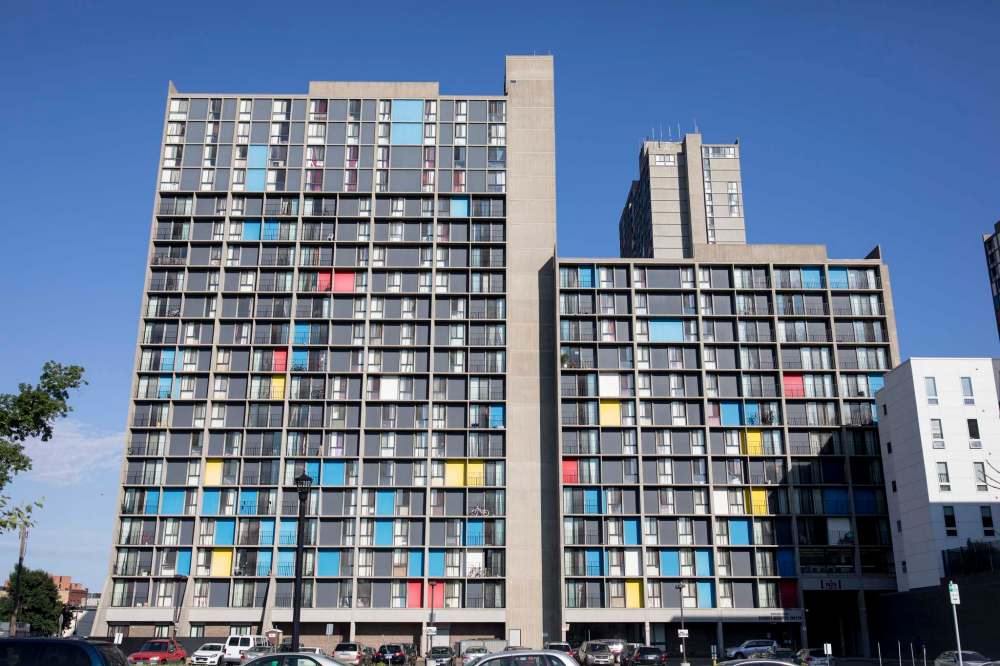
Cedar-Riverside is nestled between two major highways in downtown Minneapolis and along the banks of the Mississippi River, discernible by colourful panelled towers that house the country’s largest Somali community — an estimated 4,000 to 6,000 people in a four-block radius. The neighbourhood has long been home to immigrants: European transplants began arriving in large numbers in the 19th century. By the 1980s, Somalis began to emigrate to the neighbourhood, and as Somalia descended into civil war in the early 1990s, thousands found safe passage in Minneapolis through a network of volunteer agencies.
The families of Abdi, 18, and Yusuf, 17, were among them, although much later. Abdi, the second oldest of seven children, lived in a small Ethiopian town before immigrating when he was 11. Yusuf’s parents met in Kenya before immigrating in the early 2000s.
The two boys were Muslims from traditional east African families in the post-9/11 era who knew little English and even less about American culture. They faced language barriers and racism in school. And they were challenged to connect with the customs of the older generation of Somalian immigrants while trying to find their place as adolescents in the West.
“There was a lot of things that I didn’t see back home that I learned here,” Abdi said. “There was a lot of new things.”
One of those new things was basketball, which he quickly became infatuated with in middle school. He moulded close relationships through the sport, including with Yusuf, even though Cedar-Riverside had little hoops history and few options to play at the youth level.
But their passion for basketball, formed during recess and impromptu sessions at the neighbourhood’s youth centre, came at an opportune time. In 2008, a longtime youth coach named Jennifer Weber had decided to go back to graduate school in her 30s. Part of her coursework was to donate service hours as a behaviour specialist, and she volunteered to coach at Cedar-Riverside after noticing it didn’t have any athletics. Yusuf and Abdi were among her first players.
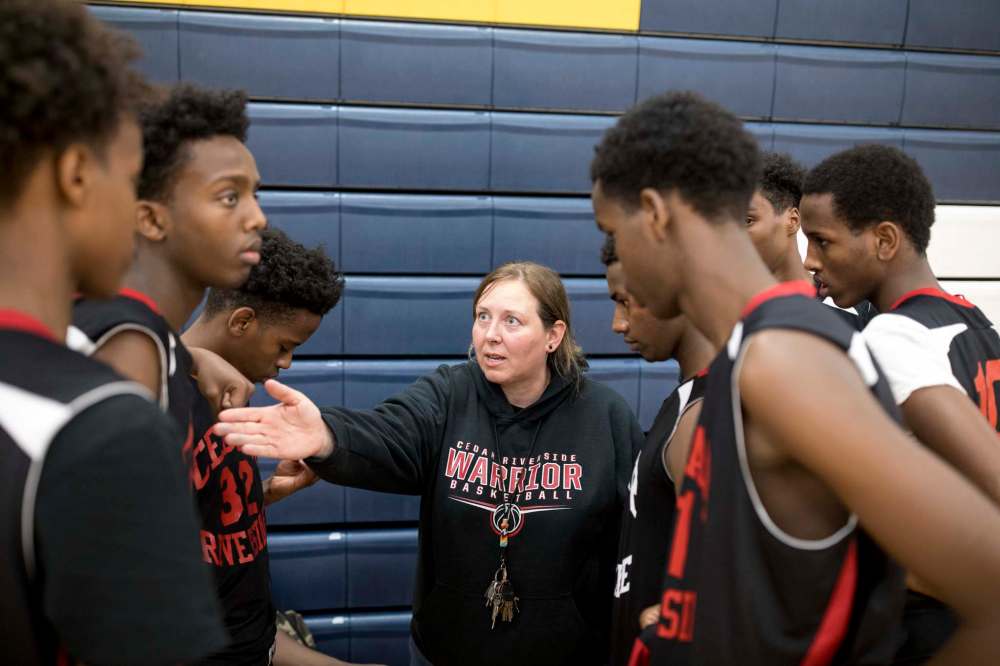
“I fell in love with the families and the kids,” she said.
Many in the community were skeptical at first. Weber, 45, was a white woman with a thick Wisconsin accent who knew nothing about Somali culture. It came at a time when Somali teenagers across Minnesota continued to make national headlines for attempting to leave their homes to fight with terrorist organizations al-Shabab (which means “The Youth”) and the Islamic State group. It also came during the introduction of the federal government’s Countering Violent Extremism (CVE) program, introduced in 2011 under the Obama administration.
By September 2014, then-attorney general Eric Holder had announced Minneapolis as one of its three pilot cities, along with Boston and Los Angeles, saying it had been chosen because of the “historic and strong relationship between the Somali-Minnesotan community and local law enforcement.”
The government named its root causes of radicalization in Minneapolis — “disaffected youth” and “community isolation” among them — and sought to pour money and resources into a broad array of community programs to stop it. By taking an “if you see something, say something” approach through local law enforcement and community outreach, CVE was aimed at identifying early signs of radicalization in youth.
But soon, activists were pointing out that no empirical evidence or data suggested CVE would be an effective deterrent against extremism. Community leaders feared it would only perpetuate Islamophobia and create a surveillance state in their neighbourhoods.
Weber won trust as an outsider with consistency and compassion, finding middle ground with her new impressionable teenagers by laying strict ground rules for practices. At night, she started a walking club for the elder women, hoping she could connect on a deeper level with guardians of the kids she was coaching.
She also decided early on that CVE was not the right move for her budding program. She watched the rift unfold as community program leaders like herself wrestled with the decision to apply for funding. Two organizations have received grants: the Hennepin County Sheriff’s Office (nearly US$350,000) and Heartland Democracy (nearly US$425,000), a non-profit that targets at-risk youth and hopes to give them an outlet to prevent the adoption of extremist ideologies. A third program serving Somali youth, Ka Joog, refused a US$500,000 federal grant in February 2017 shortly after Trump announced his initial refugee and travel restrictions.
The introduction of these grants left Weber unsettled. Rumours swirled. Before tryouts for the travelling team, some of the boys — including Abdi and Yusuf — met with Weber on the court.
“Are you taking that money?’” a few players asked.
“And I said, ‘No, we’re not taking that money,’” Weber said. “Because I knew stuff about that money, too… There were all these protocols being put in to look for behaviours. ‘Look for these things you’re going to see. These things are a predictor of this.’ And I didn’t agree with that.”
Her decision reinforced her standing among her players.
“They’ve probably offered her a lot… because they know how connected she is with the kids,” Yusuf said of community members trying to sway Weber to work with CVE. “She’s taken no part in it. That’s why we’re close with her. She puts us first.”
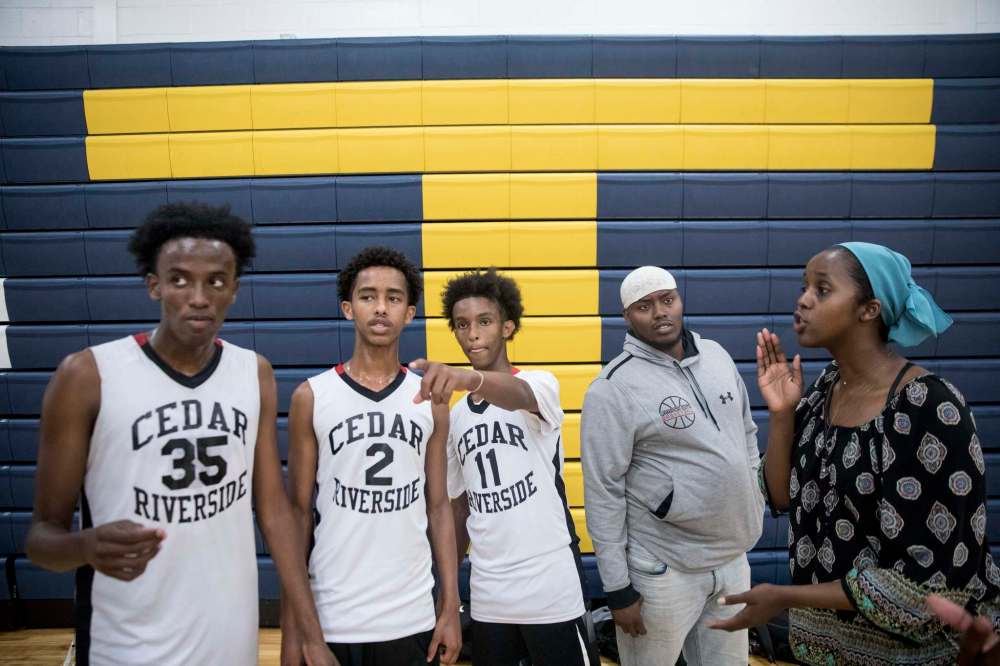
There are new fears that CVE could be amplified under Trump. Reuters reported in 2017 that the president could revamp the program to focus solely on Islamic terrorism and not focus on other extremist groups, including white supremacists — and could potentially change the name to “Countering Islamic Extremism.”
The divisive policy has been confusing at times for Abdi and Yusuf, both of whom contend that the government is using the program to spy on them. They have nothing to hide, they say, as two shy teenagers who are obsessed with basketball and who dream of attending college. They’re known around Cedar-Riverside simply as “hoopers.” But they still sometimes wonder if anyone is watching them. It could be a cop or a teacher or even someone from their own community.
“You have to watch your back and all that stuff. You don’t know who to trust,” Abdi says. “You could use that (CVE) money to build more space in the gym.”
● ● ●
Abdi has been spending almost all of his time in the gym recently, knowing his work this summer is critical if he’s to have any chance at earning a college basketball scholarship. He’s a low-level prospect, but his fire is undeniable. When Yusuf and another player started jawing in a tournament game in early July, the painfully quiet Abdi — whom Weber calls “Renaissance Man” because of his passion for learning languages and playing piano — came to the defence of his teammate and nearly started a scuffle.
Yusuf has been the bigger project. Unlike Abdi, who has started for Roosevelt High School in Minneapolis since he was a sophomore, Yusuf only started getting varsity minutes at the school after he hit a string of baskets in the final minutes against the state runner-up last winter. It was one of the highest moments of his young life.
There are difficult moments, too, like when Abdi had to talk to his high school coach about being mistaken for someone involved in a drive-by shooting. Weber has seen skepticism shown toward them at AAU events, too, mostly from parents. “Who let these terrorists in?” one said as Weber’s girls team prepared to play in a tournament game a couple of years ago. At other events in Minnesota, she has noticed her boys team get side-eyed when they walked into a gym.
“You’re always being suspected of doing something bad,” Yusuf said. “Whatever you’re there for, you’re always being suspected. Even if you’re not doing nothing. Kind of like: ‘Watch out for them.’”
Few Somalis have played high-major college basketball, and Abdi and Yusuf might not make it that far. Neither has received any interest from college coaches, although they will have a chance at exposure when they travel to the Las Vegas Classic — considered one of the country’s premier AAU events — in July. It will be the first time a team from Cedar-Riverside plays in a tournament of that magnitude.
“A lot of these young people, most of them, have never seen Somalia. Either they were born in a refugee camp or in Minnesota. So they hardly know great stories about their background,” said Abdirizak Bihi, a powerful Somali-American social activist whom some consider the unofficial mayor of Cedar-Riverside. “So that gap, with basketball… is seeing a huge push right now. A lot of young people really want to make it.
“A lot of them, because of Coach Weber, have dreams now.”
Bihi has long been a polarizing figure in his own community. He formerly ran a counterterrorism program after his nephew was one of the first Minneapolis teens to disappear to join al-Shabab in 2008 before being killed the next year.
But Bihi would rather talk basketball, about how his daughters want to play in college, about how the game is helping build his community. He hosts an English-language radio show for Somalis, and Weber was his premier guest on a program in early July.
“Is there anything these kids can’t do?” Bihi asked.
“When people say that exact question, or (ask) is there anything these kids fear?” Weber said. “No.”
● ● ●

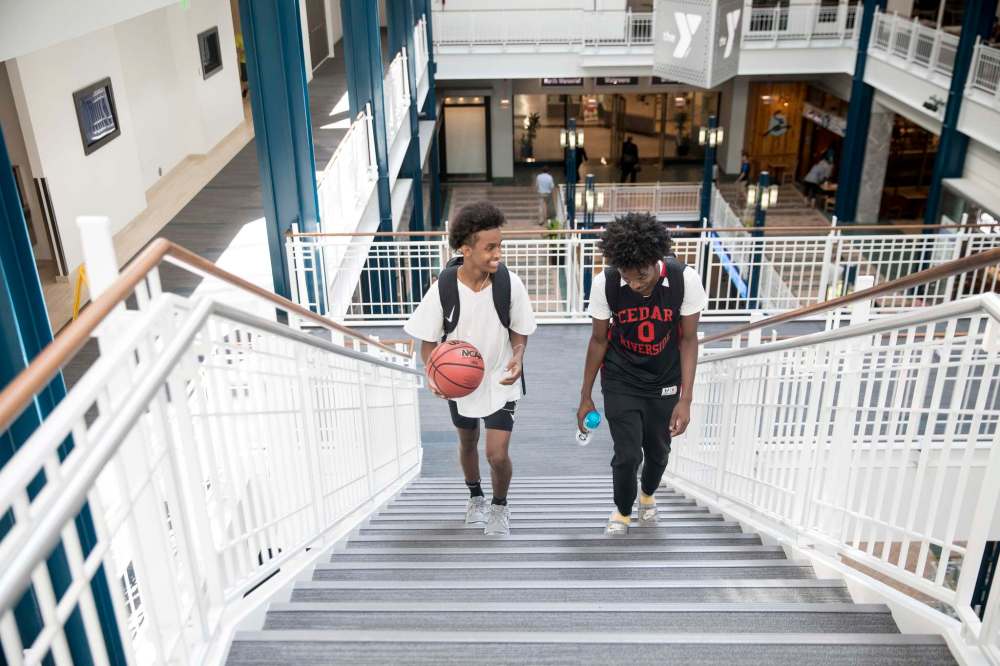
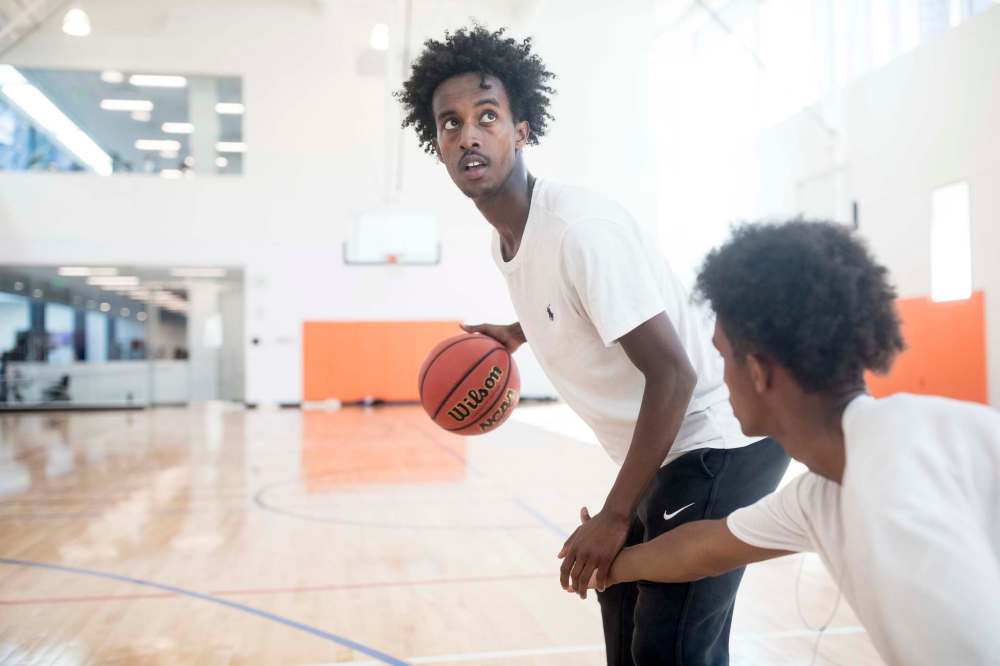
Across town, Abdi and Yusuf were playing pickup basketball at the downtown YMCA. They are hardly ever apart, but eventually went their separate ways later that evening, with Abdi staying to get a few more shots up and Yusuf headed back to Cedar-Riverside.
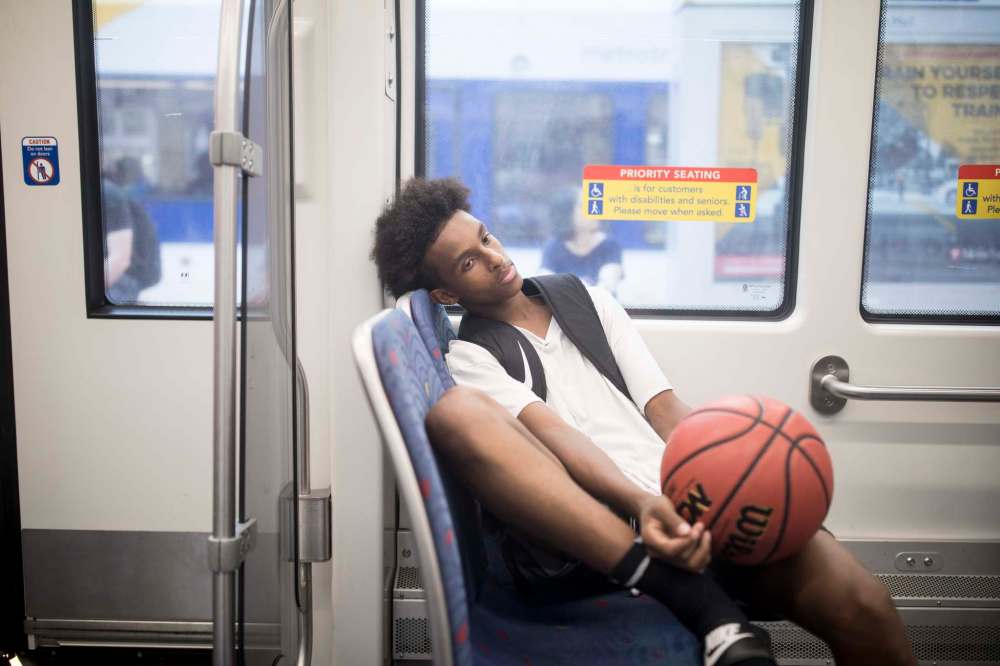
Yusuf walked a couple of blocks to the train, looking out the window as it prowled through the city. He could point to any section of his neighbourhood and pull out a difficult memory, like in 2016 when he and Abdi went to protest the eventually cancelled HBO show Mogadishu, Minnesota, which was accused of being propaganda for CVE, and were pepper-sprayed by police. He could point to the community centre off 15th Avenue, where last month he and Abdi went to listen to elders vent in the wake of the Supreme Court’s ruling upholding Trump’s travel ban.
But instead, Yusuf smiled as his empty train arrived in Cedar, where the sun was beginning to set on a festival held by his people in a park. Nobody noticed him as he turned the corner toward the commons of his community, or as he disappeared behind the tallest colourful tower, finally home and out of view.
“I can’t wait for Las Vegas,” he said as he walked along the path, already wondering who might be there to watch him at the most important basketball tournament of his life.
— Washington Post