

Farewell to bronze-medal matchup
Curling Canada eliminates third-place game with no one shedding a tear

Advertisement
Read this article for free:
or
Already have an account? Log in here »
To continue reading, please subscribe:

Digital Subscription
One year of digital access for only $205*
- Enjoy unlimited reading on winnipegfreepress.com
- Read the E-Edition, our digital replica newspaper
- Access News Break, our award-winning app
- Play interactive puzzles
*First annual payment billed as $205.00 + GST for one year. This annual subscription will automatically renew at $233.00 + GST every 52 weeks (10% off the regular annual price of $259.35). Offer available to new and qualified returning subscribers only. Cancel any time.
To continue reading, please subscribe:
Add Free Press access to your Brandon Sun subscription for only an additional
$1 for the first 4 weeks*
- Enjoy unlimited reading on winnipegfreepress.com
- Read the E-Edition, our digital replica newspaper
- Access News Break, our award-winning app
- Play interactive puzzles
*Your next Brandon Sun subscription payment will increase by $1.00 and you will be charged $17.95 plus GST for four weeks. After four weeks, your payment will increase to $24.95 plus GST every four weeks.
Read unlimited articles for free today:
or
Already have an account? Log in here »
Hey there, time traveller!
This article was published 01/02/2018 (3172 days ago), so information in it may no longer be current.
PENTICTON, B.C. — By now, every curling fan in Canada has heard about the new national championship format. New teams, more teams, new ways to group them. Championship round, seeding round, a new wild-card jacket.
Yet in all the chatter, one change went almost entirely unnoticed. Need a hint? Look at the schedule: the playoff timing is a little different. The top Page playoff game is on Saturday night; on Sunday morning, there is only a semifinal.
In other words: the bronze-medal game is dead, and so far, nobody has turned out to its funeral.
After seven editions, the third-place match has just vanished. News stories about the new format barely mentioned its absence. Some curlers in Penticton didn’t even notice: “It’s gone?” more than one player said, when asked about it.
This is how the least-beloved game in Scotties history ends: not with a bang, but with a whimper.
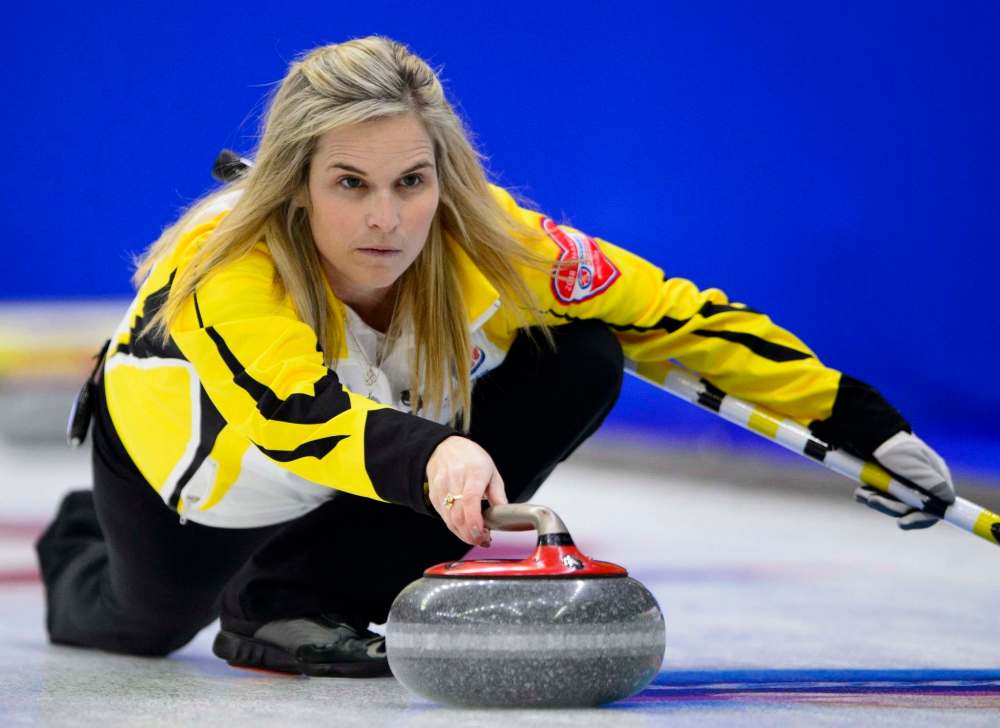
“We actually high-fived when we saw it wasn’t there,” says Manitoba skip Jennifer Jones. “It was just tragic.”
So, now that Curling Canada has quietly axed the bronze-medal match, let’s take a moment to deliver its eulogy. This is the not-so-storied history of the game almost nobody wanted to play and some of those that did, can’t remember.
The bronze-medal game came into the world in the summer of 2010, conceived at Curling Canada’s annual off-season meeting. The addition was intended to follow the format of world championships and Olympic Games.
After all, the theory goes, a third-place finisher should win a medal, not earn one on a loss.
Television liked the idea, too. The sport was growing its televised presence, and a bronze-medal game meant a new match between likely fan favourites. Some years, TSN would draw around one million viewers to the third-place game.
Curlers were, to put it delicately, not quite so enthusiastic.
When the game made its Brier debut in 2011, Newfoundland hero Brad Gushue told the Regina Leader-Post that he “wasn’t a fan.” Alberta Olympian Kevin Martin thought it would go away, because it “doesn’t make any sense at all.”
Gushue beat Martin 10-5 in that first Brier bronze-medal tilt. Martin, one suspects, didn’t care very much.
As the game persisted, so did the frustration. In 2015, Gushue again fell into the third-place game, where he lost to Saskatchewan’s Steve Laycock. After the match, he told the Calgary Herald it was “the dumbest game in curling.”
Headline-writers pounced: GUSHUE’S BEEF WITH BRIER BRONZE, the St. John’s Telegramannounced.
But if Gushue was more blunt than some, he was far from alone. When Manitoba champion Chelsea Carey landed in the 2014 Scotties bronze-medal game (she won), she flatly told reporters she didn’t think they should have to bother.
Jones disliked it from the beginning. It was “senseless,” Jones says, and had little value beyond squeezing another draw out of crestfallen curlers. Try as a team might, there was almost no way to get their heart in it.
“There wasn’t a lot of glowing love for the bronze-medal game,” says Nolan Thiessen, a former three-time Brier champion and now Curling Canada player liaison. “Teams come here to do one thing, they come here to win it.”
It wasn’t that there was no pride in a third-place finish at a national championship. It’s partly that the Page playoff system provides its own placement logic: since there is only one semifinal, the loser should finish in third place.
More to the point: for top contenders, the Scotties and the Brier are a step towards a bigger prize.
So if athletes would “crawl across the desert to get an Olympic bronze medal,” as Martin told the Leader-Post in 2011, a Canadian championship is different. Anything other than first place is a result that didn’t get you there.
“You’re just trying to advance to worlds,” Jones says. “That’s the whole point of this competition. At the Olympics, you want to win a medal. At the world championships, you want to win a medal. Here you don’t, to be honest, really care.”
So for seven seasons the game drew viewers, even though it was a bit of a drag. Some teams showed up to the sheet looking under-slept, overplayed or just doing a passable impression of someone who cared about winning the game.
After Manitoba’s Kerri Einarson lost the bronze to Jones in 2016, she could barely drum up the energy to comment on it.
“It was a very tough game for me to come in to play,” the skip says now, at her second Scotties. “We were still up for it, but not how we would be. Because we still wanted that Scotties ring, that’s for sure. It was a pretty tough game.”
Well, it’s gone now, and its passing was mercifully painless.
It really came down to timing. The new 16-team national championship format added another day of pre-playoff draws. To avoid playoff teams having to play thrice in one day, the semifinal was pushed to the Sunday morning.
With that, Curling Canada had quietly dumped the third-place game. There… wasn’t too much discussion.
“It just made sense that it goes away,” Thiessen says. “There wasn’t a lot of athletes clamouring for it to stick around. I don’t think there’s going to be anybody who loses the semifinal here and says, ‘Is there another game I get to play?’”
Before we bid it adieu forever, here are some fun facts about the Scotties bronze-medal game.

Four skips have the distinction of playing it twice: Jones, Carey, Stefanie Lawton and Rachel Homan. Also, it ended with a three-year winning streak for a Team Canada, starting with a squad skipped by Homan in 2015, then by Jones and Carey.
That’s about all there is to say, to cement the glory of the Scotties’ seven most forgettable playoff games.
“Farewell, bronze-medal game,” Jones says. Then she breaks into a laugh, and walks away.
melissa.martin@freepress.mb.ca
Melissa Martin
Reporter-at-large
Melissa Martin reports and opines for the Winnipeg Free Press.
Every piece of reporting Melissa produces is reviewed by an editing team before it is posted online or published in print — part of the Free Press‘s tradition, since 1872, of producing reliable independent journalism. Read more about Free Press’s history and mandate, and learn how our newsroom operates.
Our newsroom depends on a growing audience of readers to power our journalism. If you are not a paid reader, please consider becoming a subscriber.
Our newsroom depends on its audience of readers to power our journalism. Thank you for your support.
A brief history of bronze
Here, for posterity, is a look back at the winners and losers of the seven least-anticipated Scotties games in history:
2011: Heather Smith-Dacey (Nova Scotia) 9, Rachel Homan (Ontario) 7
2012: Jennifer Jones (Manitoba) 8, Marie-France Larouche (Quebec) 6
2013: Kelly Scott (British Columbia) 10, Heather Nedohin (Canada) 8
2014: Chelsea Carey (Manitoba) 7, Stefanie Lawton (Saskatchewan) 3
2015: Rachel Homan (Canada) 7, Stefanie Lawton (Saskatchewan) 5
2016: Jennifer Jones (Canada) 8, Kerri Einarson (Manitoba) 7
2017: Chelsea Carey (Canada) 7, Krista McCarville (Northern Ontario) 4
Most memorable bronze-medal games
“I don’t even remember them. I can’t even remember what years I was in it.” — Jennifer Jones
“I don’t think there is one, to be honest with you.” — Nolan Thiessen
Melissa Martin
Reporter-at-large
Melissa Martin reports and opines for the Winnipeg Free Press.
Every piece of reporting Melissa produces is reviewed by an editing team before it is posted online or published in print — part of the Free Press‘s tradition, since 1872, of producing reliable independent journalism. Read more about Free Press’s history and mandate, and learn how our newsroom operates.
Our newsroom depends on a growing audience of readers to power our journalism. If you are not a paid reader, please consider becoming a subscriber.
Our newsroom depends on its audience of readers to power our journalism. Thank you for your support.
Related Articles
McEwen well on way to full recovery




Advertisement Advertise With Us
Advertisement Advertise With Us
History
Updated on Thursday, February 1, 2018 7:28 AM CST: Photo added.
Updated on Thursday, February 1, 2018 1:22 PM CST: Corrects number of skips playing twice