

Latest Olympic example shows days of Canadian curling domination are “long gone”
Advertisement
Read this article for free:
or
Already have an account? Log in here »
To continue reading, please subscribe:

Digital Subscription
One year of digital access for only $205*
- Enjoy unlimited reading on winnipegfreepress.com
- Read the E-Edition, our digital replica newspaper
- Access News Break, our award-winning app
- Play interactive puzzles
*First annual payment billed as $205.00 + GST for one year. This annual subscription will automatically renew at $233.00 + GST every 52 weeks (10% off the regular annual price of $259.35). Offer available to new and qualified returning subscribers only. Cancel any time.
To continue reading, please subscribe:
Add Free Press access to your Brandon Sun subscription for only an additional
$1 for the first 4 weeks*
- Enjoy unlimited reading on winnipegfreepress.com
- Read the E-Edition, our digital replica newspaper
- Access News Break, our award-winning app
- Play interactive puzzles
*Your next Brandon Sun subscription payment will increase by $1.00 and you will be charged $17.95 plus GST for four weeks. After four weeks, your payment will increase to $24.95 plus GST every four weeks.
Read unlimited articles for free today:
or
Already have an account? Log in here »
Hey there, time traveller!
This article was published 18/02/2022 (1676 days ago), so information in it may no longer be current.
BEIJING – Similar to gold-or-bust expectations for Canadian hockey teams, the country’s curling representatives are under just as much pressure to reach the top of the podium.
There’s just one problem. Other powerhouse curling countries are just as good if not better than the top Canadian rinks.
The Pyeongchang Games served as a wake-up call. The Beijing Olympics made it clear. Canada is not the curling force it once was.
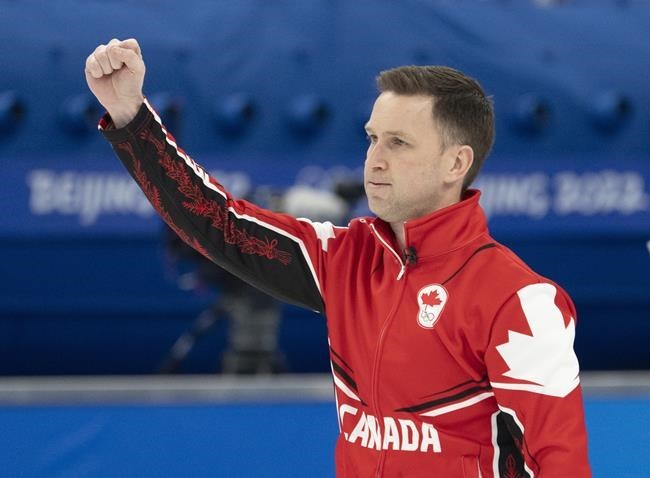
“I don’t think a lot of Canadians understand how good the teams are in Europe and around the world now in Asia,” said South Korea team coach Peter Gallant.
“They have caught up to Canada.”
Canada’s John Morris and Kaitlyn Lawes won mixed doubles gold four years ago in the discipline’s Olympic debut. The Canadian four-player teams were both shut out of the Olympic medals for the first time.
At the Beijing Games, all three Canadian entries had middling performances.
Morris and Rachel Homan missed the playoffs in mixed doubles and Jennifer Jones didn’t make the cut in the women’s team event.
Brad Gushue lost the men’s semifinal before salvaging a bronze with a win over the United States.
“We’ve worked our butts off and I think we’ve all done ourselves proud and done the country proud,” Gushue said. “I know we all expect gold but that shouldn’t be the reality.”
Sweden and Britain made the final four in all three disciplines at the Ice Cube. Teams from Japan, Switzerland, Italy, the United States and Norway also shone.
Canada remains a force on the pebbled ice, there’s just more parity with each passing quadrennial as the competition improves.
“We wanted to win gold, too — just like everyone else wanted,” said Canada third Mark Nichols. “But for people to think that we’re going to walk in here and just kind of coast into the playoffs and win a semifinal and get ourselves into the (final), those days are gone.
“They’re long gone I think.”
Canada used to enter world championships or the Olympics as a favourite to win gold. A podium appearance was considered a virtual lock.
Now it’s a coin flip whether there will be any hardware at all.
“In the ’90s, Canada was the powerhouse and everyone knew it,” said American second Matt Hamilton, who won Olympic gold four years ago.
“I think what happened is everyone kind of took notice and started trying to see what Canada was doing and replicating it and mimicking it.”
More and more countries started to invest in top coaches and high performance, with many federations focusing on just one or two teams.
Canada has more overall depth but that doesn’t necessarily lead to results.
“These guys that are coming over, they’re professional curlers,” said Nichols. “We’re trying to make sure we’re balancing our families and our businesses and our jobs and making sure that we’re doing all that too.
“There’s a fine balance there too. It’s so hard to say. I wish I had the answer to know what Canada could do, but I don’t.”
Canada last reached the top of the team podium in 2014 when Jones ran the table and Brad Jacobs won the men’s title.
Curling Canada has its work cut out for it as it looks ahead to the next quadrennial and rebounding for the 2026 Winter Games in Milan, Italy.
First up though is trying to get back on the world championship podium after missing out on the medals last season.

It’s possible the association could make major changes to its approach. A more likely scenario would be an adjustment to the scheduling of the Olympic trials.
The team trials were in late November and the mixed doubles trials were scheduled for late December, much later than other countries at the Games.
“I don’t really think you have to reinvent the wheel,” Gallant said. “I just think you have to give teams more preparation time.”
This report by The Canadian Press was first published Feb. 18, 2022.
Follow @GregoryStrongCP on Twitter.
Related Articles
European curling championships removed from Russia Canada still a dominant force in international curling


Advertisement Advertise With Us
Advertisement Advertise With Us