

Anchored putting stroke outlawed
Advertisement
Read this article for free:
or
Already have an account? Log in here »
To continue reading, please subscribe:

Digital Subscription
One year of digital access for only $205*
- Enjoy unlimited reading on winnipegfreepress.com
- Read the E-Edition, our digital replica newspaper
- Access News Break, our award-winning app
- Play interactive puzzles
*First annual payment billed as $205.00 + GST for one year. This annual subscription will automatically renew at $233.00 + GST every 52 weeks (10% off the regular annual price of $259.35). Offer available to new and qualified returning subscribers only. Cancel any time.
To continue reading, please subscribe:
Add Free Press access to your Brandon Sun subscription for only an additional
$1 for the first 4 weeks*
- Enjoy unlimited reading on winnipegfreepress.com
- Read the E-Edition, our digital replica newspaper
- Access News Break, our award-winning app
- Play interactive puzzles
*Your next Brandon Sun subscription payment will increase by $1.00 and you will be charged $17.95 plus GST for four weeks. After four weeks, your payment will increase to $24.95 plus GST every four weeks.
Read unlimited articles for free today:
or
Already have an account? Log in here »
Hey there, time traveller!
This article was published 22/05/2013 (4882 days ago), so information in it may no longer be current.
GOLF’S governing bodies approved a rule Tuesday that outlaws the putting stroke used by four of the last six major champions, a move opposed by the PGA Tour, which contends long putters are not hurting the game.
The Royal & Ancient Golf Club and U.S. Golf Association said Rule 14-1b will take effect in 2016.
“We recognize this has been a divisive issue, but after thorough consideration, we remain convinced that this is the right decision for golf,” R&A chief executive Peter Dawson said.
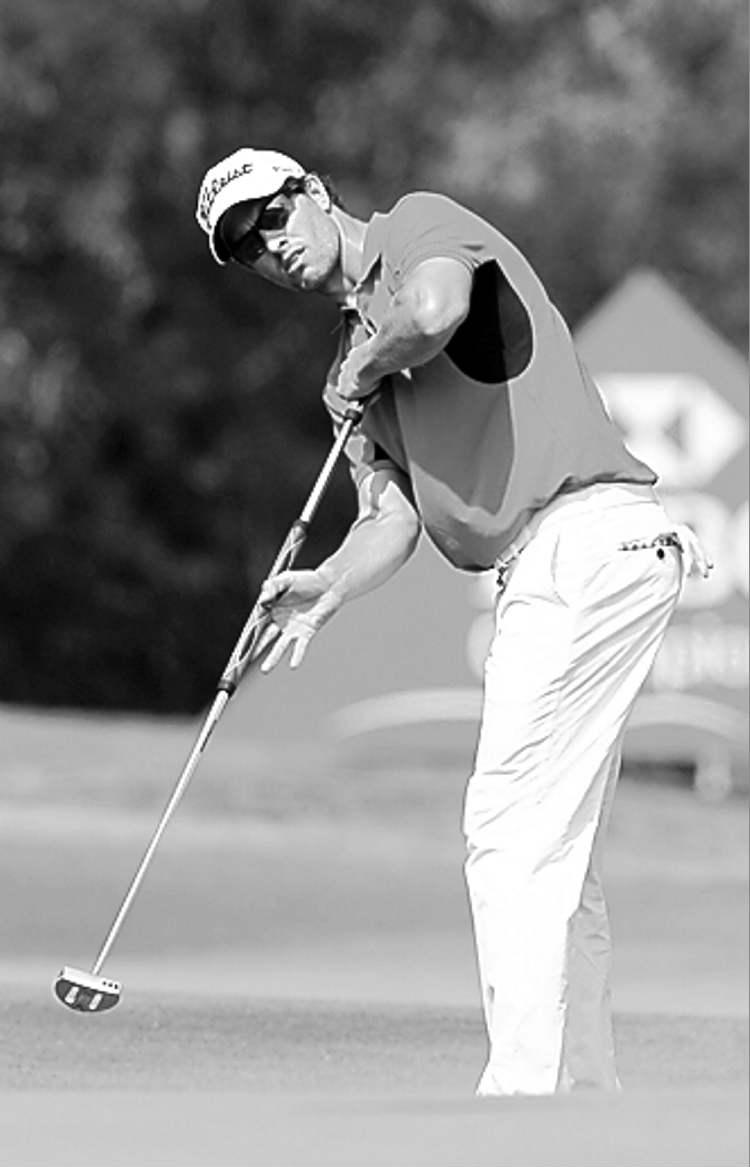
The new rule does not ban the long putters, only the way they commonly are used. Golfers no longer will be able to anchor the club against their bodies to create the effect of a hinge. Masters champion Adam Scott used a long putter he pressed against his chest. British Open champion Ernie Els and U.S. Open champion Webb Simpson used a belly putter, as did Keegan Bradley in the 2011 PGA Championship.
“We strongly believe that this rule is for the betterment of the game,” USGA president Glen Nager said. “Rule 14-1b protects one of the important challenges in the game — the free swing of the entire club.”
The announcement followed six months of contentious debate, and it might not be over.
The next step is for the PGA Tour to follow the new rule or decide to establish its own condition of competition that would allow players to anchor the long putters. PGA Tour commissioner Tim Finchem said in February the USGA and R&A would be “making a mistake” to adopt the rule, though he also has stressed the importance of golf playing under one set of rules.
“I think it’s really important that the PGA Tour — and all the professional tours — continue to follow one set of rules,” USGA executive director Mike Davis said. “We have gotten very positive feedback from the tours around the world saying that they like one set of rules, they like the R&A and USGA governing those. So if there was some type of schism, we don’t think that would be good for golf.
“And we are doing what we think is right for the long-term benefit of the game for all golfers, and we just can’t write them for one group of elite players.”
The tour said in a statement it would consult with its Player Advisory Council and policy board to determine “whether various provisions of Rule 14-1b will be implemented in our competitions, and if so, examine the process for implementation.”
PGA of America president Ted Bishop, who had some of the sharpest comments over the last few months, also said his group would discuss the new rule — and confer with the PGA Tour — before deciding how to proceed.
“We are disappointed with this outcome,” Bishop said. “As we have said publicly and repeatedly during the comment period, we do not believe 14-1b is in the best interest of recreational golfers and we are concerned about the negative impact it may have on both the enjoyment and growth of the game.”

Some forms of anchoring have been around at least 40 years, and old photographs suggest it has been used even longer. It wasn’t until after Bradley became the first major champion to use a belly putter that the USGA and R&A said it would take a new look at the putting style.
“It can never be too late to do the right thing,” Nager said.
“Intentionally securing one end of the club against the body, and creating a point of physical attachment around which the club is swung, is a substantial departure from that traditional free swing,” Nager said.
— The Associated Press
Related Articles
Khan, Casey in U.S. Open Turkey has Tiger by tail in bid for Olympics


Advertisement Advertise With Us
Advertisement Advertise With Us