

Column: A quiet, measured response from golf on civil unrest
Advertisement
Read this article for free:
or
Already have an account? Log in here »
To continue reading, please subscribe:

Digital Subscription
One year of digital access for only $205*
- Enjoy unlimited reading on winnipegfreepress.com
- Read the E-Edition, our digital replica newspaper
- Access News Break, our award-winning app
- Play interactive puzzles
*First annual payment billed as $205.00 + GST for one year. This annual subscription will automatically renew at $233.00 + GST every 52 weeks (10% off the regular annual price of $259.35). Offer available to new and qualified returning subscribers only. Cancel any time.
To continue reading, please subscribe:
Add Free Press access to your Brandon Sun subscription for only an additional
$1 for the first 4 weeks*
- Enjoy unlimited reading on winnipegfreepress.com
- Read the E-Edition, our digital replica newspaper
- Access News Break, our award-winning app
- Play interactive puzzles
*Your next Brandon Sun subscription payment will increase by $1.00 and you will be charged $17.95 plus GST for four weeks. After four weeks, your payment will increase to $24.95 plus GST every four weeks.
Read unlimited articles for free today:
or
Already have an account? Log in here »
Hey there, time traveller!
This article was published 02/06/2020 (2313 days ago), so information in it may no longer be current.
Golf has never been known to move quickly.
Harold Varner III illustrated as much with thoughtful observations he posted on social media after civil unrest in America over the weekend reached levels not seen in more than 50 years.
“I’ve received more messages than ever before, mostly from people who wanted me to speak up immediately because of who I am. I AM BLACK,” his post began. “But it’s not helpful to anyone when impulsive, passionate reaction takes precedence over clear-minded thought.”
What followed from Varner, one of three PGA Tour members of black heritage, was just that.
He referred to the “senseless killing” of George Floyd, the handcuffed black man who died last week when a white police officer in Minneapolis put a knee to the back of his neck until he stopped breathing. “To me, it was evil incarnate,” Varner said.
“There are objective truths in life. I think that’s one of them,” he wrote in his Monday post.
Varner also cautioned against single-minded thoughts, that one can be against police killing a man while saying that burning businesses and police stations is wrong.
“We can go beyond the trap of one-dimensional thinking. Once we do, our eyes will see the righteous, our hearts will feel the love, and we’ll have done more to honour all those subjected to evil and its vile nature,” he concluded.
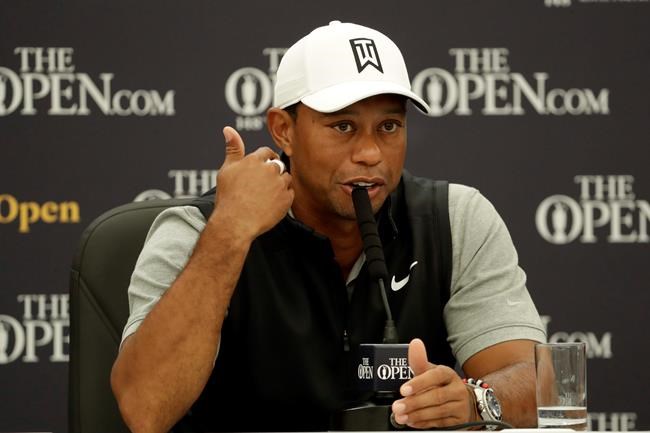
The more prominent voice is Tiger Woods, whose profile worldwide is so great that he chose early in his career not to get too opinionated on social issues.
One example was two years ago at Riviera, during Black History Month, when he was asked during a news conference what concerned him about the plight of black Americans. Woods was smart in his delivery, short on substance, when he said African Americans have had their share of struggles, it has gotten better and there’s room for improvement.
Accurate and safe.
His tweet Monday night arrived shortly before 10 p.m. in Florida. It began with his heart going out to Floyd, his loved ones and “all of us who are hurting right now.” And while he said he has “the utmost respect” for law enforcement and the training involved to know how, when and where to use force, “This shocking tragedy clearly crossed that line.”
Woods referenced the Rodney King riots in Los Angeles in 1992 — he was a teenager growing up in neighbouring Orange County — and said “education is the best path forward.”
“We can make our points without burning the very neighbourhoods we live in,” he said. “I hope that through constructive, honest conversations we can build a safer, unified society.”
Whether he said a little or a lot, Woods said something. That was important.
Voices need to be heard, especially relevant ones.
Golf doesn’t have many of those. It has a shabby history of inclusion, particularly when it comes to blacks, starting with the PGA of America taking until 1961 to drop its “Caucasian-only clause.”
The PGA Tour now attracts the best from every corner of the globe. It can be an expensive game, yet not even the privileged are assured of making it. Woods said in a 2009 interview on being the only black on tour, “It’s only going to become more difficult for African Americans now, because golf has opened up around the world.”
And so where does golf fit in the discussion of equality and justice?
The PGA Tour is the only major sports league that did not issue a public statement or reference the views of its players on the homepage of its website.
Would anyone have taken it seriously given the composition and colour of the tour’s membership?
Did it need to carve out a spot on the dais that already was crowded with voices from other sports that are far more germane to the issues?
Commissioner Jay Monahan was searching for answers over the weekend and ultimately chose to keep his thoughts within the tour, sending a letter Monday to his staff and then sharing it with the players.
“The hardships and injustices that have and continue to impact the African-American community are painful to watch and difficult to comprehend,” Monahan wrote. “And as a citizen of this country and a leader of this organization, I must admit that I’m struggling with what my role should be. But I am determined to help and make a difference.”
Monahan said he had several “meaningful and emotional” conversations with colleagues and friends in the black community, “who — once again — showed me that sometimes listening and making a commitment to understand are the only things you can offer, and that’s OK.”
“What I was left with was this,” he wrote. “Make no mistake about it — someone you know and care about is hurting right now, even if they haven’t told you that directly. … And if anyone at the tour is hurting, we should all hurt.”

He also included a link from the Refinery29 website on the unseen pain blacks endure.
“Too often we just move on when we are not directly influenced by the news of the day,” he wrote. “Yes, we have all been impacted by the global pandemic, but we should also be painfully aware and impacted by the dividing lines in our country.
“We might not know exactly what to do right now, but we shouldn’t be deterred.”
The PGA Tour resumes next week at Colonial, back to its familiar world with little controversy and ample privilege. No other sport does charity as well as golf. This issue requires more than that.
If the best it can do is listen and commit to understand, that’s OK.
Related Articles
CBS pushing for players to do their part to boost broadcast

Advertisement Advertise With Us
Advertisement Advertise With Us