

Column: Would new PGA Tour model have stopped defections?
Advertisement
Read this article for free:
or
Already have an account? Log in here »
To continue reading, please subscribe:

Digital Subscription
One year of digital access for only $205*
- Enjoy unlimited reading on winnipegfreepress.com
- Read the E-Edition, our digital replica newspaper
- Access News Break, our award-winning app
- Play interactive puzzles
*First annual payment billed as $205.00 + GST for one year. This annual subscription will automatically renew at $233.00 + GST every 52 weeks (10% off the regular annual price of $259.35). Offer available to new and qualified returning subscribers only. Cancel any time.
To continue reading, please subscribe:
Add Free Press access to your Brandon Sun subscription for only an additional
$1 for the first 4 weeks*
- Enjoy unlimited reading on winnipegfreepress.com
- Read the E-Edition, our digital replica newspaper
- Access News Break, our award-winning app
- Play interactive puzzles
*Your next Brandon Sun subscription payment will increase by $1.00 and you will be charged $17.95 plus GST for four weeks. After four weeks, your payment will increase to $24.95 plus GST every four weeks.
Read unlimited articles for free today:
or
Already have an account? Log in here »
Hey there, time traveller!
This article was published 07/03/2023 (1308 days ago), so information in it may no longer be current.
PONTE VEDRA BEACH, Fla. (AP) — The PGA Tour is going to reward the biggest stars with as many as 11 tournaments that have small fields, big money and no cuts.
This should sound familiar.
And there is no denying it would not have happened without the threat and the disruption of Saudi-funded LIV Golf.
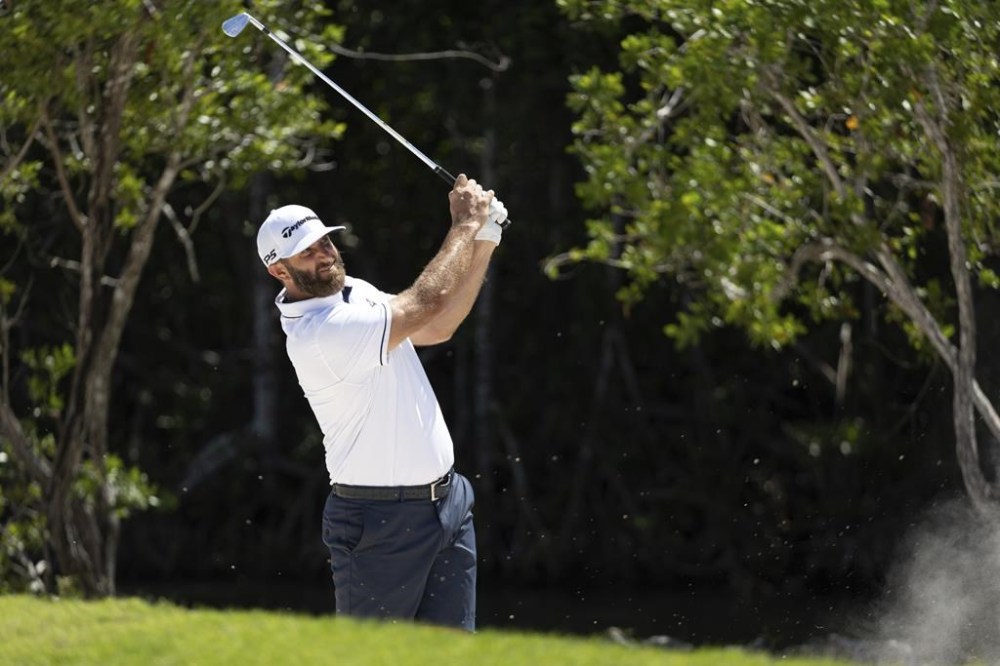
But it raises a question that might shed light on the differences between the rival circuits. If this had been in place two years ago, how many of the 36 PGA Tour players who defected to LIV Golf would have stayed?
“Zero to five,” Jordan Spieth said in offering his best guess, which is all anyone can do. “It’s still not guaranteed money, or that level of guaranteed money.”
That remains one of the differences in the two models.
The PGA Tour has put the prize fund at $20 million for its big events, just like LIV Golf, except with larger fields and more fresh faces. LIV is locked in with the same 48 players and the occasional alternate. But without a cut, the money effectively is guaranteed on both circuits.
Not to be overlooked, however, is that LIV players like Phil Mickelson, Dustin Johnson, Brooks Koepka, Cameron Smith and Bryson DeChambeau — all of whom have won majors in the last five years — received a signing bonus of what has been reported to be in the $150 million neighborhood.
That was more appealing than a chance to play for the Iron Heads or the Hy Flyers.
Spieth still can recall being at a Rolex dinner during the U.S. Open last year when Koepka was part of a group that was circling the wagons for the PGA Tour. And then a week later, Koepka signed for the Saudi money and was gone.
“The easy way out,” is how Rory McIlroy described players leaving for LIV when their prime years were still ahead of them.
The new PGA Tour model effectively creates two tours, but players — no matter their world ranking or what they have done lately — still have to perform.
The top players are guaranteed spots on LIV for multiple years regardless of how they play. That aspect — more than the lack of a 36-hole cut or 54-hole events — is what led to suggestions the Saudi-funded league would be merely an exhibition.
PGA Tour Commissioner Jay Monahan and his predecessor, Tim Finchem, share more than Irish heritage. Both have taken ideas from Greg Norman, the latter having created the World Golf Championships that were similar — but not identical — to the Shark’s failed plan of a World Golf Tour in the mid-1990s.
The PGA Tour stole a page from LIV’s playbook by not having a cut, effectively assuring sponsors and television that all the best players will play four rounds in the eight designated events, along with the three FedEx Cup playoff events.
It effectively creates a two-tier system. Then again, it’s been that way for the 25 years the WGCs have been around. Now those will be gone after this year.
The biggest criticism for the PGA Tour is doing away with a cut, regardless of its history of having no-cut events. Five years ago, the PGA Tour schedule had nine no-cut events, though not everyone felt compelled to play them (three were in Asia in the fall).
Tiger Woods, who has 26 no-cut victories among his 82 wins on the PGA Tour, was said to be among those who felt strongly about a cut, perhaps because he rarely worried about weekends off. Woods failed to make the cut seven times in his first 13 years on tour.
What the tour got right, however, was providing enough of an avenue for those who aren’t at the elite level or are trying to earn their way back. Ten spots will be awarded to leading players from the current FedEx Cup standings, some of that from points accrued in the fall. Five other spots would come from points earned at tournaments that year.
“As long as you’ve got a tee time, good golf takes care of everything,” J.T. Poston said in January as the system was being developed.
Performance still matters.
Jon Rahm, Si Woo Kim and Nico Echavarria already have won this year. About the only thing they have in common is that all start from scratch when they get to Kapalua in January.
It’s hard to argue with how these designated events are working with the star power that keeps showing up at the end. Scottie Scheffler won in Phoenix. Rahm won at Riviera. Bay Hill was the latest example on multiple levels.
The five-way tie for the lead in the final hour featured Scheffler, Spieth and McIlroy. That the winner was Kurt Kitayama also was telling.
Only 18 months ago, Kitayama was in the Korn Ferry Tour Finals just to get a PGA Tour card. Then, he finished third in the Honda Classic. He was runner-up to Rahm in Mexico. He got into the Scottish Open and was runner-up again. He finished 40th in the FedEx Cup.
That would have been enough to get him into a tournament like Bay Hill under the new system that starts in 2024.
There are sure to be others like him.

If not, there’s always the B-flight, which doesn’t look so bad when the purse is $8.1 million (Valspar Championship) or $8.9 million (Valero Texas Open). Equally appealing is not having to face the usual list of all-stars to cash in.
The verdict won’t come until next year when this plays out. Spieth is among those who fear players who don’t qualify for the elite events might be tempted to join LIV. So this might not be the last of the defections.
That would go back to the question raised at the very start of this fracture in golf, whether players are motivated more by money or competition.
___
AP golf: https://apnews.com/hub/golf and https://twitter.com/AP_Sports
Related Articles
Scheffler on another big run, this one getting attention

Advertisement Advertise With Us
Advertisement Advertise With Us