

Block that shot… at all costs
NHL defencemen acting as goalies
Advertisement
Read this article for free:
or
Already have an account? Log in here »
To continue reading, please subscribe:

Digital Subscription
One year of digital access for only $205*
- Enjoy unlimited reading on winnipegfreepress.com
- Read the E-Edition, our digital replica newspaper
- Access News Break, our award-winning app
- Play interactive puzzles
*First annual payment billed as $205.00 + GST for one year. This annual subscription will automatically renew at $233.00 + GST every 52 weeks (10% off the regular annual price of $259.35). Offer available to new and qualified returning subscribers only. Cancel any time.
To continue reading, please subscribe:
Add Free Press access to your Brandon Sun subscription for only an additional
$1 for the first 4 weeks*
- Enjoy unlimited reading on winnipegfreepress.com
- Read the E-Edition, our digital replica newspaper
- Access News Break, our award-winning app
- Play interactive puzzles
*Your next Brandon Sun subscription payment will increase by $1.00 and you will be charged $17.95 plus GST for four weeks. After four weeks, your payment will increase to $24.95 plus GST every four weeks.
Read unlimited articles for free today:
or
Already have an account? Log in here »
Hey there, time traveller!
This article was published 01/12/2014 (4297 days ago), so information in it may no longer be current.
Trying to fire a puck on net in the NHL these days is like trying to thread an arrow through the forest to hit a target behind two trees.
Shot-blocking has evolved to the point a shooter needs luck as well as accuracy.
“It’s like the other team has six goalies on the ice,” Philadelphia Flyers winger Wayne Simmonds joked.
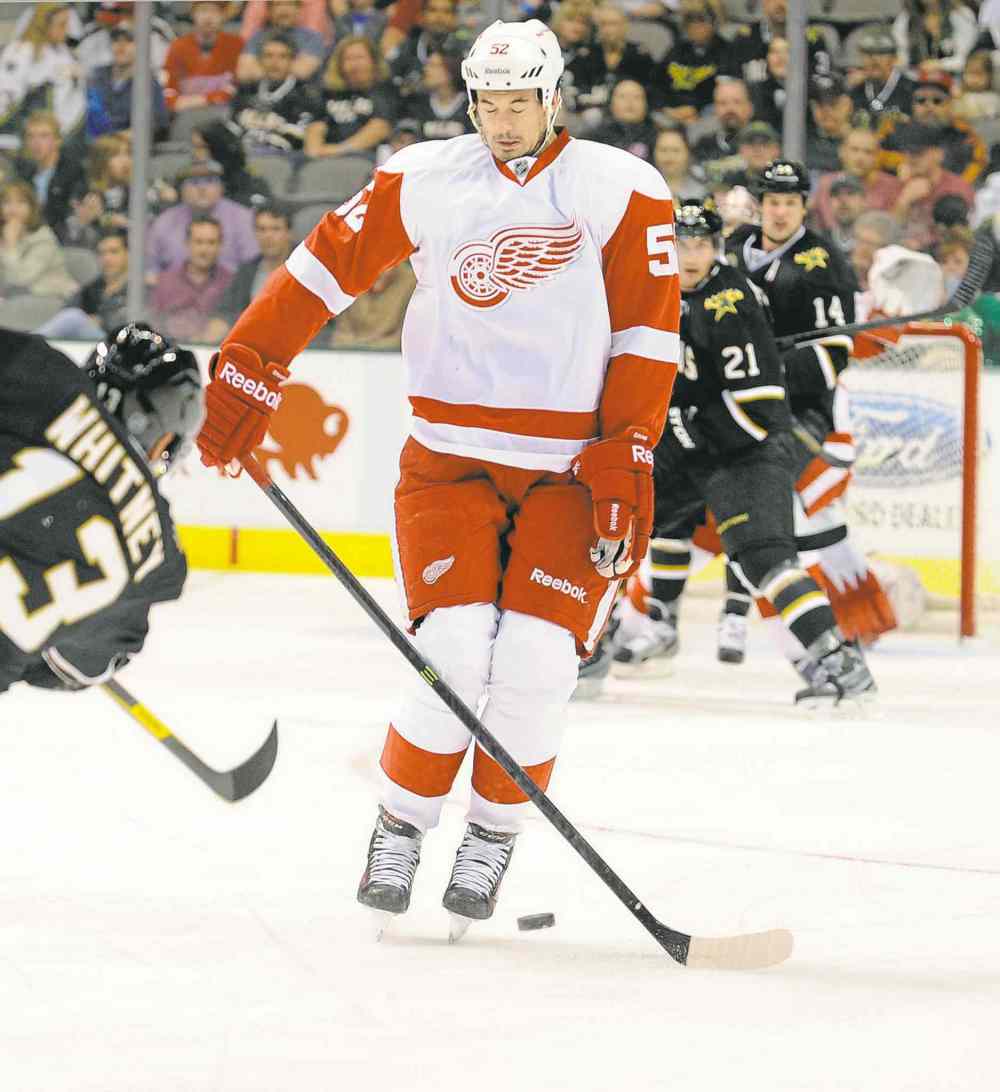
Over the last 10 seasons, shot-blocking has increased by roughly five a game. That means there are about 6,000 more shots a season blocked today than there were in 2003-04.
In 1997-98, the New York Rangers led the NHL with 871 blocked shots and most teams had a total below 700. Last season, the Montreal Canadiens led with 1,491 blocked shots, an average of 18 a game. Four of the 30 teams blocked fewer than 1,000 shots.
“It is hard to get the puck to the net,” Arizona Coyotes defenceman Oliver Ekman-Larsson said. “Everyone is talking about blocking shots.”
Last season, defenceman Andrew MacDonald, playing for both the New York Islanders and Flyers, led the NHL with 242 blocked shots. Coyotes defenceman Michael Stone is on pace for 246 this season.
“It’s considered a big team thing and you usually get the pat on the back when you get back to the bench,” said Vancouver Canucks defenceman Kevin Bieksa. “It can galvanize a team.”
Tampa Bay Lightning defenceman Victor Hedman said shot-blocking “can be as important as scoring a goal.”
He told USA Today Sports that in September, and a month later he was on the injured list with a broken finger suffered when he blocked a shot. He returned on Saturday after missing 18 games.
“You have to pay the price to be mentioned as a good player,” Hedman said before his injury.
The potential for injury doesn’t seem to discourage shot blockers.
“Everyone hates to be scored on,” Simmonds said. “I’m all for sacrificing your body if that is what you need to do to win… You see guys putting their faces in front of pucks.”
The popularity of shot-blocking has escalated as coaches have become more defence-oriented. Now, forwards are working on trying to overcome the shot blockers.
“These defencemen are so good at getting in lanes,” New Jersey Devils forward Travis Zajac said. “It’s almost like you have to make the extra pass if you want to score.”
Forwards are faking more, similar to the pump fake in basketball, with the hope of getting the defender to drop to the ice to block the shot. If the defender takes the fake, the shooter moves around him and fires from an open area.
“But these defencemen are really good at timing it,” Colorado Avalanche forward Gabriel Landeskog said. “They don’t go down and give you a chance to go around. They go down as you’re shooting.”
Most forwards have worked on the angle of their release as a means to get it by a shot-blocker.
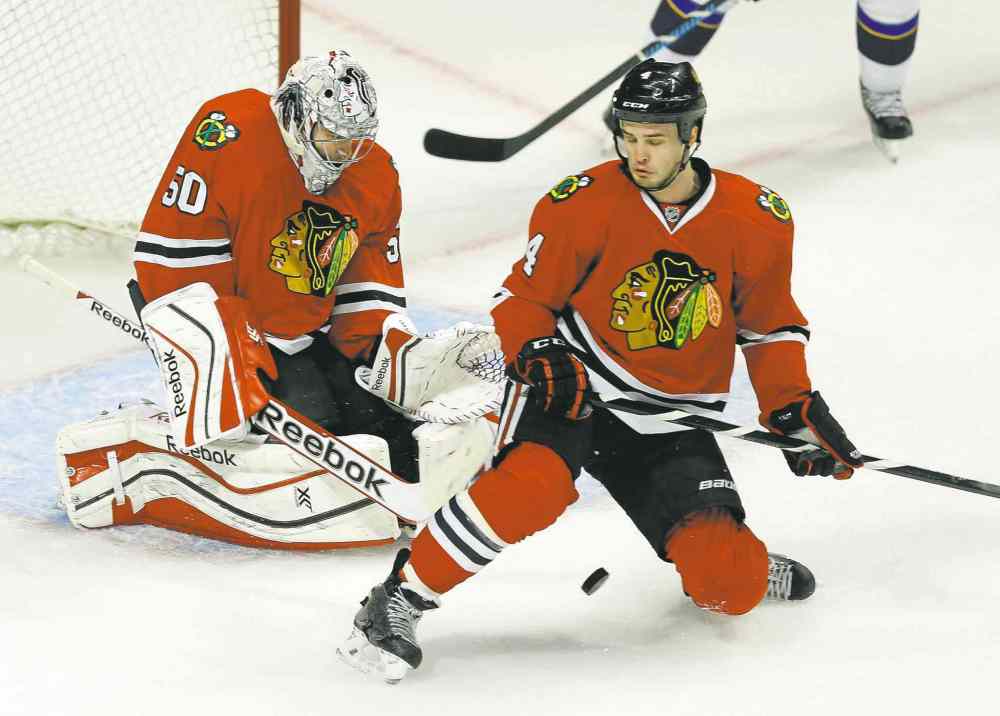
“This is just an evolution of the game,” Buffalo Sabres forward Brian Gionta said. “Guys have become so fast, so strong, so quick that you need everything you can to prevent from being scored on. The margin for error is minimal.”
Another strategy shooters use, although it is not common, is banking the shot off the boards like a billiards player. “You can shoot off the sideboards or backboards,” Zajac said.
Simmonds is the Flyers’ net-front presence on the power play, and he says establishing the correct position has become a major part of his job.
“It’s like being a low-post player in basketball,” Simmonds said. “You are trying to box the defenceman out, and he’s trying to box you out. If he gets in front of you, you know he’s going to block the shot. It’s a battle.”
A quick release is helpful. “The (shooting) lane closes down so quick now,” Gionta said. “Time and space is so minimal. You might get it through the first layer, but there is a second layer there.”
Some defencemen have a knack for stopping shots.

“Ryan McDonagh blocks everything he sees,” Simmonds said.
The Rangers’ McDonagh says the value of shot-blocking outweighs the risk of injury. In addition to preventing a scoring chance, there’s an inspirational boost, particularly in the playoffs.
“When you see a block,” he said, “it motivates you as a player to make sure you are doing your part.”
— USA Today