

In praise of Teemu
Selanne's contemporaries weigh in on what made the Finnish Flash great
Advertisement
Read this article for free:
or
Already have an account? Log in here »
To continue reading, please subscribe:

Digital Subscription
One year of digital access for only $205*
- Enjoy unlimited reading on winnipegfreepress.com
- Read the E-Edition, our digital replica newspaper
- Access News Break, our award-winning app
- Play interactive puzzles
*First annual payment billed as $205.00 + GST for one year. This annual subscription will automatically renew at $233.00 + GST every 52 weeks (10% off the regular annual price of $259.35). Offer available to new and qualified returning subscribers only. Cancel any time.
To continue reading, please subscribe:
Add Free Press access to your Brandon Sun subscription for only an additional
$1 for the first 4 weeks*
- Enjoy unlimited reading on winnipegfreepress.com
- Read the E-Edition, our digital replica newspaper
- Access News Break, our award-winning app
- Play interactive puzzles
*Your next Brandon Sun subscription payment will increase by $1.00 and you will be charged $17.95 plus GST for four weeks. After four weeks, your payment will increase to $24.95 plus GST every four weeks.
Read unlimited articles for free today:
or
Already have an account? Log in here »
Hey there, time traveller!
This article was published 09/01/2015 (4281 days ago), so information in it may no longer be current.
Key figures around Teemu Selanne in his days with the Winnipeg Jets shared their thoughts on three questions about the early part of the Finnish Flash’s NHL career.
John Paddock was the coach of the Jets (1991-95) and the team’s general manager (1995-96). Terry Simpson was a member of the Jets coaching staff from 1990-93, left to be head coach of the Philadelphia Flyers in 1993-94 and returned to Winnipeg as an assistant in 1994, eventually taking over when Paddock moved into the GM’s chair in 1995. Randy Carlyle, Phil Housley, Kris King and Randy Gilhen were all Selanne’s Jets teammates. Carlyle was also a Jets assistant coach after retiring as a player and coached Selanne in Anaheim when the pair helped the Ducks win the Stanley Cup in 2007.
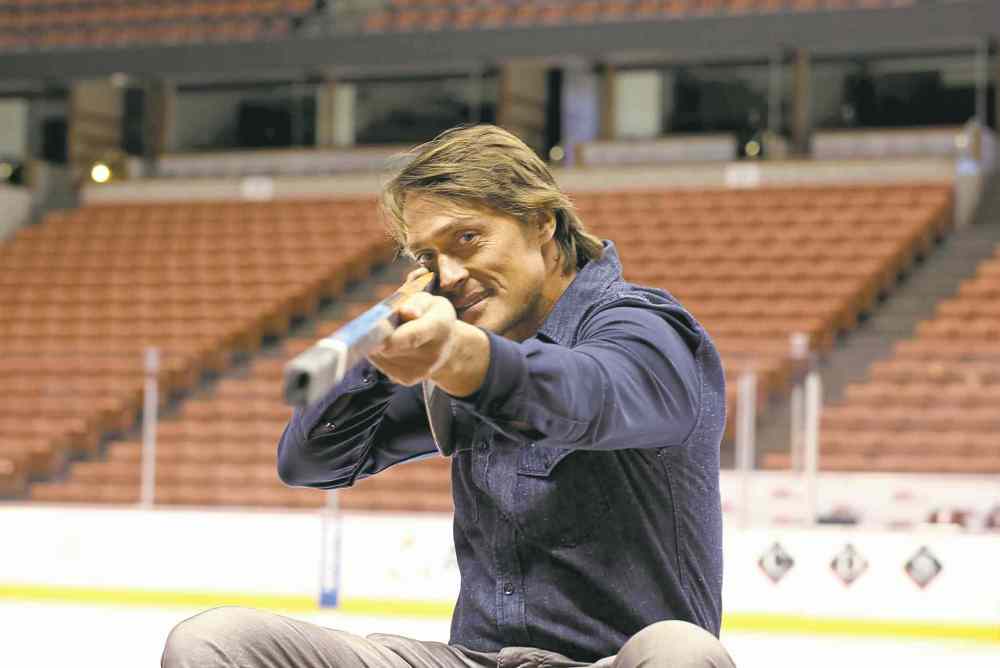
WHAT WAS THE KEY TO HIS SUCCESS AND LONGEVITY?
John Paddock: “The (2004) lockout, when he had the knee surgery, I’m sure that extended his career. I think he had a couple of suspect years in Colorado, San Jose and wasn’t the same player from what I know and what I heard him say. I think that revitalized him. He had strong legs and great passion to play and as long as he was healthy, nothing surprised me. He was such a great skater and you have to be strong to do that. His ability to skate allowed him to keep up with the game changing.
“And let’s face it, he had a knack — the puck went in for him and it didn’t go in for other guys. You don’t score like he scored in his rookie year, or any year, without having that God-given ability that most don’t have.”
Phil Housley: “I think the No. 1 thing was his off-season workouts. Anybody that plays that long, you have to pay special attention to your training. The more years you rack up, the earlier you have to start. He took care of himself.”
Terry Simpson: “He just loved to play hockey. He wasn’t anybody who practised exceptionally hard but he just loved to play. In Winnipeg, I recall that when he first came over he didn’t really buy into all the standard rules like having to be in the dressing room 45 minutes before practice, he’d be out signing autographs, be late coming in and Carlyle would be giving him shit. He was really a free spirit of a kid and it was pretty refreshing for the whole team.”
Kris King: “His natural ability was huge. He worked at it. He just loved the game. He wanted to be on the ice first all the time. That’s what I remember from the early days. And when you’ve got a guy like Howie (Housley) setting you up all the time, it was as good a one-two punch as I remember at the time. And that includes a lot of good players.”
Randy Carlyle: “I think he just enjoyed the game. The most he enjoyed it was at the beginning of his career and at the end of his career. When you start with 76 goals, it’s hard not to enjoy it. Having that type of success was his step to stardom. He played well, then he had some injuries in the middle of his career, moved around a bit, and then when he came back to Anaheim, it’s like he never should have left. And that’s when I was there and I was fortunate to be able to coach him at that time.”
Randy Gilhen: “One thing you have to look at when anybody plays that long is how smart they are on the ice. He just had that sense, that gift, of knowing where everybody was. Special players have that. He never put himself in vulnerable positions.”
EVERY SPORT HAS ITS ELITE ATHLETES. FEW HAVE BEEN AS POPULAR AS SELANNE ANYWHERE AND EVERYWHERE HE’S BEEN. WHY?
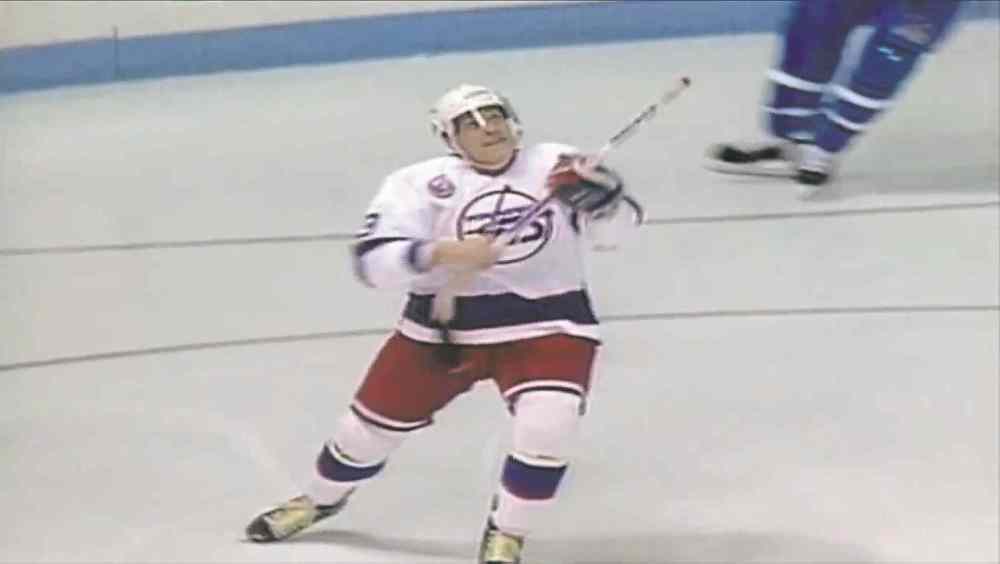
Paddock: “His personality and how he conducted himself. I don’t remember having to pull him away from signing autographs but he was always gracious to the public, no matter how he was personally or how the team was. He had time for everybody, the press, everybody. And when you take the first year by storm like he did, that sort of sets you up for your career unless you’re a complete dud. I remember one night in Calgary, standing underneath the seats just when he went out for warm-up and you could actually hear people whispering and gasping, like, ‘There he is.’ The only other thing like that I experienced was playing in Quebec and Montreal and how Guy Lafleur was.”
Housley: “He’s a classy gentleman. He wasn’t afraid to stop and sign autographs. He talked to people, said, ‘Hi,’ as much as his time allowed. And people appreciate that. You get a reputation like that and it sticks with you. I’m sure he likes his private time but when he was in public, we went out of his way to do those things.”
Simpson: “I think that’s exactly right. He never had agendas and his attitude, being the refreshing guy he was, he was always in a good mood and loved to be around the rink. That rubbed off on the rest of the team. Most players have moody spells like when they’re not scoring but it never seemed to bother him.”
King: “I liken it to Curtis Joseph in Toronto. Those guys knew how important it was to associate with their fans. I didn’t play with Gretzky but a guy like Teemu in Winnipeg, even on the road, he was always the last guy on the bus because he never passed anybody by. Curtis was the same. That is a skill in itself. Their people skills were second to none and that goes a long way to the point where I watched Teemu’s swan song in all the cities and everybody loved him. And he buried a lot of those teams with his play over the years. He had the respect of the players he played against and certainly the fans. That’s why we saw those kinds of farewells.”
Carlyle: “Personality. The rink is his happy place. There were times he may not have enjoyed it as much, when things plateaued for him, as with any player, but then he was able to regain it. What helped him in my mind was the (2004) lockout when he had his knee rebuilt. He came back as strong as ever. He was the Finnish Flash again.”
Gilhen: “The biggest reason is that Teemu’s a good person. He was never near any scandal; there was never any dirt on him. What an attribute, to go through your whole career like that. Early on, I think he had tremendous advice from (agent) Don Baizley, obviously, and Don was the guy behind Teemu who helped him focus, stay even-keeled.”
WHAT’S YOUR RECOLLECTION OF YOUR FIRST MEETING OR ENCOUNTER WITH SELANNE?
Paddock: “I went over to Finland the first year I was coach in the summer (1991), when he wasn’t coming, to meet Alpo (Suhonen) and Teppo (Numminen) and him. I don’t remember the meeting but it was in Verumaki.”
Housley: “In that (1992) camp we had the fab five there, Zhamnov, Teemu, Tkachuk, (Evgeny) Davydov and the defenceman (Sergei) Bautin. I just thought we grew as a group that year. I had been in the league about 10 years. I do remember the speed he had, being able to break into holes. I’ve played with a lot of players and some great players and Teemu had an instinct for jumping into holes at the right time and it was easy to get the puck to him. So explosive and we were able to create a chemistry. You always looked for him on a regroup or broken play. I remember one night he was stopped at the blue-line, a broken play, and I snapped him the puck and Derian Hatcher was right in front of him and he just flew around him from a dead stop. We had faceoff plays we used quite a bit. It was a joy to play with him.”
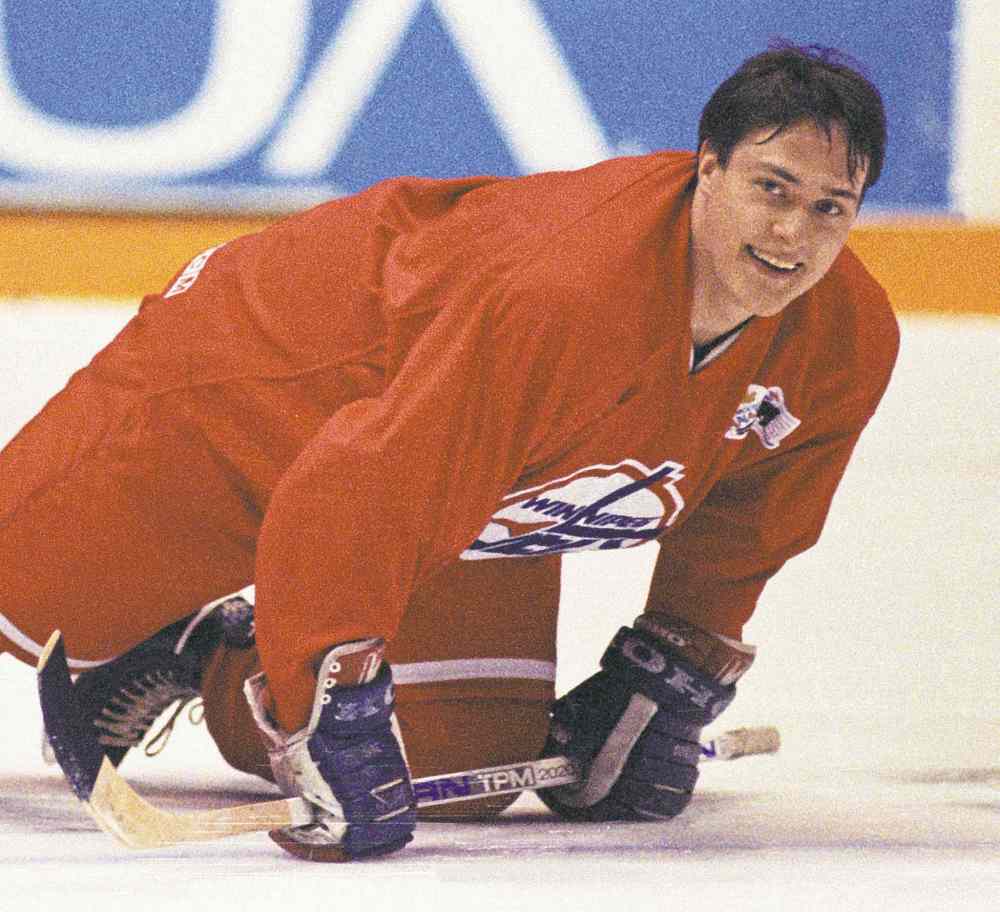
Simpson: “I don’t remember the first day I saw him. There sure was a lot of talk about him in hockey right from the start. I knew who he was. But what sticks with me is the nights him and Housely would have, the rushes and the breakaways. He was just a pure hockey player. It’s the best way I know how to describe him.”

King: “What I remember when I came in there a few days after Christmas (1992) was that one guy (Zhamnov) never said much, one guy (Tkachuk) wouldn’t shut up and Selanne, all he did was smile. The team was sitting in fifth or sixth spot. I don’t think the plan was for Tie (Domi) and I to do anything other than give these guys a little more room. When I met Teemu, he just said, ‘So you’re the guys who are going to protect me.’ That was kind of funny, but true. The record after we got there, well, those guys could play their game.”
Carlyle: “That’s when he came to training camp (in 1988) in Moncton. Couldn’t speak a word of English, him, Teppo Numminen and another Finn, (Jukka Marttila), a right-handed defenceman. He went back to his military commitment then, and the next time he came back he was a totally different player, bigger, faster, stronger. I just remember sitting there in that hotel (in 1988), couldn’t speak a word of English, not even to order food.”
Gilhen: “I was with him in his first training camp in Moncton when he was the first-round draft pick. A couple of things come to mind. This 18-year-old kid walked in with a smile on his face. He was happy to be there, happy to be playing. No. 2, I remember him rooming with Randy Carlyle that training camp and Randy used to have the room freezing cold and Teemu was afraid to tell Randy to turn the air conditioning down.”
— Tim Campbell
Related Articles
The Finnished Flash
Advertisement Advertise With Us
Advertisement Advertise With Us