

Former NHL prospect cranks up volume with essay on hockey’s toxic culture

Advertisement
Read this article for free:
or
Already have an account? Log in here »
To continue reading, please subscribe:

Digital Subscription
One year of digital access for only $205*
- Enjoy unlimited reading on winnipegfreepress.com
- Read the E-Edition, our digital replica newspaper
- Access News Break, our award-winning app
- Play interactive puzzles
*First annual payment billed as $205.00 + GST for one year. This annual subscription will automatically renew at $233.00 + GST every 52 weeks (10% off the regular annual price of $259.35). Offer available to new and qualified returning subscribers only. Cancel any time.
To continue reading, please subscribe:
Add Free Press access to your Brandon Sun subscription for only an additional
$1 for the first 4 weeks*
- Enjoy unlimited reading on winnipegfreepress.com
- Read the E-Edition, our digital replica newspaper
- Access News Break, our award-winning app
- Play interactive puzzles
*Your next Brandon Sun subscription payment will increase by $1.00 and you will be charged $17.95 plus GST for four weeks. After four weeks, your payment will increase to $24.95 plus GST every four weeks.
Read unlimited articles for free today:
or
Already have an account? Log in here »
Hey there, time traveller!
This article was published 20/05/2020 (2337 days ago), so information in it may no longer be current.
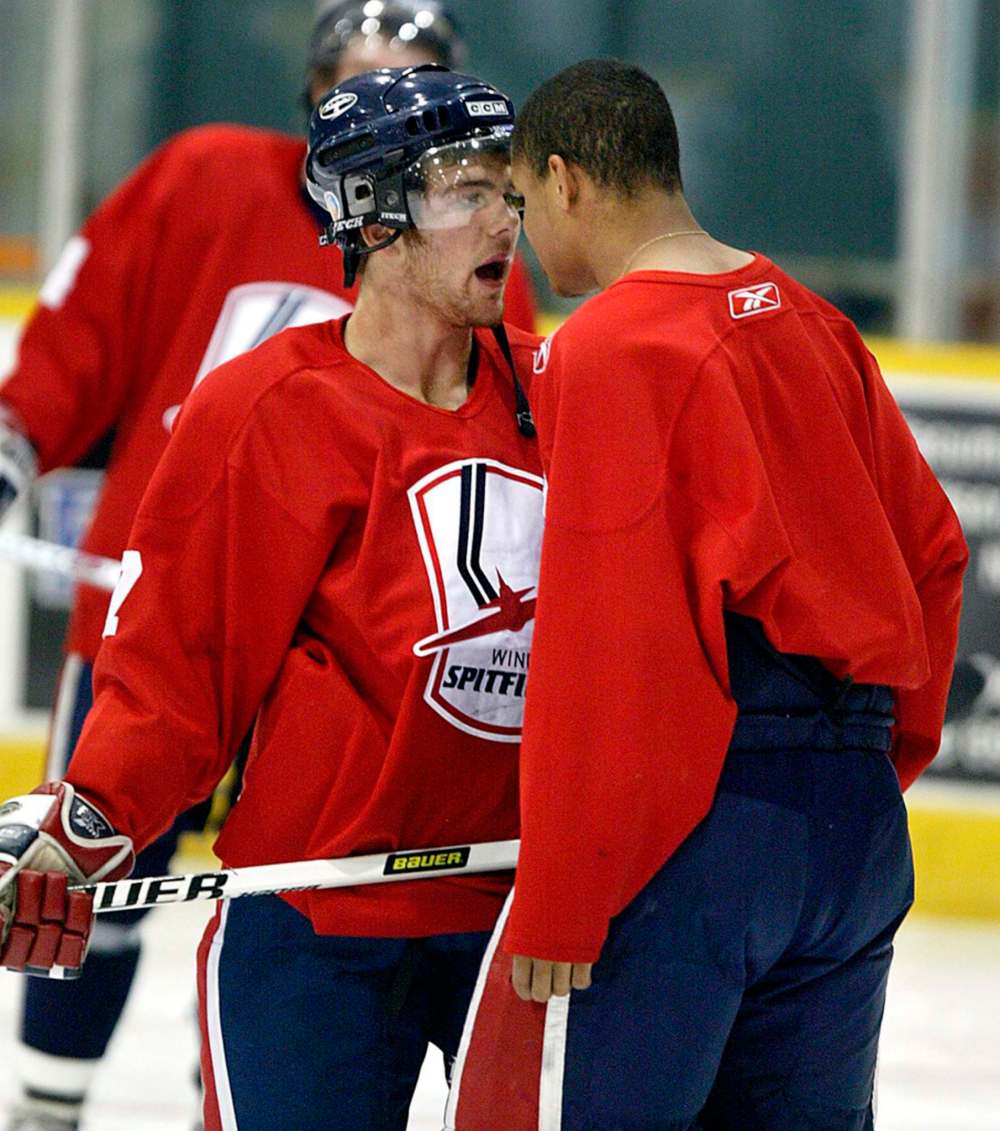
Akim Aliu didn’t have much of an impact on the ice, a once-promising NHL prospect turned journeyman minor-leaguer whose many stops included a quick cup of coffee with the Winnipeg Jets organization. But he is certainly leaving his mark off the ice, pulling back the curtain and raising some uncomfortable truths about toxic hockey culture.
Aliu’s latest effort, a personal essay titled Hockey Is Not For Everyone, published earlier this week, should be mandatory reading for everyone involved in the sport, including players, coaches, parents, fans and journalists.
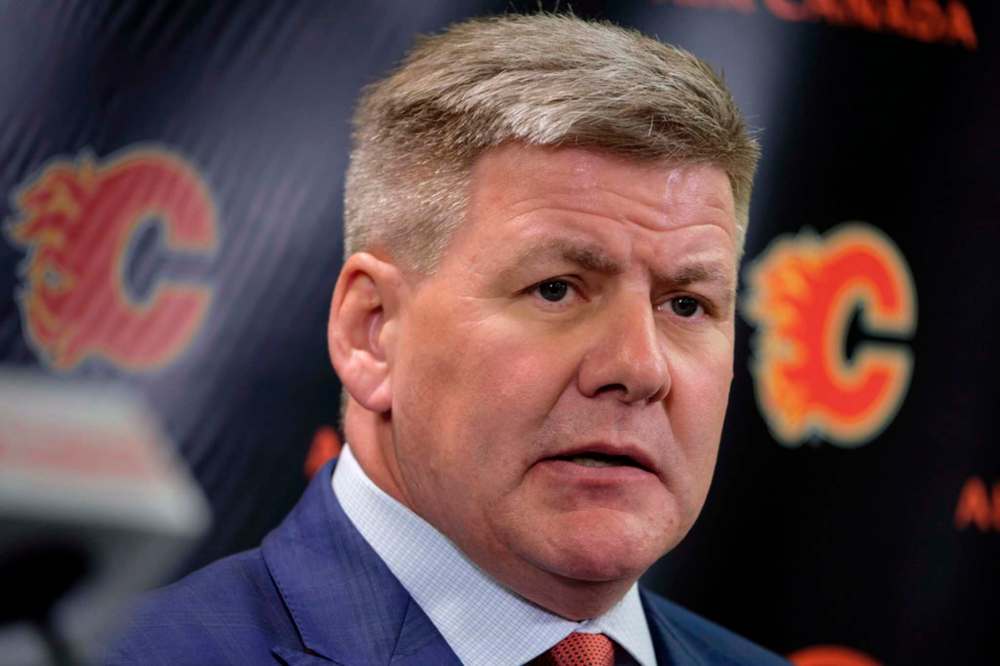
The 31-year-old son of Nigerian and Ukrainian parents who immigrated to Canada when he was seven in pursuit of a better life, details the many horrors he experienced chasing his big-league dreams — from the first time he recalls being called the N-word at a youth tournament in Quebec, the violent hazing he suffered playing junior in Ontario, his ugly mistreatment at the hands of coach Bill Peters while playing in the AHL, to the tarnished reputation that seemingly followed him everywhere.

Peters was sent packing earlier this season by the Calgary Flames after Aliu went public. As much as some wanted to see that as the end of this sad story, it was really only the beginning. Racism, homophobia, abuse and misogyny continue to be a part of the game, from the lowest levels right to the very top.
A conference call hosted by the New York Rangers involving top draft pick K’Andre Miller was recently hijacked by a “fan” who began spewing disgusting epithets on the live Zoom broadcast. We saw a first-hand example here in Manitoba when a private group chat involving several local hockey players disparaging numerous women went public, resulting in the Washington Capitals cutting Winnipegger Brendan Leipsic and the University of Manitoba Bisons releasing his younger brother Jeremey.
Aliu is continuing to speak his truth and shine a light on the problems — even if many are all too eager to turn a blind eye. Sadly, there are those who will discount Aliu’s revelations as the musings of a bitter ex-player whose career crashed and burned. In doing so, they will only be contributing to the very environment that has allowed young athletes like him to be mistreated and exploited.
“I hope this will inspire the next generation of athletes when things return to normal,” Aliu wrote to his modest Twitter following of just over 9,000 in sending out a link to his powerful piece, which he penned for The Players’ Tribune website.
It would be nice to see some of the most prominent names in the game, the ones whose online followings are in the tens or even hundreds of thousands, share Aliu’s story and use their platforms to offer their own words of support. You know, the same way they’ve been encouraging hand-washing and thanking front-line workers in the ongoing COVID-19 battle.
Instead, the general silence is deafening, although not surprising. As Aliu wrote, players are taught from a very early age that they better conform or there will be consequences. It’s why the evils that happened to him can go unchallenged and remain a dirty secret as long as they have.
“How many players speak out about any issues? Barely any. Everyone tiptoes around every little thing because they’re petrified about being an outcast,” wrote Aliu. “There is a power structure in place to turn bright, loving kids into something they were not born to be. You think it’s a coincidence that hockey players are all ‘robotic’ in the way they speak and carry themselves? No. They are products of a machine. And part of what that machine does is create tribalism amongst young players.”
He’s bang-on. Just look at how fellow black hockey players such as Evander Kane or P.K. Subban are vilified in some circles. You’ll often hear terms like “selfish” or “egomaniac” or “thinks he’s bigger than the game,” used by people to describe them, because how dare they express opinions or show personalities. People who hold those views are actually showing their true colours.
Then there’s the hate some of these athletes experience on social media. Aliu included graphic examples in his essay, describing such vitriol as “relentless.”
“When it comes to racism, it exists in many forms with our game, not only back then but still in today’s game. I’ve said this for a long time, maybe now you’ll listen,” Kane said on Twitter in giving Aliu a well-deserved pat on the back.
Thankfully, there’s some reason for hope. Aliu’s voice has been heard by the power brokers at the NHL head office, and commissioner Gary Bettman and deputy commissioner Bill Daly met with him a few months ago to discuss his concerns. The dialogue is continuing. Aliu would like to see a league mandate to interview more minorities for coaching positions, much like the “Rooney Rule” in the NFL.
“I believe the league has a long way to go before it can be a proper leader in the fight for equality,” wrote Aliu. “The road ahead is long, and it will be painful for some. And we are not at the end yet. There will be more reckonings for coaches, more incidents highlighting the dark side of hockey culture.”

That’s why starting at the grassroots level, where impressionable young minds haven’t already been poisoned, is so important. Diversity and inclusion need to be taught as much as skating and shooting. Aliu called on Hockey Canada and USA Hockey to improve screening and monitoring of coaches, encourage better communication and feedback from players and parents and increase sanctions for offenders.
“I know there are kids like me out there who have a hard time seeing themselves in the NHL. Or there’s a little black boy or girl who wants to be an NHL coach, but he or she doesn’t see anyone in the league who looks like them. The end goal here is to create a system, from top to bottom, that welcomes and nourishes everyone from every background,” he said.
It won’t be easy, but then nothing about Aliu’s life or career has been. And if he can make the hockey world a little less scary for the next generation, Aliu will have left the kind of legacy most athletes can only dream of.
mike.mcintyre@freepress.mb.ca
Twitter: @mikemcintyrewpg
Mike McIntyre is a sports reporter whose primary role is covering the Winnipeg Jets. After graduating from the Creative Communications program at Red River College in 1995, he spent two years gaining experience at the Winnipeg Sun before joining the Free Press in 1997, where he served on the crime and justice beat until 2016. Read more about Mike.
Every piece of reporting Mike produces is reviewed by an editing team before it is posted online or published in print — part of the Free Press‘s tradition, since 1872, of producing reliable independent journalism. Read more about Free Press’s history and mandate, and learn how our newsroom operates.
Our newsroom depends on a growing audience of readers to power our journalism. If you are not a paid reader, please consider becoming a subscriber.
Our newsroom depends on its audience of readers to power our journalism. Thank you for your support.
Mike McIntyre is a sports reporter whose primary role is covering the Winnipeg Jets. After graduating from the Creative Communications program at Red River College in 1995, he spent two years gaining experience at the Winnipeg Sun before joining the Free Press in 1997, where he served on the crime and justice beat until 2016. Read more about Mike.
Every piece of reporting Mike produces is reviewed by an editing team before it is posted online or published in print — part of the Free Press‘s tradition, since 1872, of producing reliable independent journalism. Read more about Free Press’s history and mandate, and learn how our newsroom operates.
Our newsroom depends on a growing audience of readers to power our journalism. If you are not a paid reader, please consider becoming a subscriber.
Our newsroom depends on its audience of readers to power our journalism. Thank you for your support.
Advertisement Advertise With Us
Advertisement Advertise With Us
History
Updated on Wednesday, May 20, 2020 7:00 PM CDT: Fixes typo in headline