

Quibbling over cash
NHL owners asking players to absorb bigger piece of hardship

Advertisement
Read this article for free:
or
Already have an account? Log in here »
To continue reading, please subscribe:

Digital Subscription
One year of digital access for only $205*
- Enjoy unlimited reading on winnipegfreepress.com
- Read the E-Edition, our digital replica newspaper
- Access News Break, our award-winning app
- Play interactive puzzles
*First annual payment billed as $205.00 + GST for one year. This annual subscription will automatically renew at $233.00 + GST every 52 weeks (10% off the regular annual price of $259.35). Offer available to new and qualified returning subscribers only. Cancel any time.
To continue reading, please subscribe:
Add Free Press access to your Brandon Sun subscription for only an additional
$1 for the first 4 weeks*
- Enjoy unlimited reading on winnipegfreepress.com
- Read the E-Edition, our digital replica newspaper
- Access News Break, our award-winning app
- Play interactive puzzles
*Your next Brandon Sun subscription payment will increase by $1.00 and you will be charged $17.95 plus GST for four weeks. After four weeks, your payment will increase to $24.95 plus GST every four weeks.
Read unlimited articles for free today:
or
Already have an account? Log in here »
Hey there, time traveller!
This article was published 19/11/2020 (2069 days ago), so information in it may no longer be current.
They haven’t dropped the gloves and come out swinging — at least not publicly — but it’s safe to say there’s plenty of bruised egos and hurt feelings between NHL players and the league when it comes to terms of a 2020-21 season.
And it’s not rising COVID-19 numbers in numerous markets that’s standing in the way of getting a deal done, but a more familiar foe — cold, hard cash.
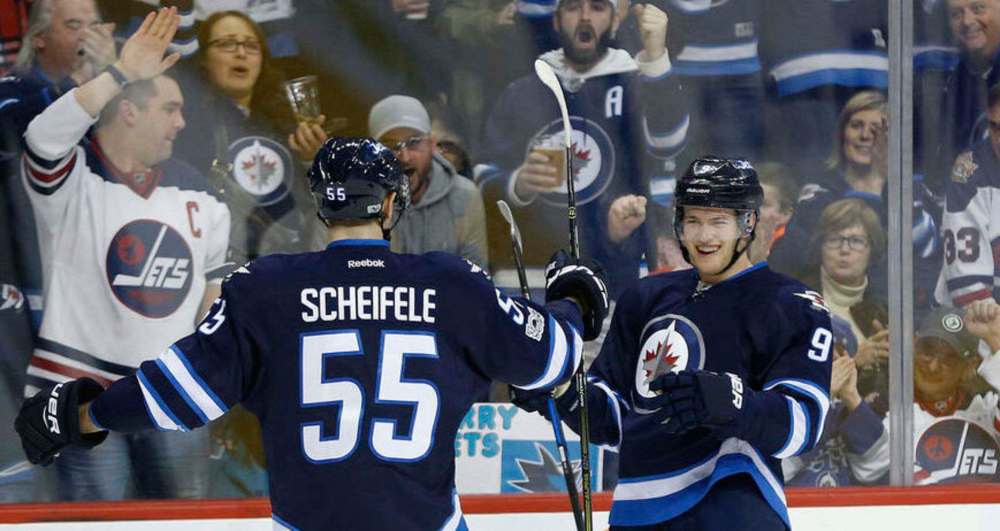
Winnipeg Jets forwards Mark Scheifele and Andrew Copp are among 16 skaters on an NHLPA committee that has been burning up the Internet in recent days as virtual negotiations pick up steam, apparently to the point of getting heated.
The situation is fluid, but here’s the latest on what we know and what we’re hearing, based on conversations with sources and various reports.
WHAT WOULD THE NEW SEASON LOOK LIKE?
A Jan. 1 puck drop remains the goal, but that’s in jeopardy considering we’re getting into late November and nothing has been agreed upon.
The league apparently has a 60-game schedule already drafted, with teams playing half of that in their own home rinks and the other half on the road. There would be divisional realignment factoring in geography and border restrictions for one year only, including an all-Canadian grouping of Winnipeg, Vancouver, Edmonton, Calgary, Toronto, Montreal and Ottawa.
Training camps would begin by mid-December, which illustrates why time is of the essence here. Players, especially those overseas, need to make arrangements to get back to their markets ASAP and satisfy quarantine requirements.
Teams would play entirely within their division. For the Jets, that would presumably mean 10 games against each northern neighbour. There would be numerous back-to-backs in the same building to cut down on time and travel.
Fans in some markets, particularly in the U.S., might be allowed right off the hop, while others would take a wait-and-see approach based on local restrictions. Considering the league derives approximately 50 per cent of revenues from ticket sales, this shows why projecting future losses is a fool’s game right now.
There will be no “bubble” environment, but teams will be under strict health and safety protocols to limit exposure to others.
The regular season would end by early May, and playoffs would be wrapped by mid-July. That would allow the NHL to get out of the way for the Summer Olympics (and avoid getting relegated to an afterthought by broadcast partner NBC) and also return to normal programming in time for the 2021-22 season to begin in October, as usual, along with the expansion Seattle Kraken joining the fold. And, of course, participation in the 2022 Winter Olympics.
The later the new season begins, the less games that can be played in order to stick to this timeline.
WHAT’S THE HOLDUP?
You’ll recall the NHL and NHLPA not only negotiated a return-to-play plan last summer that allowed the 2019-20 playoffs to be completed without a hitch in Edmonton and Toronto bubbles, but also an extension of the collective bargaining agreement through the 2025-26 season.
It included a new financial framework, specifically dealing with how players and owners would share in the profits, or losses, in the midst of a global pandemic.
Known as escrow, it’s a way to ensure a 50-50 split of hockey-related revenue. As part of the new CBA, players agreed to put 20 per cent of their salary in escrow for the 2020-21 season, 14 to 18 per cent in 2021-22, 10 per cent in 2022-23, and six per cent for the remaining three seasons.
In addition, players also agreed to a further 10 per cent deferral of salary for the 2020-21 season, based on forecasts that it would be an especially difficult one for the league given all the uncertainty.
All of the above was sold, quite correctly, as a major sign of progress for the NHL, which doesn’t have a storied history when it comes to labour relations.
Yeah, about that. The NHL went to the NHLPA this week with a proposal that was said to anger players, claiming they expect to be in a bigger financial hole than expected and need to reopen the agreement.
For the coming (shortened) season, they want that 10 per cent salary deferral doubled to 20 per cent, and the escrow increased from 20 per cent to 25 per cent.
An alternate proposal, according to reports, involves raising the deferral from 10 per cent to 26 per cent 2020-21, but leaving escrow as is until the final three years of the CBA, increasing it from six per cent to between eight and nine per cent.
At this point, your eyes may be glazing over. They said there wouldn’t be math in sports, right?
In a nutshell, the owners are asking the players to absorb a bigger piece of the hardship than outlined in the deal they signed a few months ago. The players, not surprisingly, aren’t jumping for joy at the prospect.
WHAT ABOUT PRO-RATED SALARIES INSTEAD?
That’s not on the table. For example, players aren’t being told that if they only play 60 games next season (instead of the usual 82), they would only take home 75 per cent of their salary.
The idea is they will still make 100 per cent of their money, just not right away. When? That will depend on the league resuming normal operations and revenues returning to an expected rate. Until then, it remains in limbo to keep everyone “whole.”
CAN’T THEY FIND COMMON GROUND?
They likely will. Eventually. Hopefully. The alternative scenario of going dark for 2020-21 and not playing is not something either side wants.
For the players, they’re likely feeling owners should live with the existing terms of the deal, as bad as it might be for them. You can imagine many are asking what the response would be if the CBA suddenly went south in their direction and they asked to renegotiate. They probably figured they’d be laughed out of the (chat) room.
All of this is likely exposing years of built-up hostilities and mistrust that can’t be easily erased.
For the owners, they are likely pleading they aren’t hiding anything, that the escrow formula is transparent and meant to protect everyone equally, and so the players should suck it up and be good teammates.

They are no doubt citing this clause of the new CBA, which reads “the parties also agree to continue discussions regarding the possibility of allowing Players and Clubs to negotiate additional deferrals on a case-by-case basis.”
Bottom line: Neither side is going to find much sympathy with the public given the current state of the world, with the economy reeling owing to COVID-19. The last thing anyone wants to hear is millionaires and, in some case billionaires, bickering over money while everyday folks are struggling to make ends meet.
It’s incumbent on all of them to get this figured out. And fast.
mike.mcintyre@freepress.mb.ca
Twitter: @mikemcintyrewpg
Mike McIntyre is a sports reporter whose primary role is covering the Winnipeg Jets. After graduating from the Creative Communications program at Red River College in 1995, he spent two years gaining experience at the Winnipeg Sun before joining the Free Press in 1997, where he served on the crime and justice beat until 2016. Read more about Mike.
Every piece of reporting Mike produces is reviewed by an editing team before it is posted online or published in print — part of the Free Press‘s tradition, since 1872, of producing reliable independent journalism. Read more about Free Press’s history and mandate, and learn how our newsroom operates.
Our newsroom depends on a growing audience of readers to power our journalism. If you are not a paid reader, please consider becoming a subscriber.
Our newsroom depends on its audience of readers to power our journalism. Thank you for your support.
Mike McIntyre is a sports reporter whose primary role is covering the Winnipeg Jets. After graduating from the Creative Communications program at Red River College in 1995, he spent two years gaining experience at the Winnipeg Sun before joining the Free Press in 1997, where he served on the crime and justice beat until 2016. Read more about Mike.
Every piece of reporting Mike produces is reviewed by an editing team before it is posted online or published in print — part of the Free Press‘s tradition, since 1872, of producing reliable independent journalism. Read more about Free Press’s history and mandate, and learn how our newsroom operates.
Our newsroom depends on a growing audience of readers to power our journalism. If you are not a paid reader, please consider becoming a subscriber.
Our newsroom depends on its audience of readers to power our journalism. Thank you for your support.
Advertisement Advertise With Us
Advertisement Advertise With Us