

Unlike men’s World Cup, no open vote on women’s event host
Advertisement
Read this article for free:
or
Already have an account? Log in here »
To continue reading, please subscribe:

Digital Subscription
One year of digital access for only $205*
- Enjoy unlimited reading on winnipegfreepress.com
- Read the E-Edition, our digital replica newspaper
- Access News Break, our award-winning app
- Play interactive puzzles
*First annual payment billed as $205.00 + GST for one year. This annual subscription will automatically renew at $233.00 + GST every 52 weeks (10% off the regular annual price of $259.35). Offer available to new and qualified returning subscribers only. Cancel any time.
To continue reading, please subscribe:
Add Free Press access to your Brandon Sun subscription for only an additional
$1 for the first 4 weeks*
- Enjoy unlimited reading on winnipegfreepress.com
- Read the E-Edition, our digital replica newspaper
- Access News Break, our award-winning app
- Play interactive puzzles
*Your next Brandon Sun subscription payment will increase by $1.00 and you will be charged $17.95 plus GST for four weeks. After four weeks, your payment will increase to $24.95 plus GST every four weeks.
Read unlimited articles for free today:
or
Already have an account? Log in here »
Hey there, time traveller!
This article was published 19/02/2019 (2779 days ago), so information in it may no longer be current.
LONDON – FIFA will still decide the host of the Women’s World Cup in secret, unlike the new open vote held last year for host of the 2026 men’s tournament.
The 2023 Women’s World Cup bidding process was launched Tuesday, and FIFA adopted many of the rigorous checks and scrutiny prospective men’s hosts now have to go through.
But the final decision is a very different process.
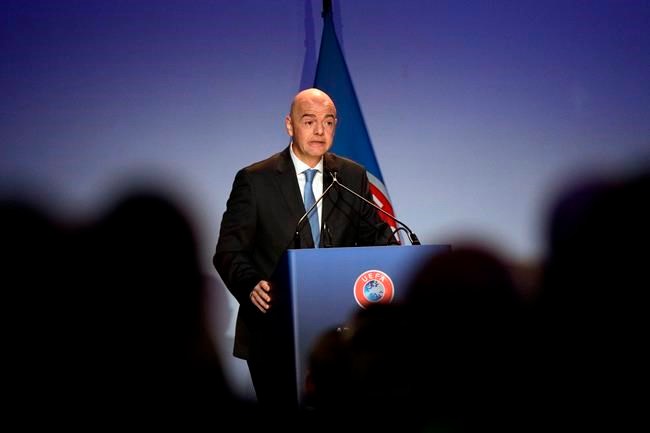
Following corruption investigations into the vote for men’s hosts in 2018 and 2022, FIFA removed the decision from its ruling committee and gave it to all member associations. When it came to deciding the 2026 men’s hosts last year, the votes were made public after the FIFA Congress chose the joint bid from the United States, Mexico and Canada over Morocco’s entry.
FIFA trumpeted that “not a single decision is guarded away from public scrutiny” in men’s World Cup hosting. But in March 2020 it will be the FIFA Council, a group of 37 people which meets in private, deciding where the women’s top players will compete in 2023.
“FIFA’s statutes explicitly stipulate that the selection of venues for the final competitions of all tournaments rests with the FIFA Council with the exception of the FIFA World Cup, where their power lies with the Congress,” world football’s governing body said in a statement to The Associated Press on Tuesday.
FIFA on Tuesday asked countries to make an expression of interest in bidding by March 15, complete the bidding registration by April 16 and submit bid books by Oct. 4.
No mention was made of bidders having to go through the key procedures, described as “bulletproof” by FIFA President Gianni Infantino, that were required of 2026 World Cup contenders. Those included an assessment of human rights and risk reports for the countries, the publication of bid books, inspections of facilities and evaluation reports.
After the AP asked why these criteria and process were not listed as being in place for women’s World Cup bidding, FIFA said it would be emulating those aspects of the men’s showpiece hosting requirements.
“It’s good to see that, as with the 2026 FIFA World Cup bidding process, that human rights criteria are included, and that the bid documents, including the human rights strategy, is made available publicly,” said Mary Harvey, the chief executive of the Centre for Sport and Human Rights, who won the inaugural World Cup in 1991 as a United States goalkeeper.
Australia, Colombia, Japan and South Africa have already expressed an interest in bidding for the event in 2023.
Football Federation Australia reiterated its intention for 2023 in a statement Wednesday, saying that its bid team had been working with multiple groups to prepare the technical components of the bid.
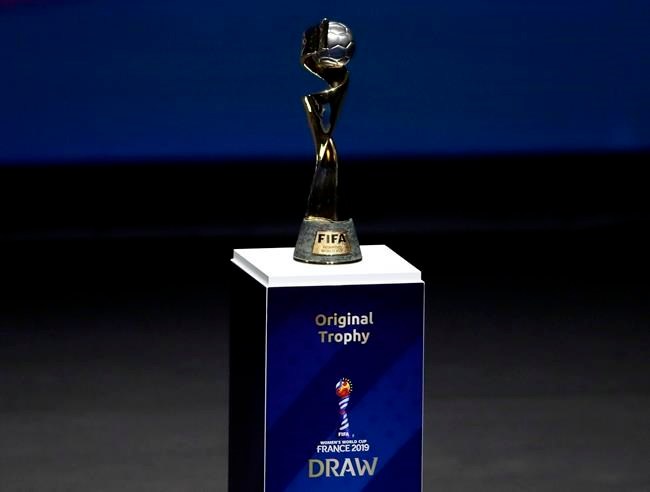
FFA chairman Chris Nikou also welcomed the announcement from FIFA regarding the bidding timeline.

“Australia is strongly aligned to FIFA’s global vision for women’s football, and committed to growing the game across Asia-Pacific region,” Nikou said. “With our strong record of successfully hosting major events, including the Asian Cup in 2015, we are confident of submitting a compelling bid for Australia.”
FIFA chief women’s football officer Sarai Bareman said she wants to see “how potential host countries will aim to promote the ultimate competition in women’s football, and create a sustainable legacy that will inspire upcoming generations of young girls and women to get involved in the game.”
The next edition is this year in France from June 7 to July 7, when the United States will be defending its title.
___
More AP soccer: https://apnews.com/apf-Soccer and https://twitter.com/AP_Sports
Related Articles
European Soccer Weekend: What to watch in main competitions



Advertisement Advertise With Us
Advertisement Advertise With Us