

FIFA racism risk assessments for 2022 World Cup qualifiers
Advertisement
Read this article for free:
or
Already have an account? Log in here »
To continue reading, please subscribe:

Digital Subscription
One year of digital access for only $205*
- Enjoy unlimited reading on winnipegfreepress.com
- Read the E-Edition, our digital replica newspaper
- Access News Break, our award-winning app
- Play interactive puzzles
*First annual payment billed as $205.00 + GST for one year. This annual subscription will automatically renew at $233.00 + GST every 52 weeks (10% off the regular annual price of $259.35). Offer available to new and qualified returning subscribers only. Cancel any time.
To continue reading, please subscribe:
Add Free Press access to your Brandon Sun subscription for only an additional
$1 for the first 4 weeks*
- Enjoy unlimited reading on winnipegfreepress.com
- Read the E-Edition, our digital replica newspaper
- Access News Break, our award-winning app
- Play interactive puzzles
*Your next Brandon Sun subscription payment will increase by $1.00 and you will be charged $17.95 plus GST for four weeks. After four weeks, your payment will increase to $24.95 plus GST every four weeks.
Read unlimited articles for free today:
or
Already have an account? Log in here »
Hey there, time traveller!
This article was published 17/06/2019 (2669 days ago), so information in it may no longer be current.
FIFA is conducting racism risk assessments for all 2022 World Cup qualifiers and sending observers to matches where there is a high prospect of discriminatory incidents.
FIFA Secretary General Fatma Samoura has written to member associations saying there is a particular onus on countries hosting matches to clamp down on discrimination on the road to the Qatar World Cup.
The letter follows particular scrutiny in Europe over players being subject to racist abuse by fans and referees not always following procedures by stopping games.
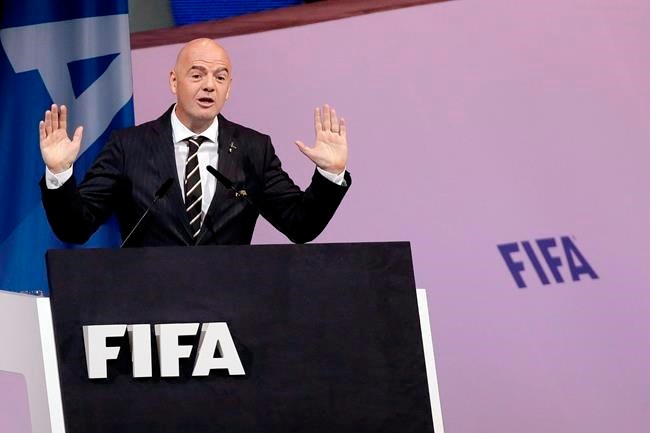
In a traffic signal coding system, Samoura told national associations when there is “a high probability of discriminatory incidents” the game will be given a red classification and observers sent to the stadium.
For games with a yellow or medium risk, Samoura said FIFA will “continue to assess the temporary dynamics” of the situation to see if observers are in fact warranted.
Central to the risk assessment is analyzing whether there is a history of discriminatory incidents or violence involving the teams or countries in general, including religious tensions.
Criteria outlined by FIFA include exploring “known far-right and other xenophobic groups, including their football-related activities and supporter links” and the “current geopolitical crises in the countries of the participating teams/associations and in their region that could affect spectators’ attitudes.”
FIFA will also look at whether fans have a “tendency to commit acts of homophobia or overt sexist abuse based on traditional chants or previous history.”
FIFA works with the Fare network to find anti-discrimination match observers.

According to FIFA, observers are required to “understand the language including idiosyncrasies of the country/team they are appointed to observe; know the symbols and codes used in the country/local environment/fan culture; know the fan culture of the country/team/local environment; have an understanding of any wider social and (geo-)political issues at play.”
Samoura has reminded associations that referees should implement a three-step procedure which allows them to stop a game, suspend a game and ultimately abandon a game if discriminatory behaviour persists.
The letter was sent out three years after FIFA disbanded its anti-racism task, saying it had “completely fulfilled its temporary mission.”
___
More AP soccer: https://apnews.com/apf-Soccer and https://twitter.com/AP_Sports
Related Articles
Swiss prosecutors say FIFA work continues after boss recused




Advertisement Advertise With Us
Advertisement Advertise With Us