

Soccer players’ union in England wants reduction in heading
Advertisement
Read this article for free:
or
Already have an account? Log in here »
To continue reading, please subscribe:

Digital Subscription
One year of digital access for only $205*
- Enjoy unlimited reading on winnipegfreepress.com
- Read the E-Edition, our digital replica newspaper
- Access News Break, our award-winning app
- Play interactive puzzles
*First annual payment billed as $205.00 + GST for one year. This annual subscription will automatically renew at $233.00 + GST every 52 weeks (10% off the regular annual price of $259.35). Offer available to new and qualified returning subscribers only. Cancel any time.
To continue reading, please subscribe:
Add Free Press access to your Brandon Sun subscription for only an additional
$1 for the first 4 weeks*
- Enjoy unlimited reading on winnipegfreepress.com
- Read the E-Edition, our digital replica newspaper
- Access News Break, our award-winning app
- Play interactive puzzles
*Your next Brandon Sun subscription payment will increase by $1.00 and you will be charged $17.95 plus GST for four weeks. After four weeks, your payment will increase to $24.95 plus GST every four weeks.
Read unlimited articles for free today:
or
Already have an account? Log in here »
Hey there, time traveller!
This article was published 20/11/2020 (2146 days ago), so information in it may no longer be current.
LONDON – The union representing soccer players in England called on Friday for balls to be headed less in training amid growing concerns about brain injury diseases among former professionals.
The decision by the Professional Footballers’ Association followed a meeting of its management committee which assessed research into dementia and neurodegenerative diseases.
“Science has been developing quickly in this area, and we need to make an urgent intervention based on the evidence that is available now,” PFA chairman Ben Purkiss said.
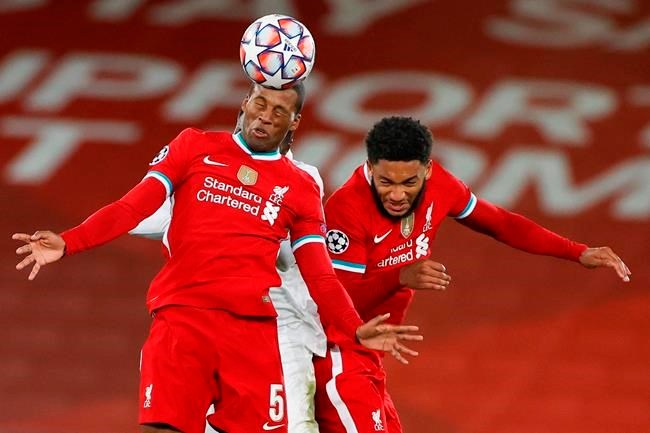
“A reduction of heading in training is a practical and straightforward step. We will be engaging with members, former members and their families to work on this area within the scope of the PFA’s new advisory group, where decisions will be made on the basis of expert advice.”
It was announced this month that Manchester United and England great Bobby Charlton was diagnosed with dementia. In July, the 83-year-old Bobby’s brother and fellow England World Cup winner, Jack, died after being diagnosed with the disease. Nobby Stiles, who was also part of England’s only World Cup-winning side, died after battling dementia.
“In the short-term, football cannot carry on as it is,” PFA chief executive Gordon Taylor said. “There is a big issue here, and based on the increasing evidence available.”
Research published in 2019 by the University of Glasgow found former male professional players had a 3.5 times higher rate of death from neurodegenerative diseases such as Alzheimer’s or Parkinson’s. In absolute terms, that risk remained relatively small — 1.7% among former players and 0.5% for the comparison group. Former players also were more likely to be prescribed dementia medicines than the others were.
Researchers compared the causes of death of 7,676 Scottish men who played soccer with 23,000 similar men from the general population born between 1900 and 1976. Over a median of 18 years of study, 1,180 players and 3,807 of the others died.
They found footballers were less likely to die of common causes such as heart disease and cancer compared with the general population but more likely to die from dementia.

“I don’t think it’s entirely clear cut to identify the risk factors,” English Football Association chief executive Mark Bullingham said on Friday ahead of the PFA announcement. “But, obviously, heading could be one of those risk factors and that’s why we put in place all the guidelines we have with regards to youth football, which I think are actually tougher than any other country in the world.”
In January, football officials in England, Northern Ireland and Scotland announced that children up to the age of 12 will be banned from heading a ball in practice sessions. The guidelines say there will be a “graduated approach” to heading in practice for kids aged from 12-15, while heading will be restricted to one practice session per week for kids 16 and 17.
Campaigning to discover more about the long-term impact of head injuries in soccer has been led in England by the family of former England striker Jeff Astle, whose death at age 59 in 2002 was attributed to repeatedly heading old-style heavy, leather balls.
___
More AP soccer: https://apnews.com/Soccer and https://twitter.com/AP_Sports