

Soccer great Seedorf urges yellow cards to curb racial abuse
Advertisement
Read this article for free:
or
Already have an account? Log in here »
To continue reading, please subscribe:

Digital Subscription
One year of digital access for only $205*
- Enjoy unlimited reading on winnipegfreepress.com
- Read the E-Edition, our digital replica newspaper
- Access News Break, our award-winning app
- Play interactive puzzles
*First annual payment billed as $205.00 + GST for one year. This annual subscription will automatically renew at $233.00 + GST every 52 weeks (10% off the regular annual price of $259.35). Offer available to new and qualified returning subscribers only. Cancel any time.
To continue reading, please subscribe:
Add Free Press access to your Brandon Sun subscription for only an additional
$1 for the first 4 weeks*
- Enjoy unlimited reading on winnipegfreepress.com
- Read the E-Edition, our digital replica newspaper
- Access News Break, our award-winning app
- Play interactive puzzles
*Your next Brandon Sun subscription payment will increase by $1.00 and you will be charged $17.95 plus GST for four weeks. After four weeks, your payment will increase to $24.95 plus GST every four weeks.
Read unlimited articles for free today:
or
Already have an account? Log in here »
Hey there, time traveller!
This article was published 14/04/2021 (2000 days ago), so information in it may no longer be current.
GENEVA – Players should get yellow cards for covering their mouths to speak to opponents, soccer great Clarence Seedorf told European lawmakers on Wednesday in a forum on hate speech in sports.
Seedorf spoke to the 47-nation Council of Europe hours before UEFA banned a Slavia Prague player for 10 games for racially insulting a Black opponent last month in the Europa League. Ondrej Kúdela covered his mouth with both hands when he spoke into the ear of Ranger player Glen Kamara.
Kúdela denied using racist language, which another Rangers player claimed to have heard. UEFA also banned Kamara for three games for assaulting Kúdela in the tunnel after the game, which Slavia won 2-0.
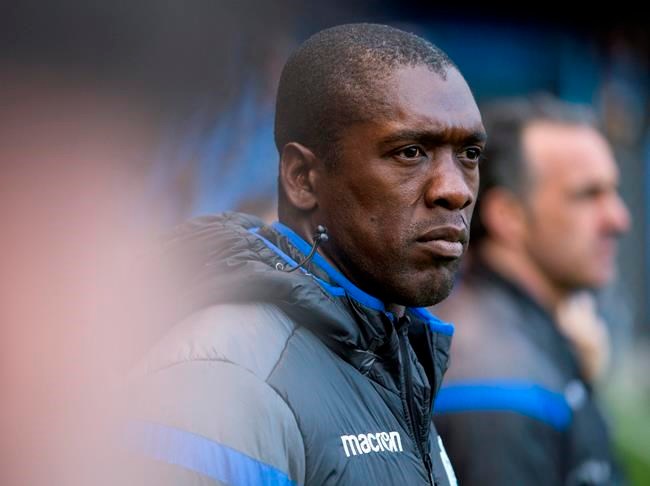
Seedorf, who is Black, referred lawmakers to “some racist situations” and hate speech among players in recent weeks.
“We are talking about sport, it has to be transparent — so why would I cover my mouth if I need to say something to my adversary?” the former Netherlands midfielder said.
Seedorf said it could be “very easily attacked by implementing some rules” such as showing a yellow card for speaking to a referee or opponent with mouth covered. UEFA can suggest such changes to the FIFA-backed rules-making panel known as IFAB.
Soccer bodies UEFA and FIFA have closed previous disciplinary cases when players say they have been racially abuse by an opponent by citing lack of evidence to support their claims. Violators face “a suspension lasting at least 10 matches or a specified period of time, or any other appropriate sanction,” under UEFA’s disciplinary code.
Seedorf said there was too much talk and not enough action to combat hate speech in soccer stadiums and on the field.
“I cannot be happy to see certain things to change so slowly because the need is obvious and very urgent,” said the former Ajax, Real Madrid and AC Milan midfielder — the only player to win the European Cup with three different clubs.
Citing the killing of George Floyd in the United States last year, Seedorf said soccer and public authorities should give fans incentives to record incidents of racism and hate speech by “capturing those moments” and sending the footage as evidence.
“If it wasn’t for the people around George Floyd, today we would not be speaking and we would not have had a movement around all that happened and we would not have that police officer now going to trial,” Seedorf said.
Seedorf spoke after UEFA official Michele Uva told the forum that the European soccer body wanted to lead by example and work together with public authorities tackling discrimination.

Seedorf later called for more diversity within soccer, citing too few Black coaches at clubs and not enough inclusion within institutions like UEFA and FIFA.
“That is where we need to start as well, where we lead by example,” he said. “From there you have I think a much better position also to ask other people to change.”
The 90-minute event in Strasbourg, France, was hosted by the European body which promotes human rights and the rule of law in Europe.
___
More AP soccer: https://apnews.com/hub/soccer and https://twitter.com/AP_Sports
Related Articles
MATCHDAY: Barcelona-Athletic Bilbao in Copa del Rey final









Advertisement Advertise With Us
Advertisement Advertise With Us