

FIFA, Qatar team up with WHO for World Cup health promotion
Advertisement
Read this article for free:
or
Already have an account? Log in here »
To continue reading, please subscribe:

Digital Subscription
One year of digital access for only $205*
- Enjoy unlimited reading on winnipegfreepress.com
- Read the E-Edition, our digital replica newspaper
- Access News Break, our award-winning app
- Play interactive puzzles
*First annual payment billed as $205.00 + GST for one year. This annual subscription will automatically renew at $233.00 + GST every 52 weeks (10% off the regular annual price of $259.35). Offer available to new and qualified returning subscribers only. Cancel any time.
To continue reading, please subscribe:
Add Free Press access to your Brandon Sun subscription for only an additional
$1 for the first 4 weeks*
- Enjoy unlimited reading on winnipegfreepress.com
- Read the E-Edition, our digital replica newspaper
- Access News Break, our award-winning app
- Play interactive puzzles
*Your next Brandon Sun subscription payment will increase by $1.00 and you will be charged $17.95 plus GST for four weeks. After four weeks, your payment will increase to $24.95 plus GST every four weeks.
Read unlimited articles for free today:
or
Already have an account? Log in here »
Hey there, time traveller!
This article was published 18/10/2021 (1808 days ago), so information in it may no longer be current.
GENEVA (AP) — FIFA and Qatari organizers of next year’s World Cup teamed up with the World Health Organization on Monday to use soccer’s marquee event for promoting public health.
The move follows years of scrutiny on Qatar and criticism of conditions for hundreds of thousands of migrant workers needed for massive projects tied to the tournament.
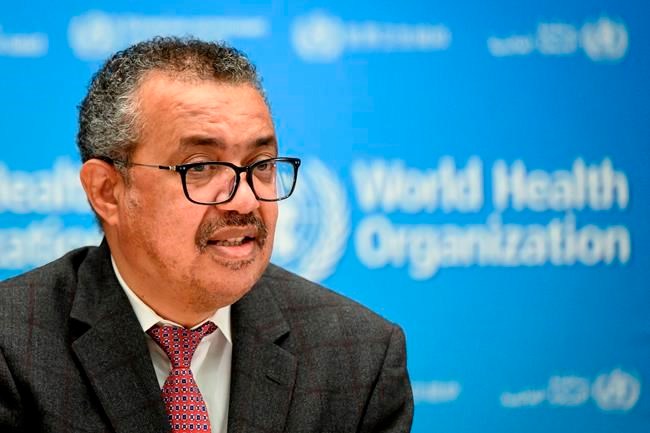
“Events like the World Cup and the Olympic Games are perfect partners for promoting health and solidarity,” WHO director general Tedros Adhanom Ghebreyesus said.
When FIFA picked Qatar in 2010 to host the World Cup, the expected health risk was exposing 32 teams of players, thousands of workers and hundreds of thousands of fans to 40-plus Celsius (100-plus Fahrenheit) heat in June and July.
Though that issue was solved by moving the games to cooler November temperatures, the coronavirus pandemic is moving into a third year and closer to key tournament preparations.
“The tournament is likely to be the first global mass gathering of this scale since the spread of the pandemic,” Hassan al-Thawadi, the head of the Qatari World Cup organizing committee, said at WHO headquarters.
No details were given Monday of practical planning to protect the World Cup from COVID-19, and no questions were taken at the launch broadcast from Geneva.
Vaccine mandates for visiting fans to enter stadiums was the official Qatari policy four months ago. Officials have since moved to a more flexible approach, which is expected to be tested one year ahead of the World Cup when Qatar hosts the 16-nation Arab Cup on Nov. 30.
WHO officials on Monday praised Qatar and FIFA for their financial and practical contributions.
Qatar was a “top 10 voluntary donor” last year, WHO regional director Ahmed Al-Mandhari said.
Tedros described Qatari support as “critical to our work” and noted two flights it recently provided to take medical supplies to Afghanistan.
FIFA made a $10 million donation to WHO last year, and FIFA president Gianni Infantino said in a video message Monday the state of Qatar was committed to “the safest World Cup ever.”

The “Healthy 2022 World Cup” aims to create a legacy for future major sporting events, including the 2026 tournament to be hosted by the United States, Canada and Mexico.
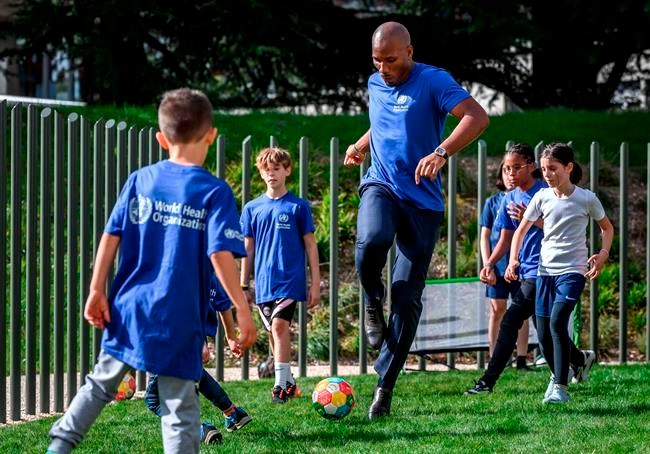
The launch included signing Ivory Coast great Didier Drogba as a WHO goodwill ambassador to promote a healthier lifestyle.
“May we unite to be better prepared,” Drogba said, “and respond to future pandemics more collaboratively as we seek to tell the WHO narrative to global audiences in languages and platforms that are accessible to all.”
___
More AP soccer: https://apnews.com/hub/soccer and https://twitter.com/AP_Sports
Related Articles
Many European states support UEFA in Super League legal case Pohang beats Ulsan on penalties to reach Asian CL final Newcastle asks fans to stop wearing imitation Arab clothing






Advertisement Advertise With Us
Advertisement Advertise With Us