

US women, men have not committed to single pay structure
Advertisement
Read this article for free:
or
Already have an account? Log in here »
To continue reading, please subscribe:

Digital Subscription
One year of digital access for only $205*
- Enjoy unlimited reading on winnipegfreepress.com
- Read the E-Edition, our digital replica newspaper
- Access News Break, our award-winning app
- Play interactive puzzles
*First annual payment billed as $205.00 + GST for one year. This annual subscription will automatically renew at $233.00 + GST every 52 weeks (10% off the regular annual price of $259.35). Offer available to new and qualified returning subscribers only. Cancel any time.
To continue reading, please subscribe:
Add Free Press access to your Brandon Sun subscription for only an additional
$1 for the first 4 weeks*
- Enjoy unlimited reading on winnipegfreepress.com
- Read the E-Edition, our digital replica newspaper
- Access News Break, our award-winning app
- Play interactive puzzles
*Your next Brandon Sun subscription payment will increase by $1.00 and you will be charged $17.95 plus GST for four weeks. After four weeks, your payment will increase to $24.95 plus GST every four weeks.
Read unlimited articles for free today:
or
Already have an account? Log in here »
Hey there, time traveller!
This article was published 11/01/2022 (1725 days ago), so information in it may no longer be current.
The unions for the U.S. women’s and men’s national teams have not committed to agreeing to a single pay structure proposed by the U.S. Soccer Federation, the head of the federation said in a letter to fans Tuesday.
The federation’s board refused to move ahead with a deal structure agreed to last spring by the men’s union with USSF executive director Will Wilson, a person familiar with the negotiations said, speaking on condition of anonymity. That structure was agreed to only after the men threatened to strike ahead of the CONCACAF Nations League final on June 6, the person said.
USSF President Cindy Parlow Cone and Wilson, speaking during a media conference call Tuesday, declined to go into details of what occurred.
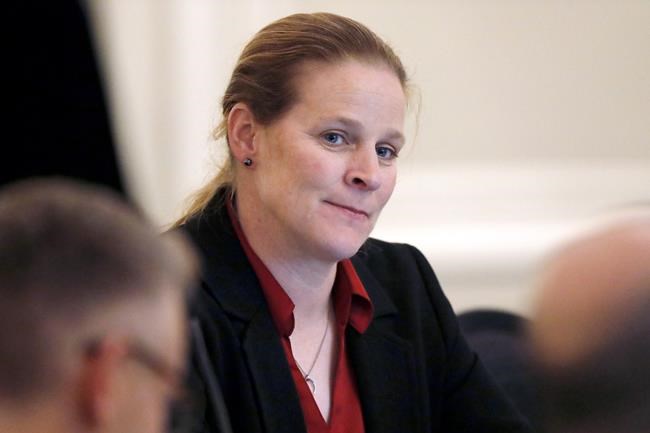
“As is the case in any negotiation, there’s a lot to work through,” Wilson said.
The federation went public with its prize money proposal in September and in November met jointly with the two unions, who under federal law are not obligated to reach similar collective bargaining agreements.
“What we’re talking about here is equalized prize money, identical game bonuses, identical commercial revenue-sharing agreement,” Parlow Cone said. “But will there be differences in the contracts? Yes, because the teams are different, and they have different needs.”
The U.S. Women’s National Team Players Association and U.S. National Soccer Team Players Association declined to comment.
Parlow Cone, a former national team player, became USSF president in March 2020 when Carlos Cordeiro quit amid a backlash to the group’s lawyers filing legal papers claiming the women’s national team players had less physical ability and responsibility than their male counterparts.
Cordeiro announced last week he is running to regain the job from Parlow Cone when the USSF’s national council meets in Atlanta on March 5.
“I think we need to continue to look forward, not backward,” Parlow Cone said. “I think I’ve led the organization with integrity and honesty. … We’ve made a lot of accomplishments in a very challenging time, and so I’m hoping that the membership will see what we’ve done. And has it been perfect? No. Of course, not. There’s still a lot of work to do, and we have a lot more that we want to accomplish. I would like to have a presidency that’s not constantly battling COVID.”
Women’s team players sued the federation in March 2019, claiming they had not been paid equitably under their collective bargaining agreement compared to what the men’s team received under its agreement.
U.S. District Judge R. Gary Klausner granted a summary judgment to the federation on the pay claim and the sides settled the portion of the suit alleging discriminatory working conditions.
Players have appealed the wage decision, and oral arguments are scheduled before the 9th U.S. Circuit Court of Appeals on March 7.
“This litigation is not a positive thing for anything that we’re doing, quite honestly, and it has contributed to a lot of negative things happening and being said,” Parlow Cone said. “The litigation obviously makes CBA negotiating a little bit more challenging, but we are still moving forward in a positive path.”
FIFA awarded $400 million in prize money for the 32 teams at the 2018 men’s World Cup, including $38 million to champion France. It awarded $30 million for the 24 teams at the 2019 Women’s World Cup, including $4 million to the U.S. after the Americans won their second straight title.
FIFA has increased the total to $440 million for the 2022 men’s World Cup, and its president, Gianni Infantino, has proposed FIFA double the women’s prize money to $60 million for the 2023 Women’s World Cup, in which FIFA has increased the teams to 32.

“Until FIFA resolves it themselves, we have to find a way to equalize the World Cup prize money,” Parlow Cone said.
The women’s collective bargaining agreement expires March 31 as part of a three-month extension. The men’s agreement expired in December 2018.
Notes: Parlow Cone said the USSF is moving ahead with studies for a national training center, which she hopes could be in place before the 2026 World Cup. Cordeiro also favors a training center.
___
More AP soccer: https://apnews.com/hub/soccer and https://twitter.com/AP_Sports
Related Articles
Beckie joins Simcoe County FC ownership group FuboTV lands Canadian rights to English Premier League for next three seasons







Advertisement Advertise With Us
Advertisement Advertise With Us