

Canada lets Arnold Clark Cup get away with loss to Spain
Advertisement
Read this article for free:
or
Already have an account? Log in here »
To continue reading, please subscribe:

Digital Subscription
One year of digital access for only $205*
- Enjoy unlimited reading on winnipegfreepress.com
- Read the E-Edition, our digital replica newspaper
- Access News Break, our award-winning app
- Play interactive puzzles
*First annual payment billed as $205.00 + GST for one year. This annual subscription will automatically renew at $233.00 + GST every 52 weeks (10% off the regular annual price of $259.35). Offer available to new and qualified returning subscribers only. Cancel any time.
To continue reading, please subscribe:
Add Free Press access to your Brandon Sun subscription for only an additional
$1 for the first 4 weeks*
- Enjoy unlimited reading on winnipegfreepress.com
- Read the E-Edition, our digital replica newspaper
- Access News Break, our award-winning app
- Play interactive puzzles
*Your next Brandon Sun subscription payment will increase by $1.00 and you will be charged $17.95 plus GST for four weeks. After four weeks, your payment will increase to $24.95 plus GST every four weeks.
Read unlimited articles for free today:
or
Already have an account? Log in here »
Hey there, time traveller!
This article was published 23/02/2022 (1654 days ago), so information in it may no longer be current.
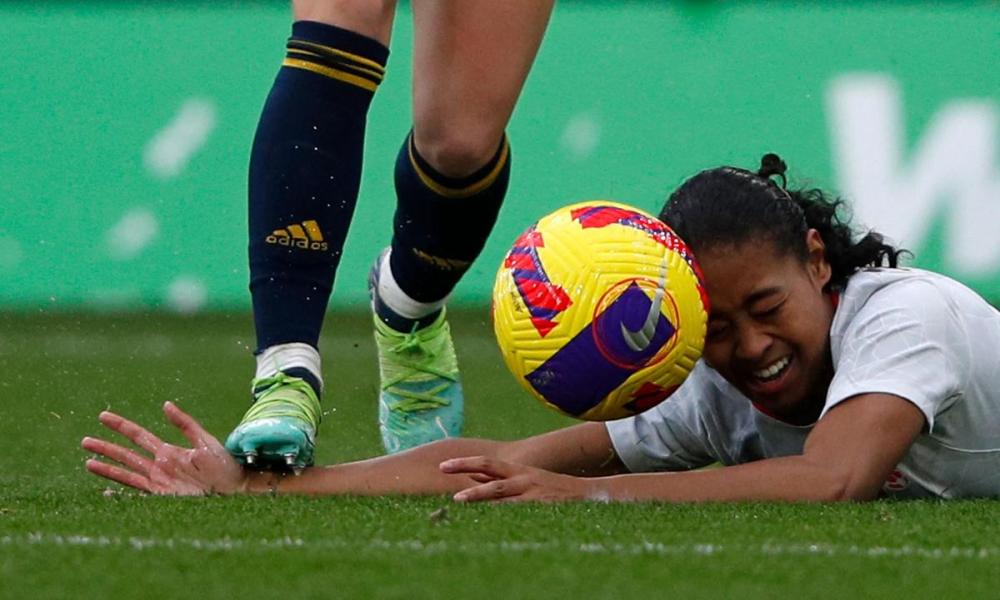
Canada dropped its first game at the first Arnold Clark Cup, losing 1-0 to Spain on Wednesday, but all is far from lost for a Canadian team that exceeded expectations in the tournament.
Alexia Putella, the reigning Ballon d’Or Feminin winner, scored the game-winning goal in the 21st minute, when she found herself unmarked near the penality spot in the Canadian box. A win would have given the Canadians the tournament title; instead they finish a point back of Spain and host England, which won the trophy after beating Germany 3-1 later Wednesday.
Coming so close to lifting a title, no matter how prestigious, and falling short is a disappointment for any competitor. But Canada coach Bev Priestman’s main objectives at the outset of the tournament in England were to work on improving small details, assessing new players and gauging how her squad stacked up against European competition.
“I’m so glad we attended this tournament,” Priestman said after the match. “I think we’ve got some massive learnings. And there are some players that really had to step up.”
Here are five things we learned from Canada’s performance against Spain.
Familiar issues
Priestman said going into the tournament that she and her staff planned to focus on “key metrics” to improve its goal scoring, but that the process would take time. And so it was another low scoring tournament for Canada, which struggled to create much after Spain took its lead. The Canadians’ creativity around the outside of the penalty box improved later in the game, with Cloe Lacasse and Quinn both pulling some strings. But finesse on the final pass was still lacking, and Canada still needs someone to step up as an out-and-out goal scorer.
D’Angelo won’t give up
Sabrina D’Angelo has mostly been out of the Canadian national team equation since a serious knee injury in 2020. But the second-half substitute showed she is still in Canada’s goalkeeping conversation. D’Angelo was cool and composed and took charge of her box. Having Kailen Sheridan and D’Angelo push each other for the No. 1 spot in Canada’s net should serve the team well.
Newbies make names
Lacasse, the striker who made her debut for Canada last November, was lively on the right wing as a second-half substitute. Her nose for goal is clear, as is her ability to run at, and beat, defenders. Midfielder Marie-Yasmine Alidou impressed in her debut for Canada against Spain, linking up well with Canada’s attackers while working under pressure and in tight spaces.

Spain a new force
The Spanish are now unbeaten in 19 games, dating back to a 1-0 loss to the United States at the SheBelieves Cup in early 2020. It’s clear why. The team balances beauty and grit both offensively and defensively. But there’s more to Spain’s success than what’s happening on the field. The team is starting to see the benefits of investing in the women’s game in the country, including the homegrown talent that comes from having two levels of professional domestic leagues. They will likely only get better. And Canada should take note.
The bigger picture
Canada’s squad featured many players still in pre-season mode. In its 1-1 tie against England and the loss to Spain, the team struggled to put together full 90-minute performances. For the Canadians, the key is to peak this summer at the CONCACAF W Championship, which serves as a qualifier for both the 2023 Women’s World Cup and the 2024 Olympics. Getting the kinks out in the lead-up to those games, against tough competition, is exactly what Canada needs and what makes this kind of tournament so critical.
Laura Armstrong is a Star sports reporter based in Toronto. Follow her on Twitter: @lauraarmy
Related Articles
Gran Derbi guaranteed drama and excitement







Advertisement Advertise With Us
Advertisement Advertise With Us