The road ahead for Canada and the 2026 men’s soccer World Cup
Advertisement
Read this article for free:
or
Already have an account? Log in here »
To continue reading, please subscribe:
Digital Subscription
One year of digital access for only $1.44 a week*
- Enjoy unlimited reading on winnipegfreepress.com
- Read the E-Edition, our digital replica newspaper
- Access News Break, our award-winning app
- Play interactive puzzles
*Billed as $5.77 plus GST every four weeks. After 52 weeks, price increases to the regular rate of $19.95 plus GST every four weeks. Offer available to new and qualified returning subscribers only. Cancel any time.
To continue reading, please subscribe:
Add Free Press access to your Brandon Sun subscription for only an additional
$1 for the first 4 weeks*
- Enjoy unlimited reading on winnipegfreepress.com
- Read the E-Edition, our digital replica newspaper
- Access News Break, our award-winning app
- Play interactive puzzles
*Your next Brandon Sun subscription payment will increase by $1.00 and you will be charged $17.95 plus GST for four weeks. After four weeks, your payment will increase to $24.95 plus GST every four weeks.
Read unlimited articles for free today:
or
Already have an account? Log in here »
Hey there, time traveller!
This article was published 27/02/2022 (1699 days ago), so information in it may no longer be current.
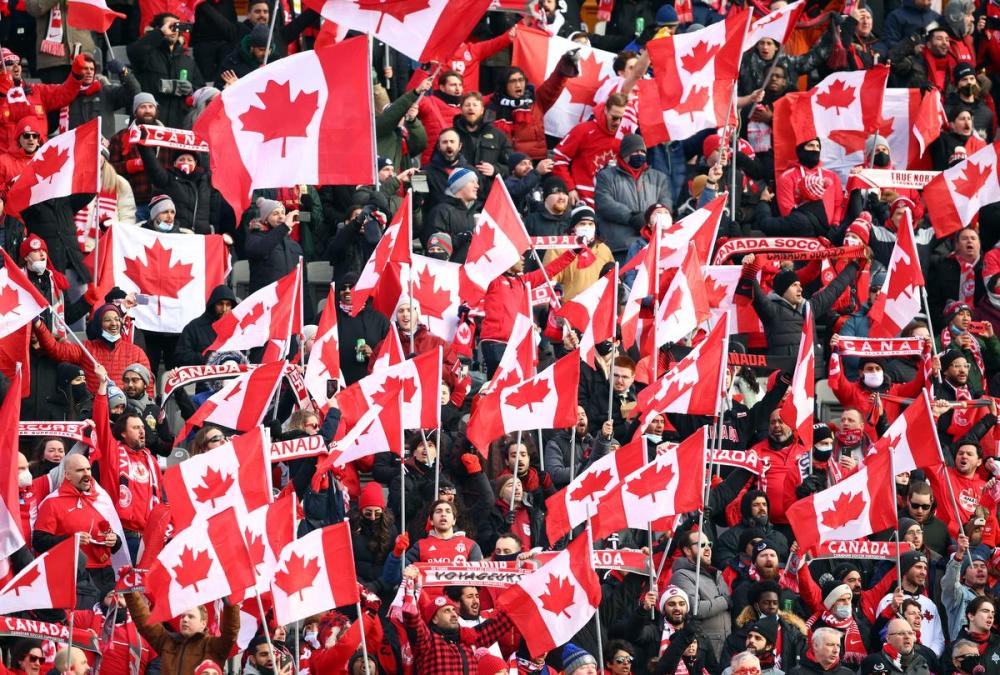
The Canadian men’s soccer team is nearing World Cup qualification for the first time in more than 35 years. And it could be just the start.
Focused on this year’s tournament in Qatar, which starts in November, Canada can clinch a berth in its next match against Costa Rica on March 24. But the 2026 World Cup is also on the horizon, and Canada will co-host that tournament along with the United States and Mexico.
FIFA wrapped up inspections of 23 possible venues (in 22 cities) for 2026 with a visit to Toronto on Nov. 22. The international delegation met with all three levels of government as well as representatives from Maple Leaf Sports and Entertainment and Canada Soccer.
“Bringing soccer’s most prestigious event to this city is going to help … mark Toronto as a soccer city for the rest of time,” Mayor John Tory said then.
Here’s a closer look at the successful 2026 bid, and what lies ahead:
How it started
Between 2012 and 2016, all three countries made pitches to host the World Cup on their own. But in January 2017, FIFA’s council voted unanimously to expand the men’s field from 32 to 48. In April 2017, Canada, the U.S. and Mexico changed course and launched a united bid.
Green light
In June 2018, Canada won the vote by a healthy margin at the FIFA Congress in Moscow, beating Morocco 134 to 65. The 2026 men’s World Cup will be the first with games in more than one country since Japan and South Korea shared the 2002 event.
The breakdown
With 80 matches in total, 60 are expected to be played in the U.S. Canada and Mexico would get 10 apiece: likely seven group-stage games, two in the round of 32 and one in the round of 16.
Canadian contenders
Toronto and Edmonton, which FIFA also visited in November, are the only Canadian cities still officially in the running. Edmonton’s Commonwealth Stadium, however, would have to convert from artificial turf to natural grass, and the city’s proposal has yet to be officially supported by the Alberta government. Montreal withdrew its bid last July because of a lack of support at the provincial level, and talk of interest from Vancouver never led to a site visit.
The cost
In January 2018, a City of Toronto report estimated that it would cost between $30 million and $45 million to host Cup matches, with contributions from all three levels of government. The following month, city council voted 29 to 1 in favour of bidding. Tory said last year that the numbers were not final, but the investment — factoring in support from FIFA and the private sector — was “not insignificant.”
The infrastructure
Capacity at BMO Field, the home of Toronto FC which holds about 30,000 fans for soccer without temporary seating, would have to expand to at least the FIFA minimum of 45,000. Some city parks and other facilities would also be upgraded to meet standards for practices, upgrades Tory calls “legacy projects.”
The payoff
In 2018, a report by the Boston Consulting Group for the U.S. Soccer Federation estimated that a World Cup would generate more than $5 billion (U.S.) worth of short-term economic activity in North America, with the net benefit coming in at $3 billion to $4 billion. Individual host cities could see a net benefit of anywhere from $90 million to $480 million. Other reports have estimated a $330-million bump for the Toronto area. Explore Edmonton reported that hosting Canada’s World Cup qualifiers in November brought in $30 million to $40 million.

The decision
While Toronto is considered a lock to host games, the official announcement isn’t expected until April.
The home team
Host nations generally get an automatic berth. For Canada, after a long drought, it would almost surely be the second in a row.
Laura Armstrong is a Star sports reporter based in Toronto. Follow her on Twitter: @lauraarmy