

FIFA safeguarding program used at under-20 Women’s World Cup
Advertisement
Read this article for free:
or
Already have an account? Log in here »
To continue reading, please subscribe:

Digital Subscription
One year of digital access for only $205*
- Enjoy unlimited reading on winnipegfreepress.com
- Read the E-Edition, our digital replica newspaper
- Access News Break, our award-winning app
- Play interactive puzzles
*First annual payment billed as $205.00 + GST for one year. This annual subscription will automatically renew at $233.00 + GST every 52 weeks (10% off the regular annual price of $259.35). Offer available to new and qualified returning subscribers only. Cancel any time.
To continue reading, please subscribe:
Add Free Press access to your Brandon Sun subscription for only an additional
$1 for the first 4 weeks*
- Enjoy unlimited reading on winnipegfreepress.com
- Read the E-Edition, our digital replica newspaper
- Access News Break, our award-winning app
- Play interactive puzzles
*Your next Brandon Sun subscription payment will increase by $1.00 and you will be charged $17.95 plus GST for four weeks. After four weeks, your payment will increase to $24.95 plus GST every four weeks.
Read unlimited articles for free today:
or
Already have an account? Log in here »
Hey there, time traveller!
This article was published 30/08/2022 (1502 days ago), so information in it may no longer be current.
The recently concluded under-20 Women’s World Cup in Costa Rica was the first youth tournament to implement FIFA’s safeguarding program, aimed at keeping participants and fans safe from abuse, exploitation and harassment.
FIFA announced Tuesday that all 32 games were staffed by a safeguarding official as well as a representative from Costa Rica’s National Children’s Institute.
The teams that participated in the tournament were briefed on the program upon arrival and materials were distributed to raise awareness and inform participants how to report incidents. Visits were also made to practices and team hotels.
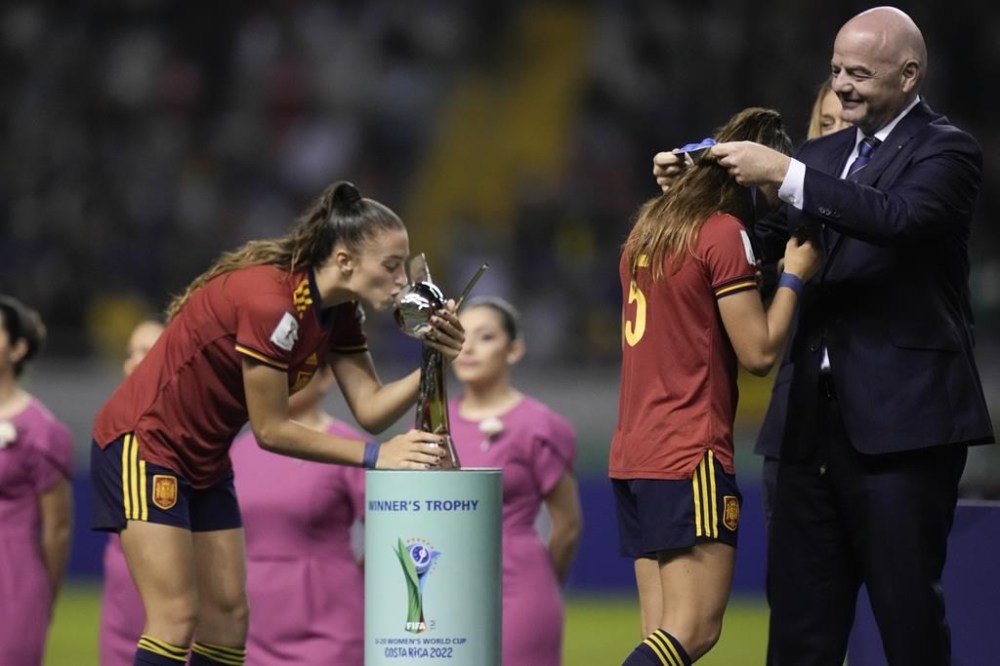
Spain defeated Japan 3-1 in the World Cup final on Sunday in San Jose.
“As a priority at FIFA, we want everyone in football to feel welcome, respected and, most importantly, safe at FIFA competitions and across all levels of the game — especially children, who are the most vulnerable,” said Marie-laure Lemineur, FIFA’s head of safeguarding and child protection.
Reports of sexual abuse in Afghanistan and Haiti in recent years spurred the program. Federation officials in both countries have been banned by FIFA for life. Gabon’s federation is currently under investigation amid allegations of underage abuse.
The safeguarding program is part of the FIFA Guardians initiative, announced following the 2019 Women’s World Cup to ensure player safety. It was developed with UNICEF, the United Nations children’s agency.
The safeguarding program will also be in place at the under-17 Women’s World Cup in India in October, and the senior Women’s World Cup in Australia and New Zealand next summer.

___
More AP soccer: https://apnews.com/hub/soccer and https://twitter.com/AP_Sports
Related Articles
American defender John Brooks signs with Portugal's Benfica







Advertisement Advertise With Us
Advertisement Advertise With Us