

Troubled German soccer giants meet when Schalke plays Hertha
Advertisement
Read this article for free:
or
Already have an account? Log in here »
To continue reading, please subscribe:

Digital Subscription
One year of digital access for only $205*
- Enjoy unlimited reading on winnipegfreepress.com
- Read the E-Edition, our digital replica newspaper
- Access News Break, our award-winning app
- Play interactive puzzles
*First annual payment billed as $205.00 + GST for one year. This annual subscription will automatically renew at $233.00 + GST every 52 weeks (10% off the regular annual price of $259.35). Offer available to new and qualified returning subscribers only. Cancel any time.
To continue reading, please subscribe:
Add Free Press access to your Brandon Sun subscription for only an additional
$1 for the first 4 weeks*
- Enjoy unlimited reading on winnipegfreepress.com
- Read the E-Edition, our digital replica newspaper
- Access News Break, our award-winning app
- Play interactive puzzles
*Your next Brandon Sun subscription payment will increase by $1.00 and you will be charged $17.95 plus GST for four weeks. After four weeks, your payment will increase to $24.95 plus GST every four weeks.
Read unlimited articles for free today:
or
Already have an account? Log in here »
Hey there, time traveller!
This article was published 20/10/2022 (1430 days ago), so information in it may no longer be current.
DÜSSELDORF, Germany (AP) — Schalke and Hertha Berlin have more in common than they’d like to admit.
Their club colors are blue and white, they see themselves as traditional powers of German soccer — and they’ve won only one league game each this season. At both clubs, lofty dreams of Champions League glory lie in ruins.
When they meet in the Bundesliga on Sunday, 17th-place Schalke and 15th-place Hertha will be looking for a win to kick-start their seasons and get as far away from the relegation zone as they can.
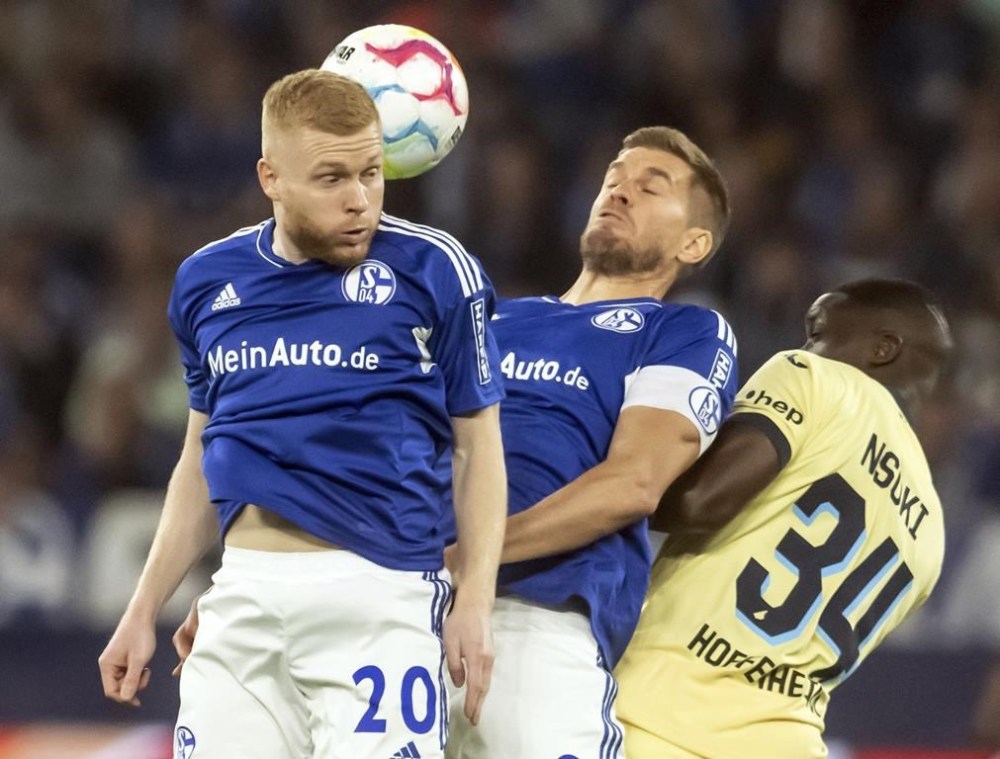
Schalke fired coach Frank Kramer on Wednesday after only four months in charge and after a five-game losing run. Whoever replaces him will be the club’s seventh permanent head coach since the start of 2020. The only mission is staying in the Bundesliga after promotion last season.
Relegation would be another blow to a club with chronic financial problems. Schalke spent heavily in an attempt to become a regular in the Champions League and was left even more exposed than most clubs when the pandemic slashed its income almost overnight. Billionaire club chairman Clemens Tönnies resigned in 2020 facing criticism for racist comments and a huge outbreak of coronavirus infections at one of his company’s slaughterhouses.
It’s unclear will be replace Kramer as Schalke coach. Given the club’s money troubles and thin squad, it’s not the most desirable job around. A knee injury for Leo Greiml means Schalke now has four central defenders unavailable until 2023, further weakening a back line which has conceded 15 goals in its last four games.
Hertha, too, is a club adjusting its expectations. Starting in 2019, businessman Lars Windhorst invested 374 million euros ($367 million) in the club with grand plans. Windhorst’s vision was to turn Hertha into a “Big City Club” and a Champions League power. If London, Paris and Madrid had teams fighting for European titles, why not Berlin?
Now the relationship between Windhorst and the Hertha members has soured and he is asking for his money back. Results on the field over the last three seasons have gone backward — 10th in the league, then 14th, then 16th, with survival only in a relegation playoff.
Even worse for Hertha fans is watching local rival Union Berlin soar to the top of the Bundesliga standings. Union has a four-point lead and is visiting last-place Bochum on Sunday.

It’s been a tough few years for traditional “big” clubs in Germany like Hertha and Schalke. Bayern Munich has powered to an unprecedented 10 consecutive Bundesliga titles with the help of Champions League TV money and global commercial deals. Borussia Dortmund has built an international brand as the team for exciting young talents. The remaining Champions League spots have often gone to clubs like Leipzig, Bayer Leverkusen, Wolfsburg and Hoffenheim that have close ties to multinational companies or deep-pocketed investors.
Windhorst was supposed to be Hertha’s answer to that trend, while Schalke sought to keep up with a now-canceled 15-year alliance with Russian state gas company Gazprom.
With such intense competition on finances, several German giants have had to accept a more modest role. And it could be worse. The second division is full of once-big names like Hamburg, which had never been relegated until 2018 and is now in its fourth season outside the top division after losing last season’s playoff to, coincidentally, Hertha.
___
AP World Cup coverage: https://apnews.com/hub/world-cup and https://twitter.com/AP_Sports
Related Articles
No face masks: Wolfsburg slams its 'disrespectful' players






Advertisement Advertise With Us
Advertisement Advertise With Us