

FIFA doctor sees World Cup as showcase of concussion policy
Advertisement
Read this article for free:
or
Already have an account? Log in here »
To continue reading, please subscribe:

Digital Subscription
One year of digital access for only $205*
- Enjoy unlimited reading on winnipegfreepress.com
- Read the E-Edition, our digital replica newspaper
- Access News Break, our award-winning app
- Play interactive puzzles
*First annual payment billed as $205.00 + GST for one year. This annual subscription will automatically renew at $233.00 + GST every 52 weeks (10% off the regular annual price of $259.35). Offer available to new and qualified returning subscribers only. Cancel any time.
To continue reading, please subscribe:
Add Free Press access to your Brandon Sun subscription for only an additional
$1 for the first 4 weeks*
- Enjoy unlimited reading on winnipegfreepress.com
- Read the E-Edition, our digital replica newspaper
- Access News Break, our award-winning app
- Play interactive puzzles
*Your next Brandon Sun subscription payment will increase by $1.00 and you will be charged $17.95 plus GST for four weeks. After four weeks, your payment will increase to $24.95 plus GST every four weeks.
Read unlimited articles for free today:
or
Already have an account? Log in here »
Hey there, time traveller!
This article was published 01/11/2022 (1427 days ago), so information in it may no longer be current.
GENEVA (AP) — FIFA’s top doctor highlighted brain injuries in soccer as his top priority Tuesday ahead of a World Cup where teams can use an extra substitute if a player has a suspected concussion.
“I joined FIFA to try and make a little bit of a difference and brain injuries is top of my list. That is the one we can focus on,” said Andrew Massey, who joined the world governing body as its medical director in 2020 after being team doctor at Liverpool. “What we do at the World Cup will be evidenced at grass roots football.”
The tournament in Qatar will be the first World Cup where teams can make an additional permanent substitution in a game for a suspected concussion, on top of the five that can be used in the regulation 90 minutes.
In the final of the 2014 World Cup, Germany midfielder Christoph Kramer stayed on the field for 14 first-half minutes after taking a heavy blow to the face when colliding with an Argentina opponent. He was replaced only after slumping to the ground.
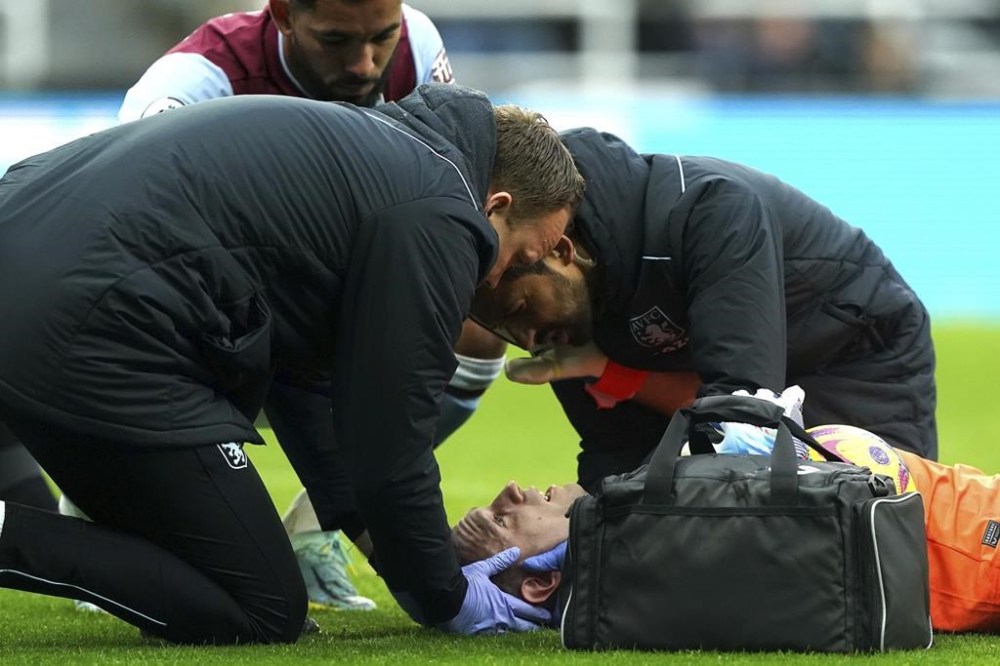
Soccer’s often inconsistent attitude to head injuries was shown Saturday in the English Premier League. Aston Villa’s Argentina goalkeeper Emiliano Martinez continued playing for several minutes against Newcastle despite looking groggy after colliding with a teammate.
FIFAs law-making panel, known as IFAB, has specially allowed concussion subs at the World Cup as it continues trials that run through August next year with about 140 competitions globally.
Massey said FIFA’s strategy was to “suspect and protect,” aiming to avoid having injured players staying on the field until the severity of a head injury becomes clearer.

“We don’t want to leave a team numerically disadvantaged or tactically disadvantaged,” he told FIFA’s in-house “Living Football” show.
In Qatar, teams’ medical staff will have tablets to see video replays quickly and get input from concussion spotters in the stands.
“Everything FIFA does is to support the team doctors” who make the final decision if a player can continue playing or must be replaced, Massey said.
___
AP World Cup coverage: https://apnews.com/hub/world-cup and https://twitter.com/AP_Sports
Related Articles
Japan defender Yuta Nakayama to miss World Cup with injury Germany's Timo Werner out of World Cup with ankle injury








Advertisement Advertise With Us
Advertisement Advertise With Us