

Argentina’s government defends chaotic World Cup parade
Advertisement
Read this article for free:
or
Already have an account? Log in here »
To continue reading, please subscribe:

Digital Subscription
One year of digital access for only $205*
- Enjoy unlimited reading on winnipegfreepress.com
- Read the E-Edition, our digital replica newspaper
- Access News Break, our award-winning app
- Play interactive puzzles
*First annual payment billed as $205.00 + GST for one year. This annual subscription will automatically renew at $233.00 + GST every 52 weeks (10% off the regular annual price of $259.35). Offer available to new and qualified returning subscribers only. Cancel any time.
To continue reading, please subscribe:
Add Free Press access to your Brandon Sun subscription for only an additional
$1 for the first 4 weeks*
- Enjoy unlimited reading on winnipegfreepress.com
- Read the E-Edition, our digital replica newspaper
- Access News Break, our award-winning app
- Play interactive puzzles
*Your next Brandon Sun subscription payment will increase by $1.00 and you will be charged $17.95 plus GST for four weeks. After four weeks, your payment will increase to $24.95 plus GST every four weeks.
Read unlimited articles for free today:
or
Already have an account? Log in here »
Hey there, time traveller!
This article was published 21/12/2022 (1382 days ago), so information in it may no longer be current.
BUENOS AIRES, Argentina (AP) — Argentina’s government on Wednesday defended the mammoth parade held to welcome home the World Cup winners even though the event was abruptly cut short amid organizational chaos.
After days of high-profile activity, team captain Lionel Messi and most of the other members of the national soccer squad were largely staying out of sight and spending time with family and friends.
There had been speculation that Rosario, Argentina’s third-largest city, would put on its own celebration for hometown hero Messi. But after Tuesday’s chaos in Buenos Aires, where millions swamped the streets eager to get a glimpse of the winning team, officials were emphasizing that the players preferred to rest.
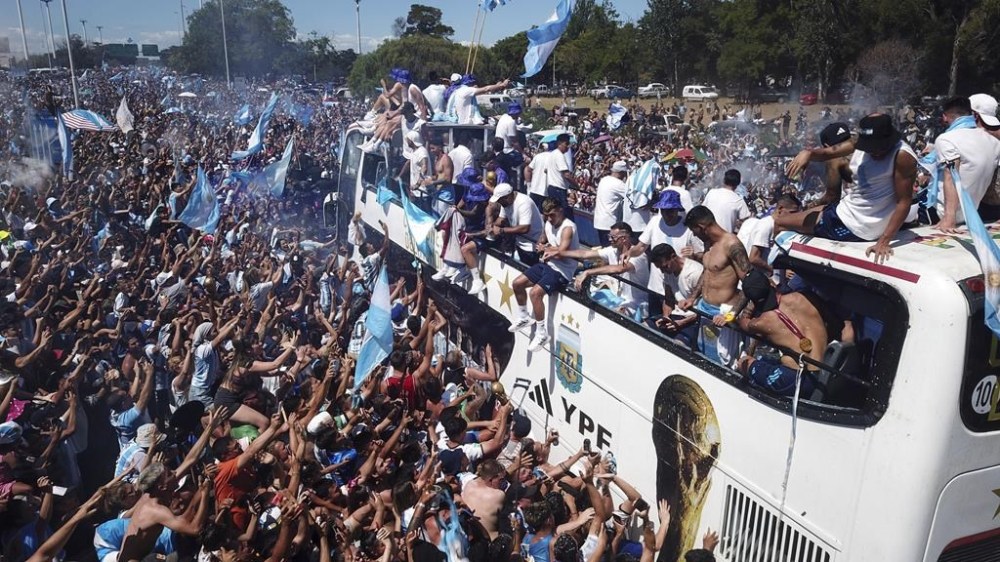
In talking about the early end to Tuesday’s parade, Security Minister Aníbal Fernández said: “The objective was to protect the players — not because they were going to be harmed, but rather because anything could help when so many people were trying to get close to them.”
The World Cup and the success of the national team brought a brief respite from the political infighting that is common in Argentina, a country that has been plagued by economic malaise for years and is suffering one of the world’s highest inflation rates. But controversy over the parade brought back
Soccer officials had said early Tuesday that the team would travel in an open-top bus from the Argentine Football Association headquarters outside the capital to the Obelisk, the iconic downtown Buenos Aires landmark that is the traditional site of celebrations. Fernández said he warned early on that was a mistake.

“Look at the photos. Put a bus in the middle of there and you realize that they would have stayed living there for six days,” Fernández said.
President Alberto Fernández sought to play up the celebration itself, saying that “if you see the happiness that there were in the streets, the objective was met.”
The initial plan was for the bus carrying the players to travel 74 kilometers (46 miles), but after going 12 kilometers in only four hours under a scorching summer sun, the players were boarded onto helicopters for a capital flyover that the government billed as an aerial parade.
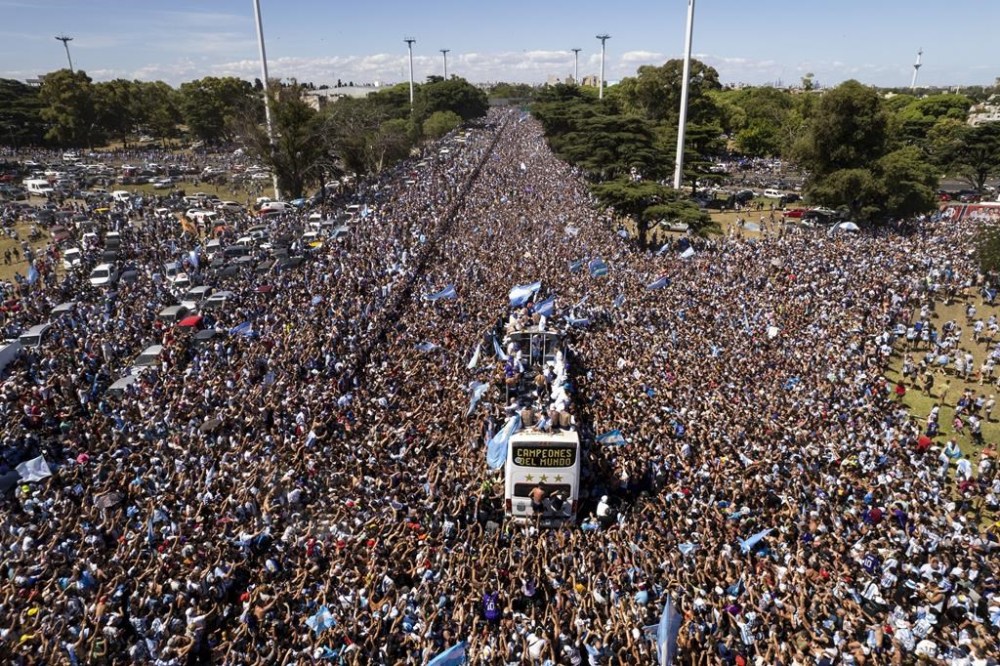
After the flyover, the helicopters returned to the soccer federation headquarters and from there players traveled home, including Messi, who flew to Rosario alongside teammate Angel Di María.
Messi boarded a helicopter at the Rosario airport and headed to the gated community outside the city, in Funes, where he has a home. Video on social media showed neighbors cheering Messi as he arrived and the soccer star agreeing to take selfies.
Related Articles
France World Cup winner Blaise Matuidi retires from soccer Maxi Moralez to leave NYC, return to Argentina’s Racing Police investigate crowd trouble at Man City-Liverpool game





Advertisement Advertise With Us
Advertisement Advertise With Us