

Norwegian aims for historic win for women in UEFA election
Advertisement
Read this article for free:
or
Already have an account? Log in here »
To continue reading, please subscribe:

Digital Subscription
One year of digital access for only $205*
- Enjoy unlimited reading on winnipegfreepress.com
- Read the E-Edition, our digital replica newspaper
- Access News Break, our award-winning app
- Play interactive puzzles
*First annual payment billed as $205.00 + GST for one year. This annual subscription will automatically renew at $233.00 + GST every 52 weeks (10% off the regular annual price of $259.35). Offer available to new and qualified returning subscribers only. Cancel any time.
To continue reading, please subscribe:
Add Free Press access to your Brandon Sun subscription for only an additional
$1 for the first 4 weeks*
- Enjoy unlimited reading on winnipegfreepress.com
- Read the E-Edition, our digital replica newspaper
- Access News Break, our award-winning app
- Play interactive puzzles
*Your next Brandon Sun subscription payment will increase by $1.00 and you will be charged $17.95 plus GST for four weeks. After four weeks, your payment will increase to $24.95 plus GST every four weeks.
Read unlimited articles for free today:
or
Already have an account? Log in here »
Hey there, time traveller!
This article was published 16/02/2023 (1322 days ago), so information in it may no longer be current.
GENEVA (AP) — Aiming to become one of the few women in world soccer politics to win an election against men, Norwegian Football Federation president Lise Klaveness is running for a seat on UEFA’s executive committee.
Klaveness was declared an official candidate Thursday, one of 11 European officials who are vying for seven available seats with a four-year mandate on the UEFA ruling committee.
UEFA’s executive committee has 20 members in total but currently includes only one woman — Florence Hardouin of France, who holds a seat that is especially reserved for women. No woman has ever been elected to a seat open for men.
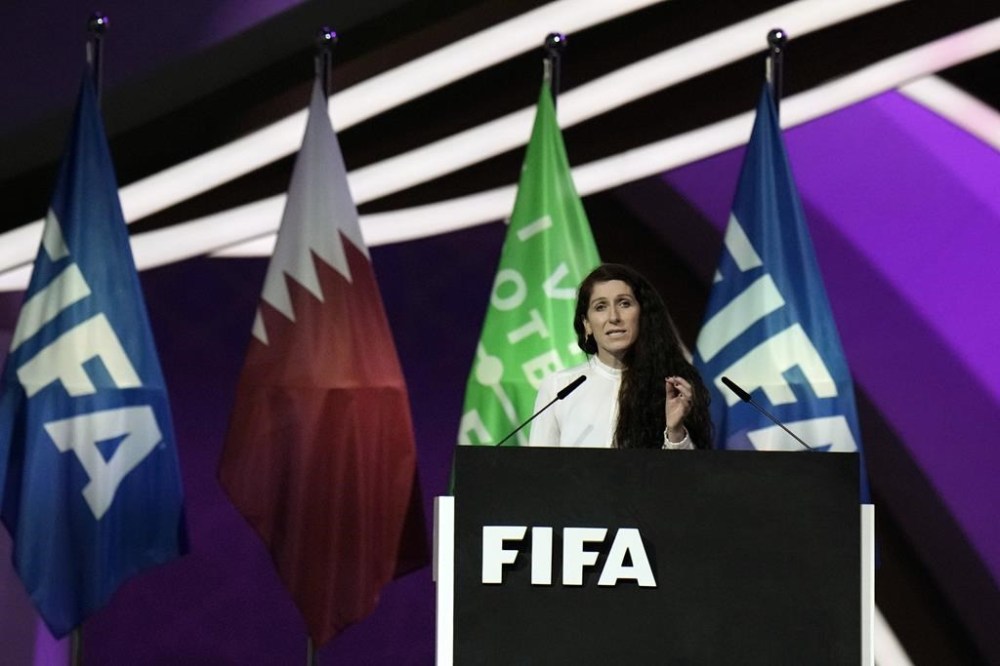
Klaveness is a lawyer and former national-team player who made a big impact at the FIFA Congress last year in Qatar with a speech directly addressing the World Cup host nation’s record on labor and human rights.
Other candidates for the four-year terms include Andriy Pavelko of Ukraine and UEFA vice president Luis Rubiales of Spain, who are among four incumbents seeking to retain their seat. They are fronting their countries’ combined bid with Portugal to host the 2030 World Cup.
The election will be held at a meeting of UEFA’s 55 member countries on April 5 in Lisbon, where Aleksander Ceferin will be unopposed for re-election to the presidency he has held since 2016.
Hardouin is not running for re-election, and Klaveness’ decision to target the election against men left only one candidate for the seat reserved for a woman, Laura McAllister of Wales. McAllister is an academic and a former international player who helped lead a group of Welsh LGBTQ fans wearing rainbow hats at the World Cup in Qatar.
Denmark’s soccer leader Jesper Møller is also a candidate to retain his UEFA seat. He said in Qatar at the World Cup that Denmark would not vote for FIFA president Gianni Infantino at an uncontested election in Rwanda on March 16.
One of the biggest decisions facing the next UEFA executive committee is choosing hosts in September for the 2028 and 2032 editions of the men’s European Championship. The UK and Ireland is expected get Euro 2028 and Italy has been favored for 2032. Both are competing against Turkey.
The UEFA executive committee also includes the Qatari president of Paris Saint-Germain, Nasser Al-Khelaïfi, who represents European clubs on the decision-making body.
Two seats held by UEFA vice presidents Sándor Csanyi and Fernando Gomes have become vacant because they have reached the age limit of 70. Both are standing on April 5 for European seats on the FIFA Council because the world soccer body does not have age limits for candidates.

Borussia Dortmund executive Hans-Joachim Watzke is the only candidate for a seat with a two-year mandate on the UEFA executive committee.
Ceferin is eligible to be UEFA president for a total of 15 years through 2031 despite UEFA having a term limit of 12 years.
An amendment was passed by UEFA that meant the first three years of his presidency — completing an unfinished mandate of Michel Platini, who was banned by FIFA for alleged financial wrongdoing — did not count against his 12-year limit.
___
More AP soccer: https://apnews.com/hub/soccer and https://twitter.com/AP_Sports
Related Articles
Bayern loses at Gladbach 3-2 in another Bundesliga setback






Advertisement Advertise With Us
Advertisement Advertise With Us