

Soccer players’ union FIFPRO eyes 2023 World Cup as catalyst to professionalize women’s game
Advertisement
Read this article for free:
or
Already have an account? Log in here »
To continue reading, please subscribe:

Digital Subscription
One year of digital access for only $205*
- Enjoy unlimited reading on winnipegfreepress.com
- Read the E-Edition, our digital replica newspaper
- Access News Break, our award-winning app
- Play interactive puzzles
*First annual payment billed as $205.00 + GST for one year. This annual subscription will automatically renew at $233.00 + GST every 52 weeks (10% off the regular annual price of $259.35). Offer available to new and qualified returning subscribers only. Cancel any time.
To continue reading, please subscribe:
Add Free Press access to your Brandon Sun subscription for only an additional
$1 for the first 4 weeks*
- Enjoy unlimited reading on winnipegfreepress.com
- Read the E-Edition, our digital replica newspaper
- Access News Break, our award-winning app
- Play interactive puzzles
*Your next Brandon Sun subscription payment will increase by $1.00 and you will be charged $17.95 plus GST for four weeks. After four weeks, your payment will increase to $24.95 plus GST every four weeks.
Read unlimited articles for free today:
or
Already have an account? Log in here »
Hey there, time traveller!
This article was published 13/07/2023 (1181 days ago), so information in it may no longer be current.
GENEVA (AP) — A risk of overloading women’s soccer players in Europe. Too few competitive games in other parts of the world. Professionalizing domestic leagues too slowly.
One week before the Women’s World Cup kicks off in Australia and New Zealand, global players’ union FIFPRO published analysis on Thursday of its members’ workload on the 32 teams’ road to the July 20-Aug. 20 tournament.
A key takeaway suggested European teams and players with clubs in Europe will be the best prepared to succeed. The first Women’s World Cup expanded to 32 teams includes Haiti, Morocco, Panama and Philippines among teams making their debut.
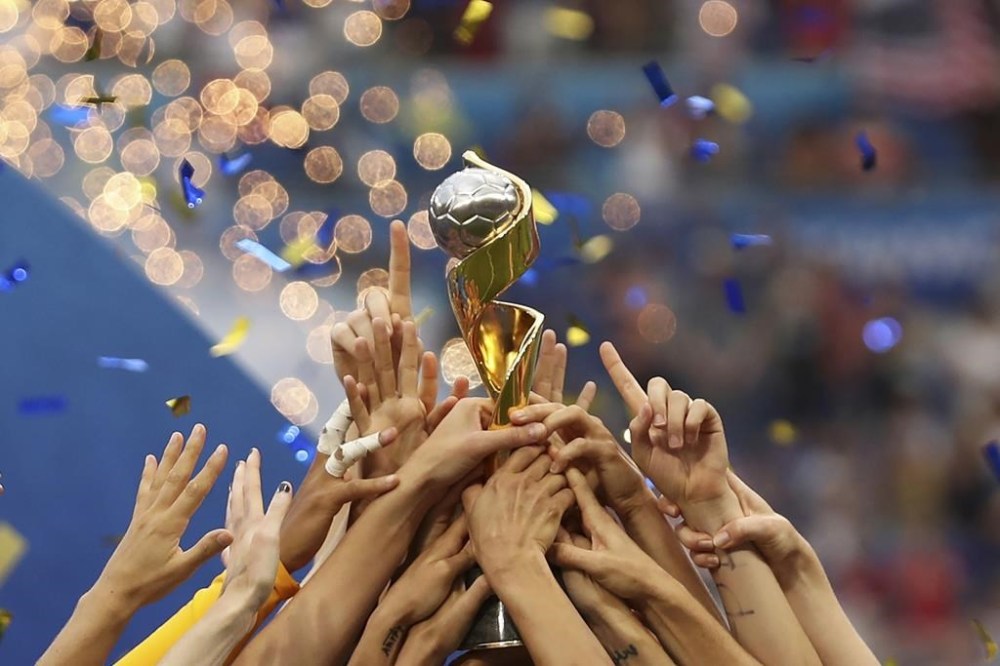
The squads of England, Spain and Portugal have played the most competitive minutes in the past year, according to FIFPRO research which was hampered by poor data collection for women’s soccer in some countries outside Europe. Those European powers have also suffered an epidemic of serious knee injuries for star players.
Only Europe had a dedicated, stand-alone qualifying tournament for the Women’s World Cup while other confederations’ games counted also as a continental championship or Olympics qualifiers. FIFPRO research showed Brazil played 18 friendly games in a row while Colombia and Argentina both had 16.
“We just feel that denies players further opportunity to have competitive and consequentially meaningful games,” said Sarah Gregorius, FIFPRO strategy director for women’s soccer.
Even the two-time defending champion United States relies heavily on friendlies rather than competitive action.
The UEFA Women’s Champions League also is ahead of other confederations in giving international competition to club teams. FIFA has targeted a Women’s Club World Cup since at least 2019 but no clear project has yet emerged.
“Some players only have access to around 20 matches per year which is just not enough,” Gregorius said in an online briefing. “The professionalization and league expansion is not happening as quick as we’d like to see.”
Gregorius noted a “large disparity in domestic club structures” which sees Tokyo Olympic champion Canada still without a women’s league, while some national leagues have as few as 12 rounds.

Women’s soccer is growing fast and its signature tournament has doubled in size in just 12 years – from 16 teams at the 2011 edition to 32 teams now.
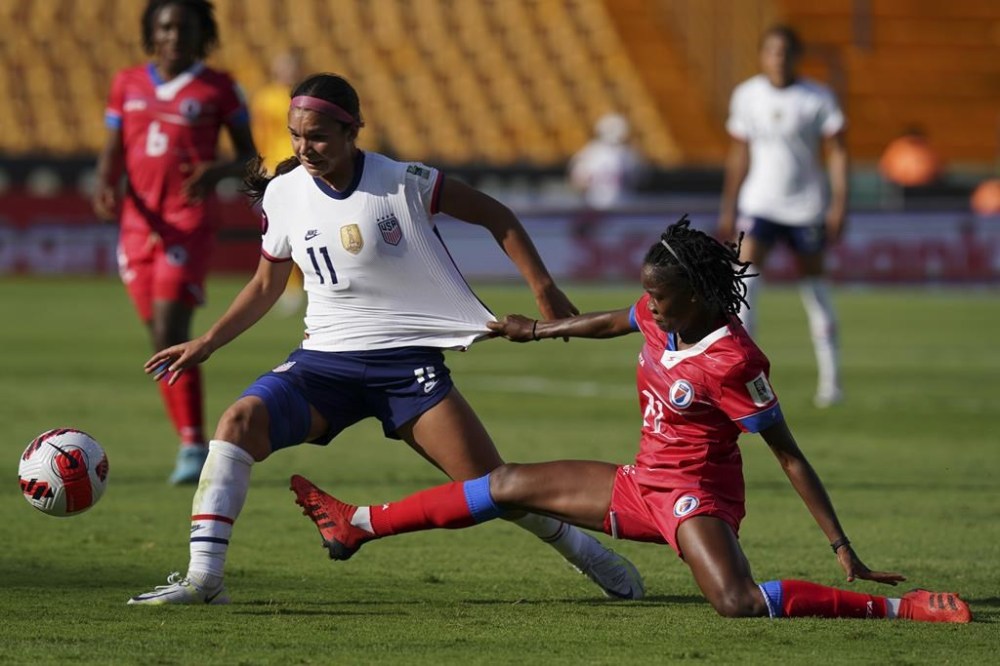
The rapid expansion could risk lop-sided games like the 13-0 win for the United States over Thailand in a group-stage game four years ago.
“The FIFA Women’s World Cup is a fantastic celebration of the women’s game but is also a time to analyze the sometimes-patchy development of the sport,” FIFPRO general secretary Jonas Baer-Hoffmann said in a statement.
___
AP Women’s World Cup coverage: https://apnews.com/hub/fifa-womens-world-cup
Related Articles
Referees to announce VAR decisions at World Cup




Advertisement Advertise With Us
Advertisement Advertise With Us