

Women’s World Cup team from Philippines has American flavor
Advertisement
Read this article for free:
or
Already have an account? Log in here »
To continue reading, please subscribe:

Digital Subscription
One year of digital access for only $205*
- Enjoy unlimited reading on winnipegfreepress.com
- Read the E-Edition, our digital replica newspaper
- Access News Break, our award-winning app
- Play interactive puzzles
*First annual payment billed as $205.00 + GST for one year. This annual subscription will automatically renew at $233.00 + GST every 52 weeks (10% off the regular annual price of $259.35). Offer available to new and qualified returning subscribers only. Cancel any time.
To continue reading, please subscribe:
Add Free Press access to your Brandon Sun subscription for only an additional
$1 for the first 4 weeks*
- Enjoy unlimited reading on winnipegfreepress.com
- Read the E-Edition, our digital replica newspaper
- Access News Break, our award-winning app
- Play interactive puzzles
*Your next Brandon Sun subscription payment will increase by $1.00 and you will be charged $17.95 plus GST for four weeks. After four weeks, your payment will increase to $24.95 plus GST every four weeks.
Read unlimited articles for free today:
or
Already have an account? Log in here »
Hey there, time traveller!
This article was published 20/07/2023 (1171 days ago), so information in it may no longer be current.
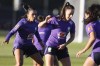
DUNEDIN, New Zealand (AP) — For a nation more than 7,000 miles (11,265 kilometers) from the United States, the Philippines boasts a women’s national soccer team with a decidedly American feel. Of the 23 names on its Women’s World Cup roster, 18 belong to U.S.-born women.
One of them, defender Hali Long, was born in Cape Girardeau, Missouri, and raised in a Filipino, or Pinoy, household.
“To be able to represent my heritage, just to have that opportunity to bring it back home for (the) people who brought me up, is such an honor,” Long said Thursday.
Despite growing up in the U.S., she said, “Under our roof, it was purely Pinoy, and I knew nothing different.”
That, she said, was her “deciding factor” in her choice to play for the Philippines.
“It’s just who I was, without question,” said Long, who played her college soccer at the University of Arkansas at Little Rock.
For Philippines head coach Alen Stajcic, it doesn’t matter how many American-born players are on the team.
“I don’t really care where they’re born,” Stajcic said. “If they have Philippines in their heart and in their blood, and they’re good at football, then they’re eligible for our team. They all play for their flag, they all play for their country, they all play for the people in the Philippines, wherever they reside.”
Philippines, one of eight newcomers in the tournament, makes its Women’s World Cup debut Friday against Switzerland.
The American-heavy roster boasts players from coast to coast. Olivia and Chandler McDaniel, a sister duo from California, join Long and teammates from Washington, Ohio, Texas, Virginia, Connecticut and other states.
Other U.S.-born players include Kiara Fontanilla, Kaiya Jota, Alicia Barker, Reina Bonta, Malea Cesar, Jessika Cowart, Dominique Randle, Tahnai Annis, Ryley Bugay, Carleigh Frilles, Isabella Pasion, Katrina Guillou, Sarina Bolden, Isabella Flanigan and Quinley Quezada.
A combination of factors helps explain how U.S. players wind up with the Philippines. The United States, as two-time defending Women’s World Cup champion, is not only elite, but its talent pool also is deep.
Title IX, the U.S. law requiring equal treatment for women athletes at American colleges, has helped more players secure access to quality training and facilities in the United States than is available in many other countries.
Philippines officials began recruiting the U.S. heavily for talented players in recent years, and even held a two-month training camp in Irvine, California, in 2021.
FIFA has rules that say players can only represent a country where they hold citizenship. They might be born there, or have biological ties to the country that allows dual citizenship.
“It’s a way for them to honor their parents,” Philippines team spokesman Cedelf Tupas said.
Added Stajcic: “I just know this team has Filipino heart, and blood, and courage, and spirit.”
The team’s first test comes at Dunedin against the Swiss as both squads open group play.
“I always knew I was going to see it one day in my life,” Long said about Philippines qualifying for the tournament. “I didn’t know I would be here being able to live it, breathe it, struggle through it, love it, like I am right now.”
___
Ellen McIntyre is a student in the John Curley Center for Sports Journalism at Penn State.
___
AP Women’s World Cup coverage: https://apnews.com/hub/fifa-womens-world-cup and https://twitter.com/AP_Sports
Related Articles
Canada turns attention to Ireland at World Cup




Advertisement Advertise With Us