

Germany players commit some of their Women’s World Cup bonuses to grassroots programs
Advertisement
Read this article for free:
or
Already have an account? Log in here »
To continue reading, please subscribe:

Digital Subscription
One year of digital access for only $205*
- Enjoy unlimited reading on winnipegfreepress.com
- Read the E-Edition, our digital replica newspaper
- Access News Break, our award-winning app
- Play interactive puzzles
*First annual payment billed as $205.00 + GST for one year. This annual subscription will automatically renew at $233.00 + GST every 52 weeks (10% off the regular annual price of $259.35). Offer available to new and qualified returning subscribers only. Cancel any time.
To continue reading, please subscribe:
Add Free Press access to your Brandon Sun subscription for only an additional
$1 for the first 4 weeks*
- Enjoy unlimited reading on winnipegfreepress.com
- Read the E-Edition, our digital replica newspaper
- Access News Break, our award-winning app
- Play interactive puzzles
*Your next Brandon Sun subscription payment will increase by $1.00 and you will be charged $17.95 plus GST for four weeks. After four weeks, your payment will increase to $24.95 plus GST every four weeks.
Read unlimited articles for free today:
or
Already have an account? Log in here »
Hey there, time traveller!
This article was published 24/07/2023 (1167 days ago), so information in it may no longer be current.
SYDNEY (AP) — Money has been a big talking point at this Women’s World Cup, from the lack of federation support for some teams and players, to the smaller prize pool FIFA is offering compared with the men’s World Cup in 2022, to the players not being paid their World Cup bonuses directly.
Ahead of its opening match Monday versus Morocco in Melbourne, two-time World Cup champion Germany tried to spread some good news about finances in the women’s game.
The national team players announced they will donate a percentage of their World Cup bonuses to grassroots girls soccer organizations in Germany.
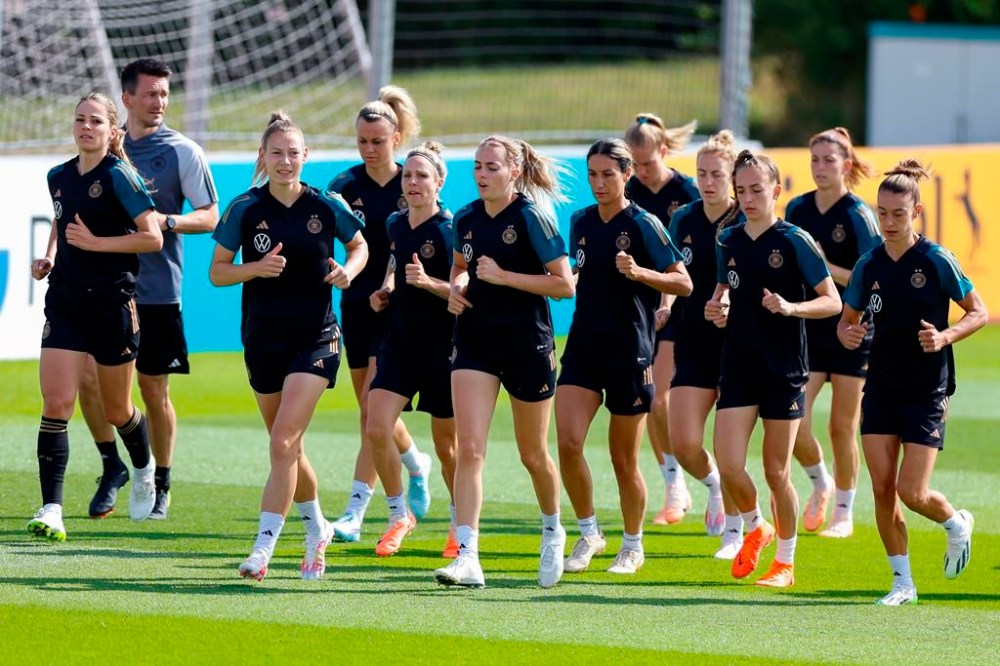
“It was important for us that if we donate to these projects, that the money actually reaches the grassroots; that was our key aspect,” midfielder Svenja Huth said.
The Germany players are partnering with Common Goal to contribute to inclusive girls’ and non-binary soccer programs.
“One of the hallmarks of our team (is) that we are aware of social shortages,” Huth said. “We want gender equality for everybody.”
They will donate 1% of their World Cup bonuses to Futbalo Girls and Girl Power, as they try to help boost their country’s investment in opportunities for girls of all cultural and social backgrounds.
If the Germans win the title, the donation would be $62,100 — as each of the 23 players would receive $270,000 in prize money. At a minimum, they will donate $6,900, or 1% of the $30,000 they each will get for playing in the group stage.
Germany is No. 2 in the world rankings behind the United States and has been a perennial power on the pitch.
Women’s soccer is gaining ground in Germany. Average attendance for Germany’s top women’s league, Bundesliga Frauen, has grown by 190% in the last five years according to Euromonitor, from less than 900 in 2017 to almost 2,500 in 2022.
Twenty players on the World Cup roster play in the Bundesliga Frauen.
The announcement came against the backdrop of FIFA President Gianni Infantino saying that he couldn’t guarantee players’ World Cup bonuses would go directly to the players, because the funds had to go to national federations to be paid out to individuals.

The German players now have something more to play for at the Women’s World Cup, with every round the team advances leading to more money for the cause back home.
“Bringing young girls into the game,” goalkeeper Merle Frohms said of the team’s goals. “Recognizing talent, and supporting that talent, so you can support them from very early on.”
___
Clay Witt is a student at the University of Georgia’s Carmical Sports Media Institute.
___ AP Women’s World Cup coverage: https://apnews.com/hub/fifa-womens-world-cup and https://twitter.com/AP_Sports
Related Articles
Two goals in 2 minutes help Japan beat Costa Rica 2-0 at Women's World Cup










Advertisement Advertise With Us
Advertisement Advertise With Us