

Shock and sadness in Rio favela after Brazil’s early elimination from Women’s World Cup
Advertisement
Read this article for free:
or
Already have an account? Log in here »
To continue reading, please subscribe:

Digital Subscription
One year of digital access for only $205*
- Enjoy unlimited reading on winnipegfreepress.com
- Read the E-Edition, our digital replica newspaper
- Access News Break, our award-winning app
- Play interactive puzzles
*First annual payment billed as $205.00 + GST for one year. This annual subscription will automatically renew at $233.00 + GST every 52 weeks (10% off the regular annual price of $259.35). Offer available to new and qualified returning subscribers only. Cancel any time.
To continue reading, please subscribe:
Add Free Press access to your Brandon Sun subscription for only an additional
$1 for the first 4 weeks*
- Enjoy unlimited reading on winnipegfreepress.com
- Read the E-Edition, our digital replica newspaper
- Access News Break, our award-winning app
- Play interactive puzzles
*Your next Brandon Sun subscription payment will increase by $1.00 and you will be charged $17.95 plus GST for four weeks. After four weeks, your payment will increase to $24.95 plus GST every four weeks.
Read unlimited articles for free today:
or
Already have an account? Log in here »
Hey there, time traveller!
This article was published 02/08/2023 (1168 days ago), so information in it may no longer be current.
A group of girls and young women gathered early Wednesday in Rio de Janeiro’s working-class Manguinhos neighborhood to watch the Brazilian team compete in the Women’s World Cup and pray for a win in the make-or-break match.
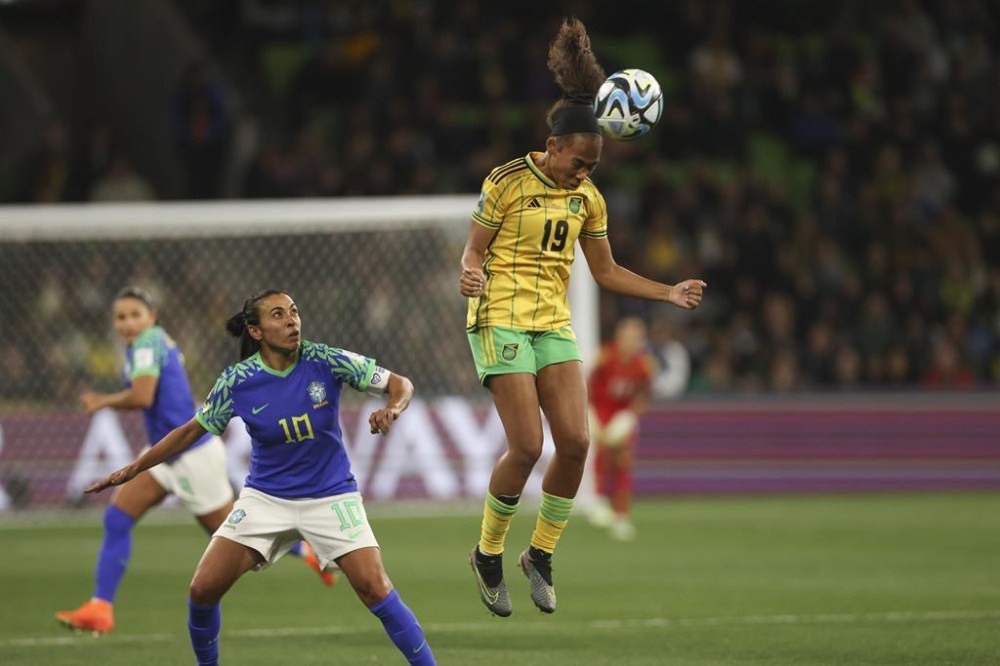
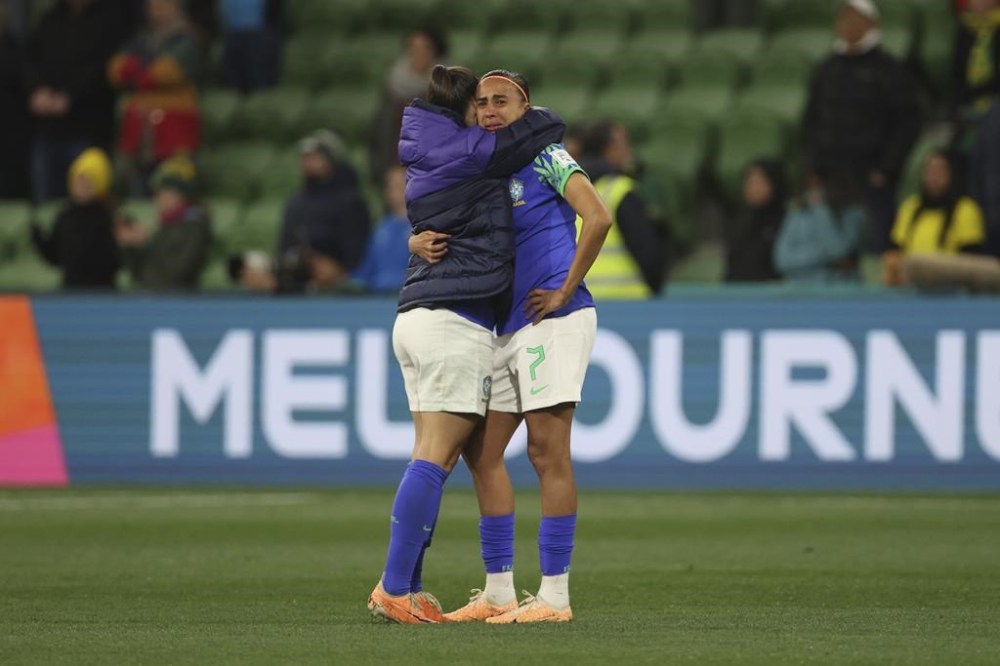
Instead, the 0-0 draw against Jamaica knocked Brazil out of the tournament in the group stage for the first time since 1995. The 16 assembled viewers in Manguinhos, who had pinned their hopes on the squad, were wracked with disappointment.
“It is sad to see Brazil lose. We didn’t even get to the round of 16,” said 14-year-old Maísa Solano, wearing green-and-yellow face paint and a jersey of veteran star Marta. “We could have gone a little further.”
Solano and the others present are among the roughly 60 participants in a project called Stars of Mandela that empowers Manguinhos’ girls and young women through soccer and gives more visibility to the women’s game. The non-profit organized the broadcast of the game at the soccer field where they practice, in the shadow of the neighborhood’s cramped brick homes.
The group was joyful in the first half, cheering their players on. As the game remained scoreless well into the second half, concern became palpable. And when the final whistle blew, many of the girls sank their heads into their hands.
The scoreless game in Melbourne also ended Brazilian great Marta’s World Cup career. Marta, who holds the all-time scoring record with 17 goals at the World Cup, had announced before the tournament that this would be her last attempt at finally winning the trophy.
Another of the attendees in Manguinhos was Kauany de Paula Souza, a 16-year-old who plays in the so-called Favela Cup that pits teams from different low-income neighborhoods across the nation against one another. Souza hopes to one day play for the Brazilian national team, and still believes that her country will some day lift the World Cup trophy.
“It didn’t happen now, but we have to continue with our lives and hope for the next time,” she said. “Continue and persist, until we win.”

___
AP Women’s World Cup coverage: https://apnews.com/hub/fifa-womens-world-cup
Related Articles
FIFA investigates misconduct complaint involving Zambia Women's World Cup team










Advertisement Advertise With Us
Advertisement Advertise With Us