

George Eastham, England 1966 World Cup winning squad member who criticized apartheid, dies at 88
Advertisement
Read this article for free:
or
Already have an account? Log in here »
To continue reading, please subscribe:

Digital Subscription
One year of digital access for only $205*
- Enjoy unlimited reading on winnipegfreepress.com
- Read the E-Edition, our digital replica newspaper
- Access News Break, our award-winning app
- Play interactive puzzles
*First annual payment billed as $205.00 + GST for one year. This annual subscription will automatically renew at $233.00 + GST every 52 weeks (10% off the regular annual price of $259.35). Offer available to new and qualified returning subscribers only. Cancel any time.
To continue reading, please subscribe:
Add Free Press access to your Brandon Sun subscription for only an additional
$1 for the first 4 weeks*
- Enjoy unlimited reading on winnipegfreepress.com
- Read the E-Edition, our digital replica newspaper
- Access News Break, our award-winning app
- Play interactive puzzles
*Your next Brandon Sun subscription payment will increase by $1.00 and you will be charged $17.95 plus GST for four weeks. After four weeks, your payment will increase to $24.95 plus GST every four weeks.
Read unlimited articles for free today:
or
Already have an account? Log in here »
Hey there, time traveller!
This article was published 21/12/2024 (646 days ago), so information in it may no longer be current.
LONDON (AP) — Former England midfielder George Eastham, a member of the country’s 1966 World Cup winning squad who was better known for his social activism, has died. He was 88.
Soccer club Stoke City announced Eastham’s death late Friday, saying it was “immensely saddened” to lose a “club legend.” It did not specify a cause of death.
Eastham made 19 appearances for England, following the path set by his father, George Eastham senior, though the last of those games was before the 1966 World Cup. He did not feature at the tournament itself, where he was the only Arsenal player in the ultimately successful England squad.
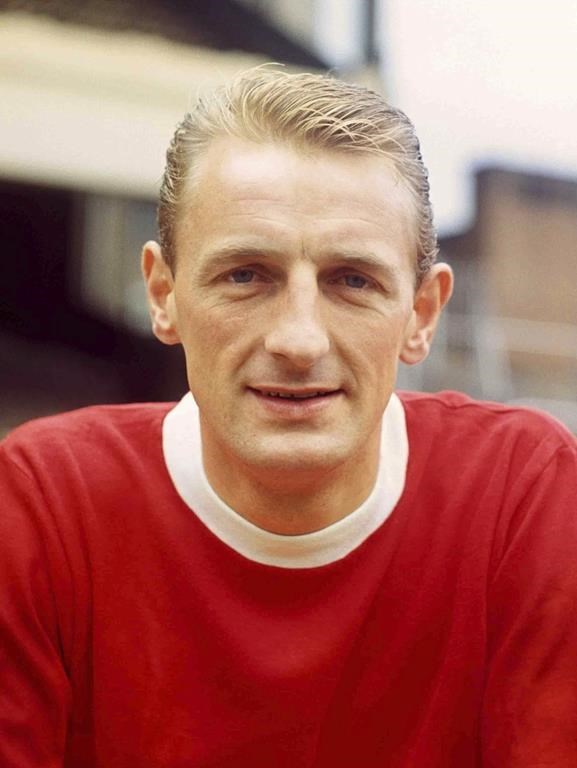
Eastham had to wait for a World Cup winner’s medal until 2007, when FIFA ruled that medals should be awarded retrospectively to non-playing squad members of previous finals.
Eastham was signed by Stoke shortly after the World Cup and went on play for the club for eight seasons including loan spells elsewhere. His personal highlight with Stoke was scoring the winning goal in a 2-1 victory over Chelsea to win the 1972 League Cup at Wembley Stadium.
Eastman started his playing career in Northern Ireland for semi-professional side Ards, where his father, a former Bolton and Blackpool forward, was the player-coach. Both father and son made their debuts for the club in the same match because of injuries to first-team players.

Eastman joined Newcastle United in 1956, Arsenal in 1960, then Stoke in 1966. He also later coached the latter.
But Eastman was better known for his role in ending the so-called “slavery rule,” by which a club could refuse to allow a player’s transfer even if his contract with the club had expired. Newcastle had refused to allow his transfer to Arsenal. Eastman’s campaign saw the retain-and-transfer regulations altered in favor of players.
Eastman finished his playing career in South Africa, where he also coached. He became a vocal critic of apartheid, the racist system of segregation in the country at the time.
___
AP soccer: https://apnews.com/hub/soccer
Related Articles
Salah sets another goal record by inspiring Liverpool to victory over Tottenham









Advertisement Advertise With Us
Advertisement Advertise With Us